The Importance of Globalisation
Reasons for globalisation
Reasons for globalisation
Globalisation is the economic integration of countries through increased cross-border movement of people, goods and services, technology and finance
In recent years there has been rapid globalisation and growing international business expansion
Businesses that trade internationally import and export goods and services
Imports are goods and services bought by people and businesses in one country from another country
In 2022, the UK’s biggest import was cars, valued at approximately £3.25 billion
Exports are goods and services sold by domestic businesses to people or businesses in other countries
In 2022, China’s biggest export was smartphones, valued at approximately $21.4 billion
Exports generate extra sales revenue for businesses selling their goods abroad
Imports result in money leaving the country, which generates extra revenue for foreign businesses
Why globalisation has accelerated
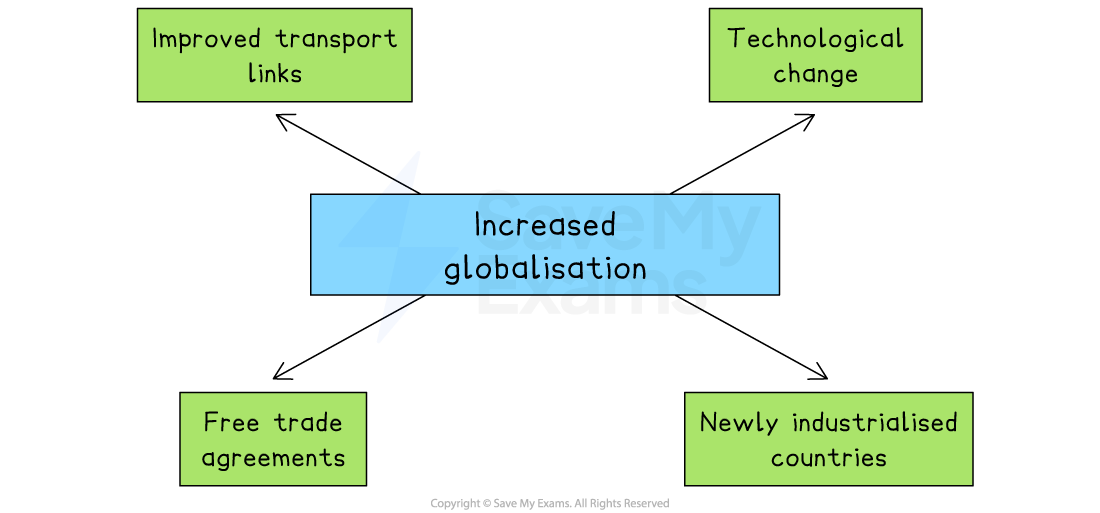
Improved transport links have made it easier and cheaper to move goods, services and people between countries
This allows businesses to expand into global markets and operate international supply chains
Technological change, including advances in communication, has made it quicker and cheaper to share information across the world
Businesses can now manage international operations, hold virtual meetings and advertise to global audiences more easily
Free trade agreements between countries have reduced or removed tariffs and other trade barriers
This encourages international trade by making imported goods more affordable and increasing access to foreign markets
The growth of newly industrialised countries has created new markets for goods and services
These countries also offer lower-cost labour and production, attracting businesses to invest and set up operations there
Opportunities and threats of globalisation for businesses
Opportunities and threats of globalisation for businesses
Globalisation offers businesses the chance to grow beyond their home country
By trading internationally, they can increase sales, lower costs and access valuable resources
Opportunities of globalisation
Opportunity | Explanation | Impact |
|---|---|---|
Market expansion |
|
|
Lower costs |
|
|
Access to resources |
|
|
Threats of globalisation
Increased competition
Globalisation exposes businesses to multinational competitors with greater economies of scale
This makes it harder for smaller firms to compete on price and distribution
Greater exposure to global risks
Businesses become more vulnerable to global shocks such as supply chain disruption, exchange rate volatility and rising commodity prices
Pressure on costs and standards
Competing globally can increase costs linked to regulation, ethical sourcing and sustainability, which may squeeze profit margins, especially for small businesses
Import tariffs and quotas
Import tariffs and quotas
A tariff is a tax placed by a government on imported goods from other countries
For example, tennis rackets imported into the UK from China have a tariff of 4.7%
An import quota is a government-imposed limit on the amount of a particular product allowed into a country
For example, China has set an import quota on Cambodian rice of approximately 5.32 million tonnes per ye
The effects of import tariffs and quotas on businesses
The effects of import tariffs and quotas on businesses
The effects of tariffs
A tariff increases the price of imported goods, which helps shift demand for that product or service from foreign businesses to domestic businesses
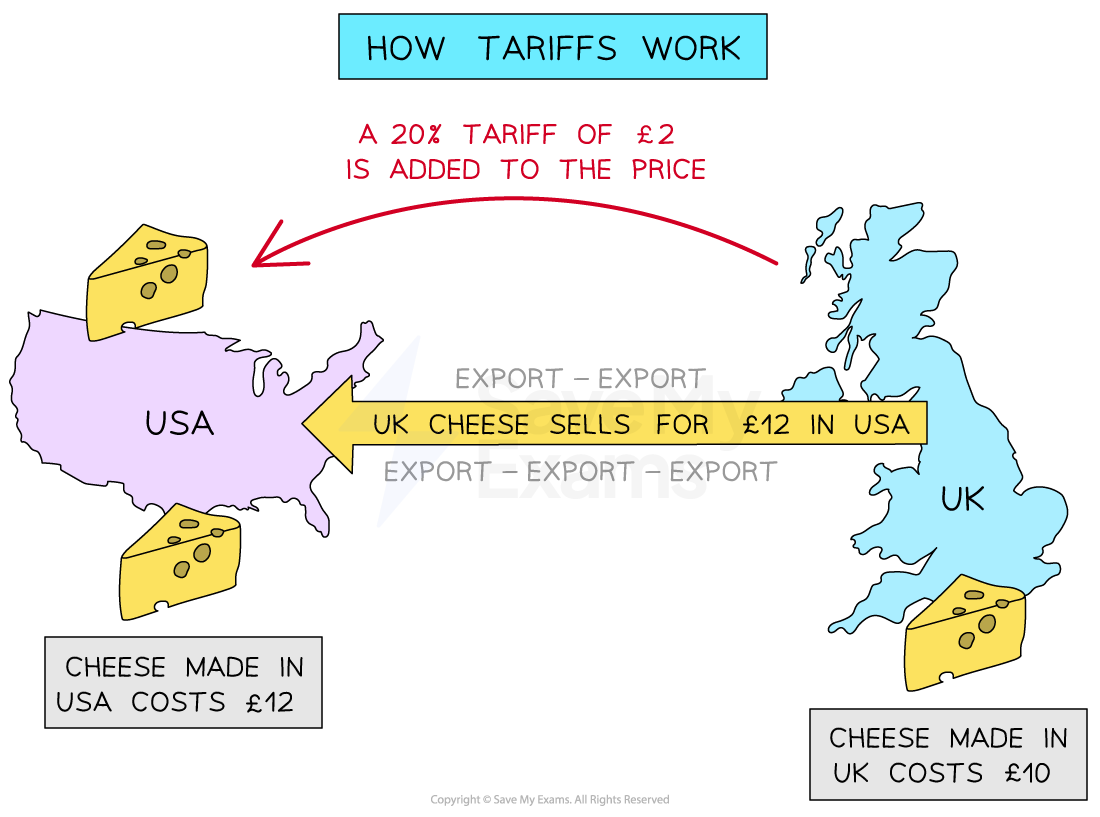
American customers are more likely to purchase American cheese as the tariff has made British cheese more expensive
Advantages of tariffs
They protect infant industries so they can eventually become more competitive globally
An increase in government tax revenue
Reduces dumping by foreign businesses as they cannot sell below the market price
Disadvantages of tariffs
Increases the cost of imported raw materials, which may affect businesses that use these goods for production, leading to higher prices for consumers
Reduces competition for domestic firms, who may become more inefficient and produce poor-quality products for their customers
Reduces consumer choice as imports are now more expensive and some customers will be unable to afford them
The effects of quotas
Restricting the physical quantity of imports using a quota means that domestic businesses face less competition and benefit from a higher market share
More domestic demand is met by domestic businesses
Advantages of import quotas
To meet extra demand, domestic businesses may need to hire more workers, which reduces unemployment and benefits the wider economy
The higher prices for the product may encourage new businesses to start up in the industry
Countries are able to easily change import quota as market conditions change
Foreign countries view quotas as less confrontational to their business interests than tariffs
Their exporters can still sell their goods at a higher price in domestic markets (but a limited amount of it)
Disadvantages of import quotas
Quotas limit the supply of a product and whenever supply is limited, the price of the product rises
They may generate tension in the relationship with trading partners
Domestic firms may become more inefficient over time as the use of quotas reduces the level of competition