The Role of Pressure Groups
Introduction to pressure groups
Introduction to pressure groups
Pressure groups are organisations, or groups of people, that seek to influence the policies and actions of businesses or governments
Their primary objective is to promote a specific cause or agenda
Pressure groups want a business to support their cause or take action on an issue
For example, an animal rights group may want a clothing company to stop using animal products in their clothing
They can operate on a national or international scale
Save the Arctic campaigned for Lego not to sell their products at Shell petrol stations
Greenpeace campaigned for Kimberley Clark (the manufacturer of products such as Kleenex and Huggies) to dispose of their products in a sustainable way
How pressure groups influence business decisions
How pressure groups influence business decisions
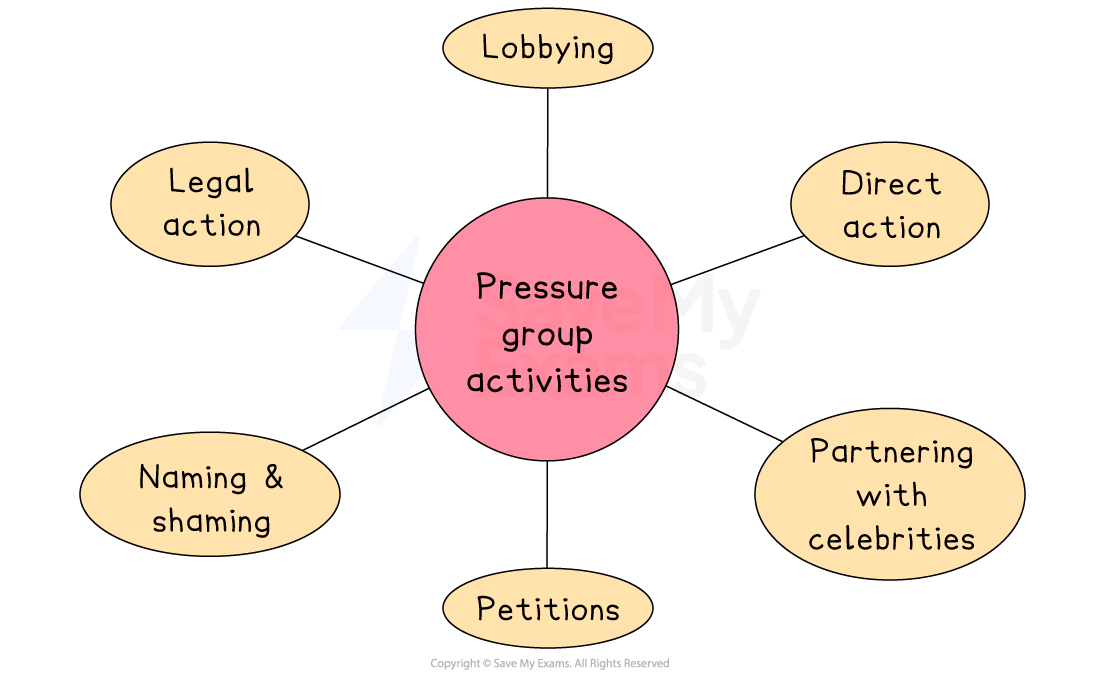
Naming and shaming
Pressure groups often publish reports or use social media to expose businesses behaving unethically
This can damage the business’s reputation and reduce public trust
For example, in 2022, Greenpeace publicly criticised Coca-Cola for being one of the world’s biggest plastic polluters
This naming and shaming led to media attention and public pressure on the company to improve its packaging
Direct action
This includes protests, strikes, boycotts and other public demonstrations to draw attention to an issue and pressure the business to change its behaviour
For example, pressure group Extinction Rebellion staged protests outside Barclays Bank branches to demand the bank stopped funding fossil fuel projects
These protests have affected customer views and generated negative media headlines
Lobbying
Pressure groups may meet with government officials or provide evidence to encourage changes in laws or regulations that affect business practices
For example, the Living Wage Foundation has lobbied the UK government to increase the minimum wage and encourages businesses to adopt the higher 'living wage'
This has influenced major companies like Lidl and Aviva to increase employee pay
Other pressure group actions
Starting online campaigns or petitions that go viral
Partnering with celebrities or influencers to spread a message
Taking legal action or supporting court cases against companies