Tariffs & Quotas
Import tariffs and quotas
Import tariffs and quotas
Import tariffs
A tariff is a tax placed on imported goods from other countries
E.g. Tennis rackets imported into the UK from China have a tariff of 4.7%
A tariff increases the price of imported goods, which helps shift demand for that product or service from foreign businesses to domestic businesses
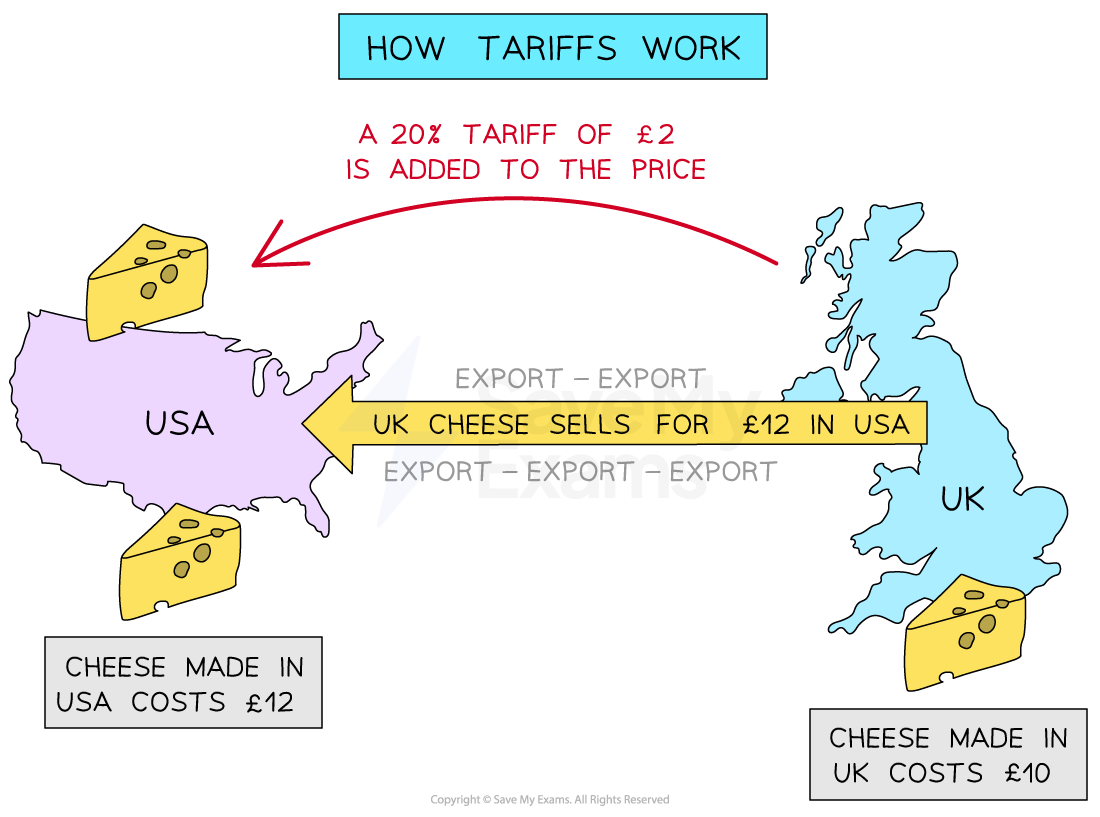
American customers are more likely to purchase American cheese now that the tariff has made British cheese more expensive
The benefits of tariffs
They protect infant industries so they can eventually become more competitive globally
An increase in government tax revenue
Reduces dumping by foreign businesses as they cannot sell below the market price
The disadvantages of tariffs
Increases the cost of imported raw materials, which may affect businesses that use these goods for production, leading to higher prices for consumers
Reduces competition for domestic firms, who may become more inefficient and produce poor-quality products for their customers
Reduces consumer choice as imports are now more expensive and some customers will be unable to afford them
Quotas
An import quota is a government-imposed limit on the amount of a particular product allowed into the country
E.g. China has set an import quota on Cambodian rice of approximately 5.32 million tonnes per ye
Restricting the physical quantity of imports means that domestic businesses face less competition and benefit from a higher market share
More of the domestic demand is now met by domestic businesses
The benefits of import quotas
To meet extra demand, domestic businesses may need to hire more workers, which reduces unemployment and benefits the wider economy
The higher prices for the product may encourage new businesses to start up in the industry
Countries are able to easily change import quota as market conditions change
Foreign countries view quotas as less confrontational to their business interests than tariffs
Their exporters can still sell their goods at a higher price in domestic markets (but a limited amount of it)
The disadvantages of import quotas
Quotas limit the supply of a product and whenever supply is limited, the price of the product rises
They may generate tension in the relationship with trading partners
Domestic firms may become more inefficient over time as the use of quotas reduces the level of competition