Taxation
The classification of taxes
The classification of taxes
The main source of government revenue is taxation
Direct taxes are taxes imposed on income and profits
They are paid directly to the government by the individual or firm
E.g., income tax, corporation tax, capital gains tax, national insurance contributions and inheritance tax
Indirect taxes are imposed on spending
The less a consumer spends, the less indirect tax they pay
Examples of indirect tax include Value Added Tax (19% VAT rate in the European Union in 2022), taxes on demerit goods and excise duties on fuel
Progressive, regressive and proportional tax systems
Tax systems can be classified as progressive, regressive or proportional
Most countries have a mix of progressive (direct taxation) and regressive (indirect taxation) taxes in place
Progressive tax system
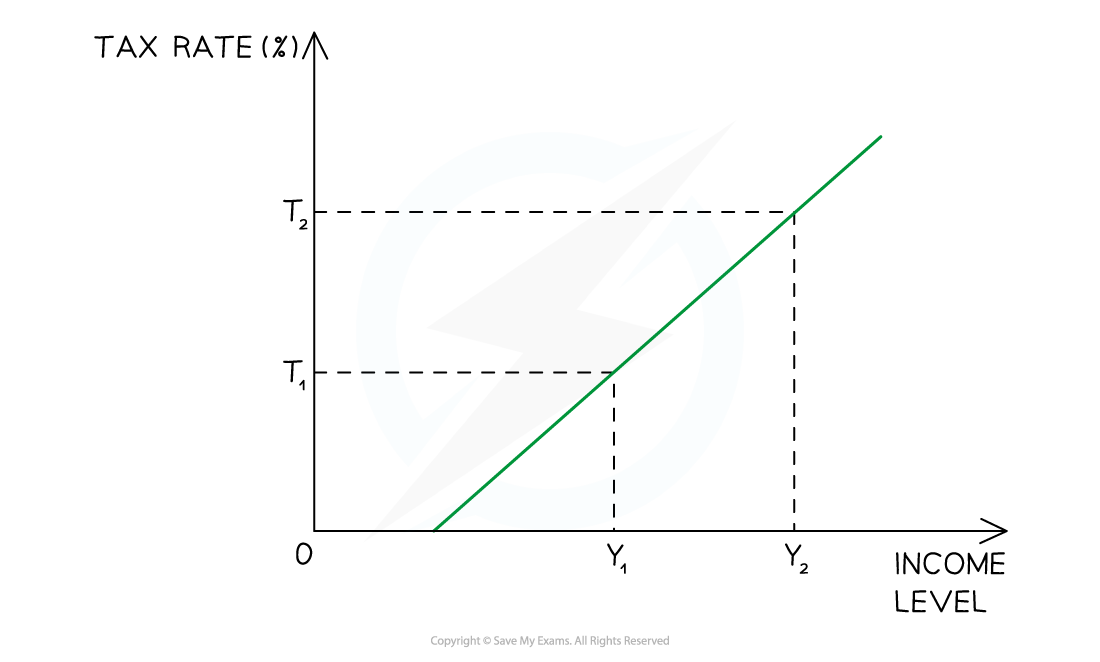
As income rises, a larger percentage of income is paid in tax
In the diagram, when personal income rises from Y1 to Y2, the tax rate rises from T1 to T2
Regressive tax system
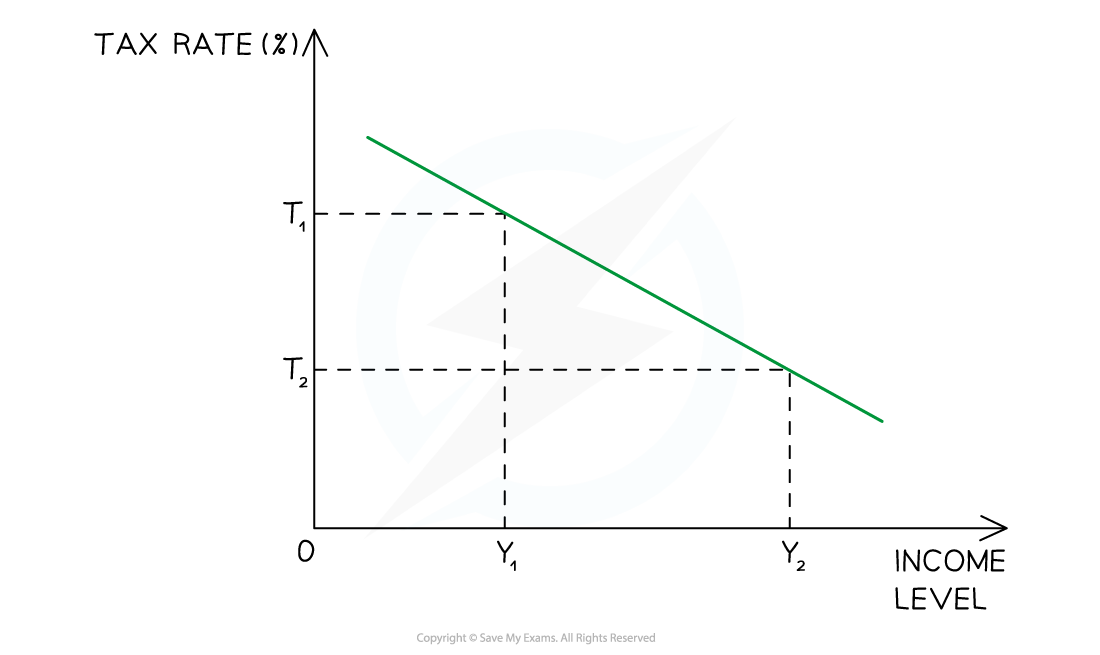
As income rises, a smaller percentage of income is paid in tax
In the diagram, when personal income rises from Y1 to Y2, the tax rate falls from T1 to T2
All indirect taxes are regressive
In the USA, Federal income tax is progressive but almost all State taxes are regressive (the bottom 20% of income earners pay as much as 6x the % of their income than the top 20%)
Proportional tax system

As income rises, the same percentage of income is paid in tax
In the diagram, when personal income rises from Y1 to Y2, the tax rate remains constant at 20%
In 2022, Bolivia was using this system with a proportional tax rate of 13%
The impact of taxation
The impact of taxation
Impact on consumers
Higher prices
Indirect taxes increase the price of goods and services, reducing consumers’ purchasing power
Reduced consumption
Higher prices may cause people to buy less, especially for non-essential goods
Behaviour changes
High taxes on harmful goods (e.g. cigarettes) can discourage consumption
Lower disposable income
Direct taxes (e.g. income tax) reduce the amount of income consumers can spend or save
Impact on workers
Lower take-home pay
Income tax reduces the amount workers keep from their wages
Reduced incentive to work
Higher taxes may discourage overtime or seeking higher-paid jobs
Impact on employment
If firms cut costs to pay higher taxes, jobs may be lost or wage growth may slow
Impact on producers/firms
Higher costs of production
Indirect taxes (e.g. VAT) make production more expensive
Reduced sales
Higher prices can lower demand, especially for price-sensitive goods
Lower profits
Increased costs and reduced sales can reduce profitability
Business decisions
Firms may relocate to countries with lower taxes or invest less in expansion
Impact on the government
Revenue generation
Taxation is the main source of government income for funding public services (e.g. healthcare, education)
Economic control
Taxes can discourage harmful consumption (e.g. sugar tax) or reduce imports (e.g. tariffs)
Redistribution of income
Progressive taxes (higher rates for higher earners) can reduce income inequality
Impact on the economy
Reduced spending and investment
High taxes can slow economic growth if they reduce consumption and business activity
Inflationary pressures
Indirect taxes can raise prices, contributing to inflation
Improved public services
Tax revenue allows the government to invest in infrastructure, education and healthcare, which can boost productivity in the long term
Balancing effects
The overall impact depends on tax rates, how revenue is used and the state of the economy