Types of migrant
Specification link
This page covers section 6.3.1 of the CIE O Level specification.
6.3.1 - Types of migrant: economic migrant, asylum seeker and refugee.
Types of migration
Types of migration
People have always migrated from one place to another, either within their country (internal migration) or across borders (international migration)
Globalisation has made this move easier and faster
There are different types of migration, including:
Forced (involuntary)
Voluntary
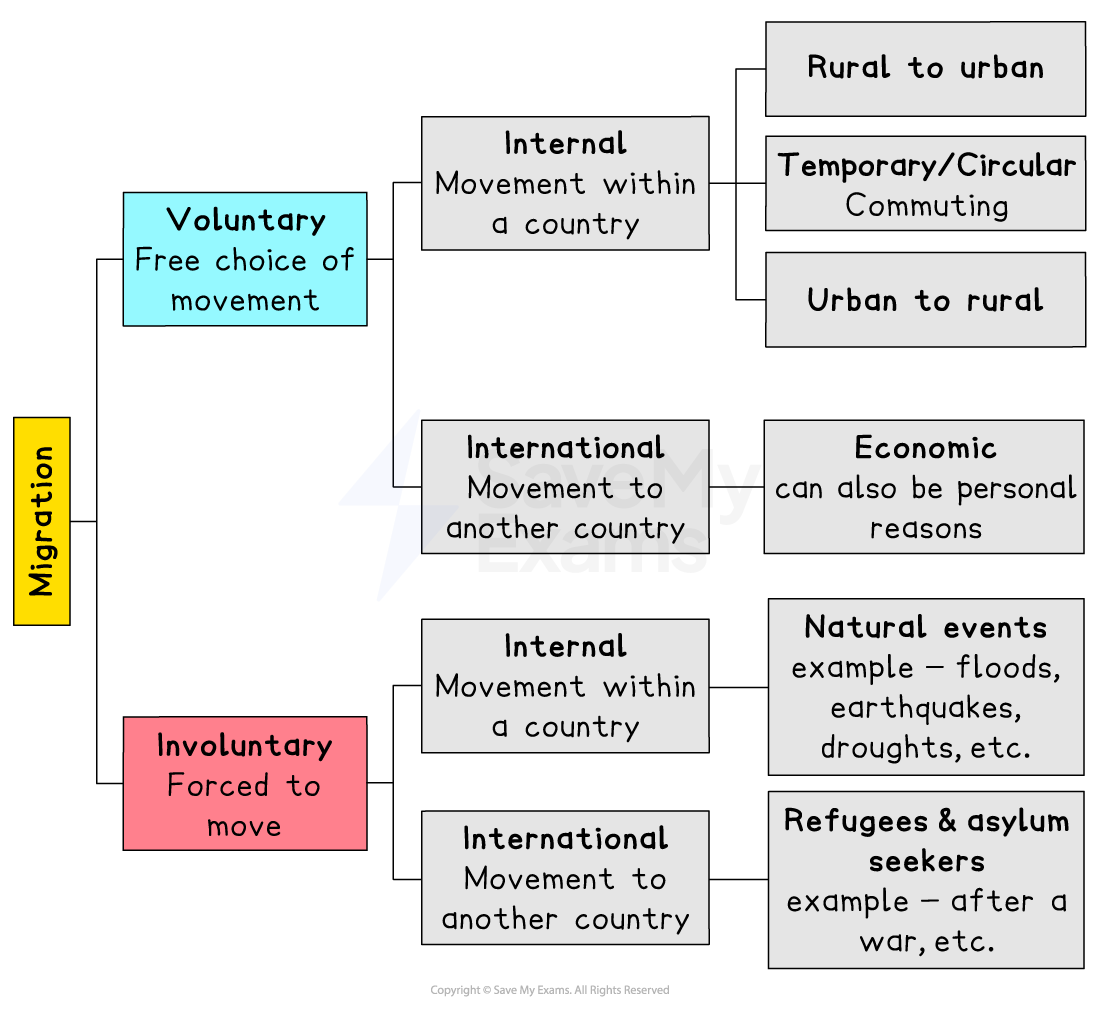
Voluntary migration
Voluntary migration is the free choice to migrate or not
This can be internal (within the same country) or international (to another country)
Voluntary migration is usually for economic reasons such as work, promotion, higher wages, etc.
In developing countries, this is usually internal, from rural to urban areas
In developed countries, counter-urbanisation is more common, from urban to rural
Forced migration
This is where a migrant has no choice but to leave their place of origin
This is usually international but can also be internal
There are several reasons for internally forced migration, including:
natural hazards
war and persecution
ethnic cleansing
Economic migrants
Economic migrants
Economic migrants are people who move to earn more money
Often economic migrants plan to return to their country of origin after working in another country
Many economic migrants send money back to their families
This money is called remittances
Asylum seekers
Asylum seekers
Asylum seekers are migrants who have left their country due to fear of persecution, punishment, torture or death in their home country and are claiming refuge in another country
Asylum seekers are seeking protection in another country, but have not yet been legally recognised as a refugee
The UN High Commission for Refugees (UNHCR) is responsible for those people forced to migrate—a 'person of concern'
Currently, 149 countries have signed the 1951 Refugee Convention, recognise the rights of people seeking asylum and have agreed to protect them
Whilst waiting for a decision on whether they will be granted refugee status, asylum seekers are held in reception or detention centres
Refugees
Refugees
A refugee is a person who lives outside their country of nationality because of well-founded fears of being persecuted, punishment, torture or death
This can be due to their:
Religion
Race
Political beliefs
Nationality
Sexuality
A refugee has been granted asylum by another country
This is based on international law which states that a person should not be sent back to a country where they face persecution, threats to their life or freedom