Stalin's Methods to Control the Soviet Union
Did Stalin Rule by Fear or Love? - Summary
Stalin ruled the USSR primarily through fear rather than love. He created a cult of personality and used propaganda to portray himself as a popular leader. However, his regime relied upon repression, intimidation and violence.
Stalin also employed fear tactics to limit dissent. The state arrested people with no evidence of a crime, found them guilty in show trials and placed them into forced labour camps or executed them. These methods instilled a climate of fear. It ensured compliance with the regime's policies.
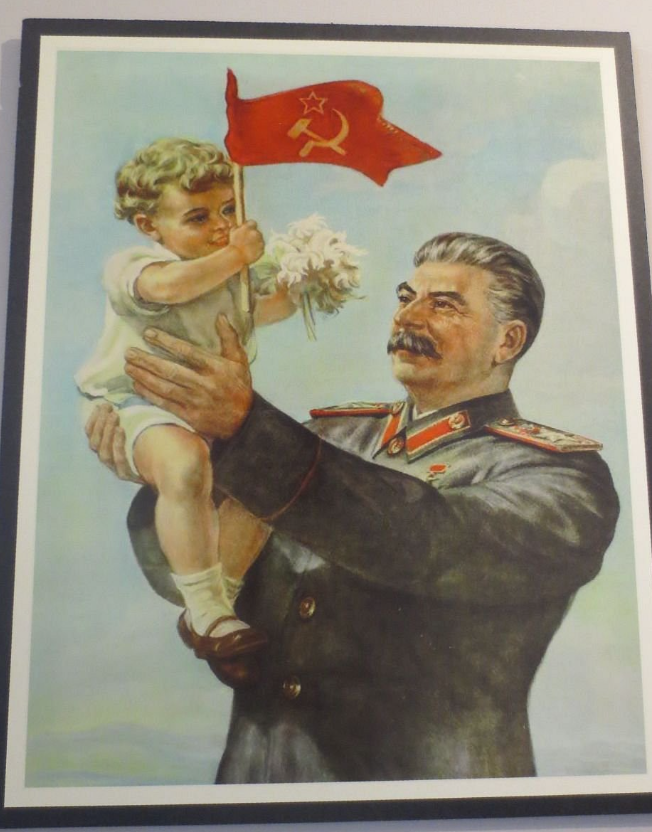
Stalin's propaganda machine portrayed him as a beloved fatherly figure and saviour of the Soviet people. The reality was that he ruled through fear and the elimination of perceived enemies.
The NKVD
The NKVD
Communist Russia had a secret police
From 1917 to 1922, it was called the Cheka
From 1922 to 1934, it was called the OGPU
The NKVD was formed in 1934
It combined all forms of the military and general police force into one organisation
Its full name was the People's Commissariat for Internal Affairs
What was the Role of the NKVD?
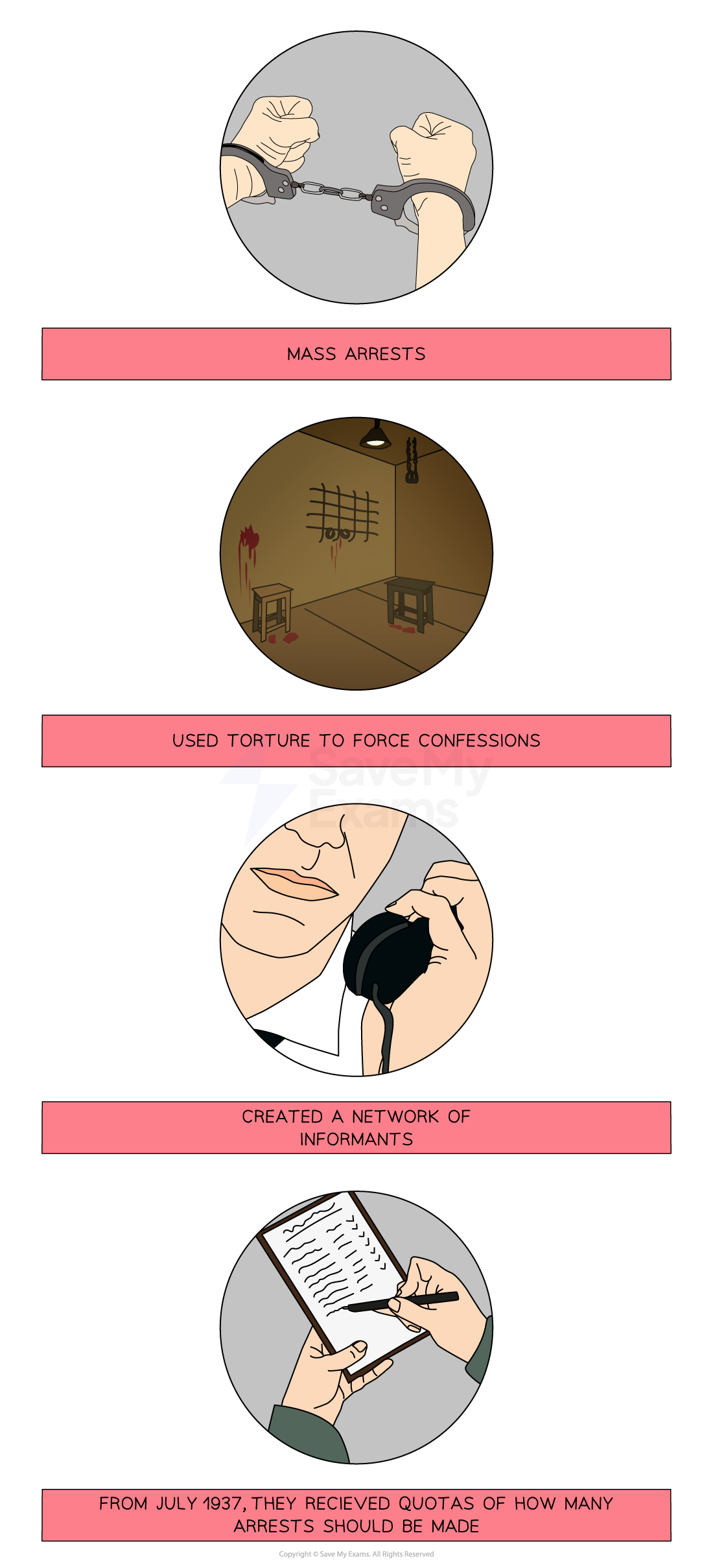
The government tasked the NKVD with eliminating political enemies
It carried out the Great Purges for Stalin
It did not need evidence or witnesses to make an arrest
From 1935, they could prosecute children as young as 12 as adults
What Tactics did the NKVD use?
If workers broke workplace rules, they could face:
Fines
Being fired from their job
The NKVD used even harsher tactics to maintain control
The GULAG System
The GULAG System
The GULAG system was created in 1919
GULAG is an acronym that translates to the Chief Administration of Corrective Labour Camps
It was an organisation of forced labour camps, which were called lagery in Russian
The state placed many of the lagery in Siberia
The secret police administrated the system
The GULAG aimed to:
Severely punish criminals
Deter other citizens from committing crimes
Provide the state with free labour
Prisoners in the GULAG System
A range of people were prisoners in the GULAG system, including:
Political opponents
Kulaks and NEPmen
Workers accused of sabotaging
Members of the military
Artists who broke censorship
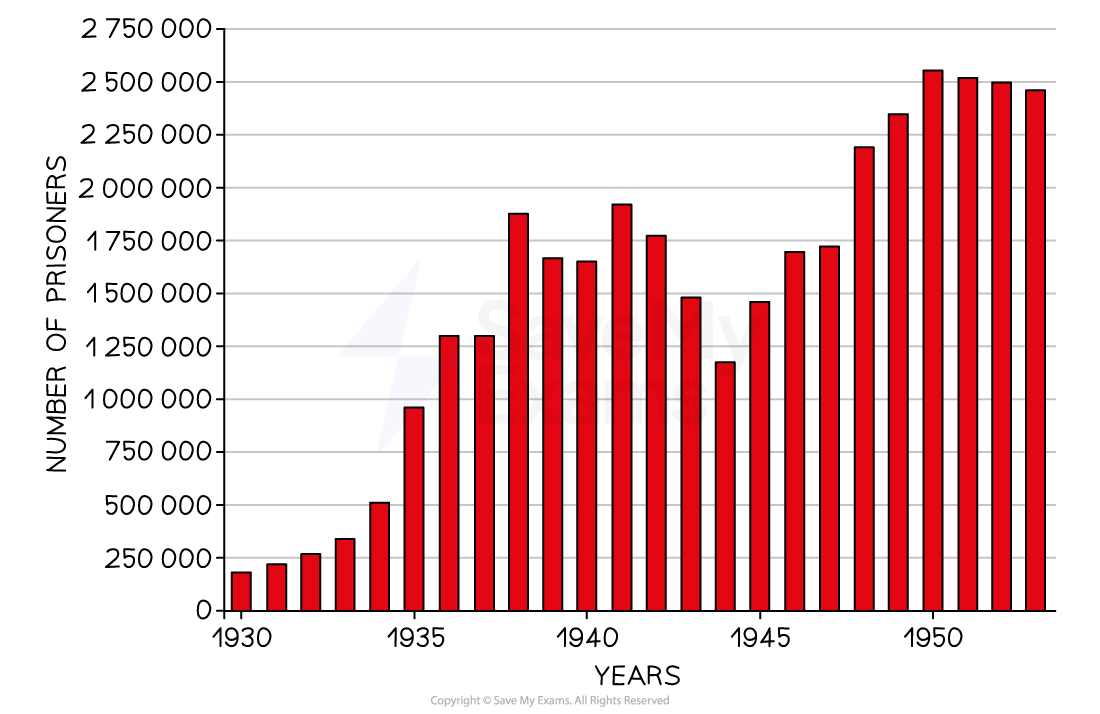
How did the GULAG System Grow?
What were Conditions Like in the GULAG System?
The lagery had terrible living conditions
Prisoners lived in overcrowded wooden lodges
There was little sanitation
Diseases spread in these conditions
There was no heating
Many people died from the cold conditions of Siberia
The prisoners completed forced physical labour
Prisoners had to meet production targets
These were unattainable
Many prisoners died of overworking
The camp rationed food for prisoners
Prisoners received more rations if they completed more work
If a prisoner did not meet their targets, the prisoner received less rations
Prisoners died of starvation
Show Trials
Show Trials
A show trial was a staged, public trial with a predetermined outcome
In the Great Purge, Stalin placed high-profile Bolsheviks in show trials
The NKVD tortured suspects so they would confess, even if they did not commit the crime
The state ensured the judge knew the sentence before the trial
The Trial of 16
Date | Suspected crime | Who were accused? | Verdict and outcome |
|---|---|---|---|
1936 |
| 16 people, including Zinoviev and Kamenev |
|
The Trial of 17
Date | Suspected crime | Who were accused? | Verdict and outcome |
|---|---|---|---|
1937 |
| Party officials |
|
The Trial of 21
Date | Suspected crime | Who were accused? | Verdict and outcome |
|---|---|---|---|
1938 |
| 21 people, including Bukharin and Yagoda, the head of the NKVD |
|
Propaganda and the Cult of Stalin
Propaganda and the Cult of Stalin
The Bolsheviks knew the importance of propaganda
The party used propaganda posters in the tsarist regime to win support
The Soviet government heavily censored information
The communist newspaper Pravda was the only legal newspaper in the USSR
Western radio stations were banned
The government controlled public events to ensure that the USSR looked good
Stalin relied on propaganda to:
Create portraits, photographs and statues across the USSR of Stalin as:
A god-like figure
'Uncle Joe' and the father of the USSR
Spread Stalin's image and ideas across the USSR
Parades celebrating the October Revolution and May Day occurred annually
Participants held images of Stalin or performed in front of him in the Red Square, Moscow
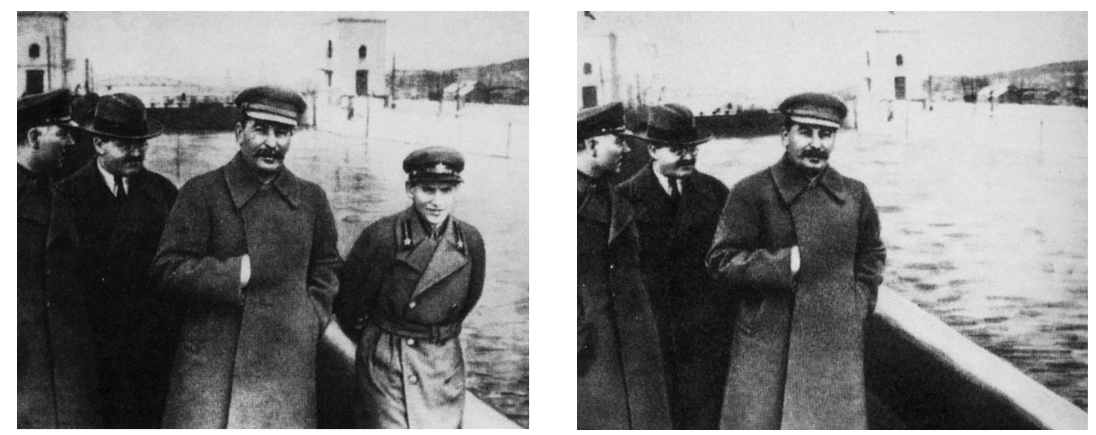
Re-write history
The government edited photographs to remove Bolshevik Party members considered 'enemies of the state' under Stalin's regime
History textbooks wrote Lenin and Stalin, rather than Trotsky, as the key figures in the October Revolution
Culture in Stalin's Regime
Culture in Stalin's Regime
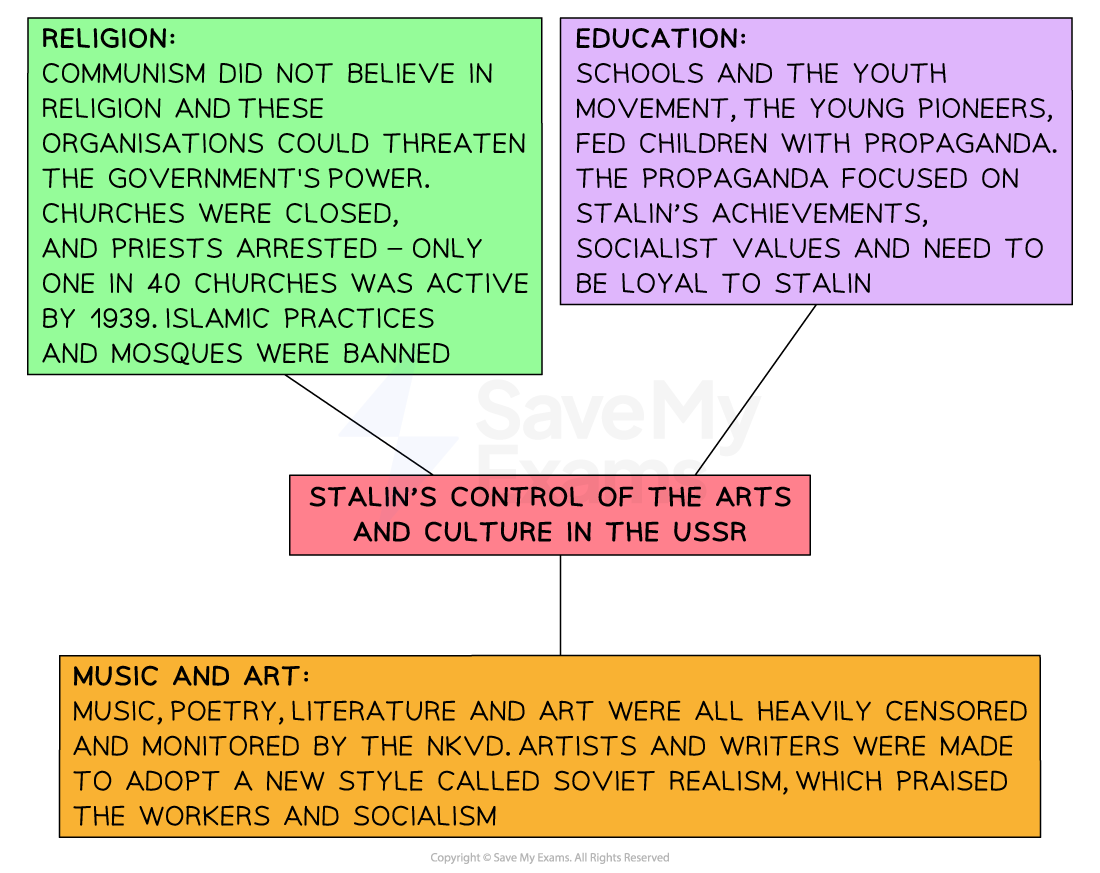
Stalin believed that controlling Soviet culture was important
He wanted all artists, writers and musicians to strengthen, not challenge, the state
Culture could be far-reaching and powerful in changing the opinions of Soviet citizens