Why Did Stalin Introduce the Five-Year Plans?
How Important were the Five-Year Plans - Summary
The Five-Year Plans were pivotal in shaping the economy and society of the USSR under Stalin's rule.
Stalin aimed to rapidly industrialise the nation and achieve specific economic goals within five-year intervals. These plans played a significant role in transforming the USSR from an agricultural society into a major industrial power.
Stalin focused on the development of heavy industry, infrastructure and agriculture. This resulted in impressive advancements in sectors such as steel production and transportation. However, the plans also resulted in high social and human costs, including forced labour, famine and political repression. The government set unrealistic and unachievable targets that could never be met.
Overall, while the Five-Year Plans helped to modernise the Soviet Union, their implementation came with significant costs.
Reasons for the Five-Year Plans
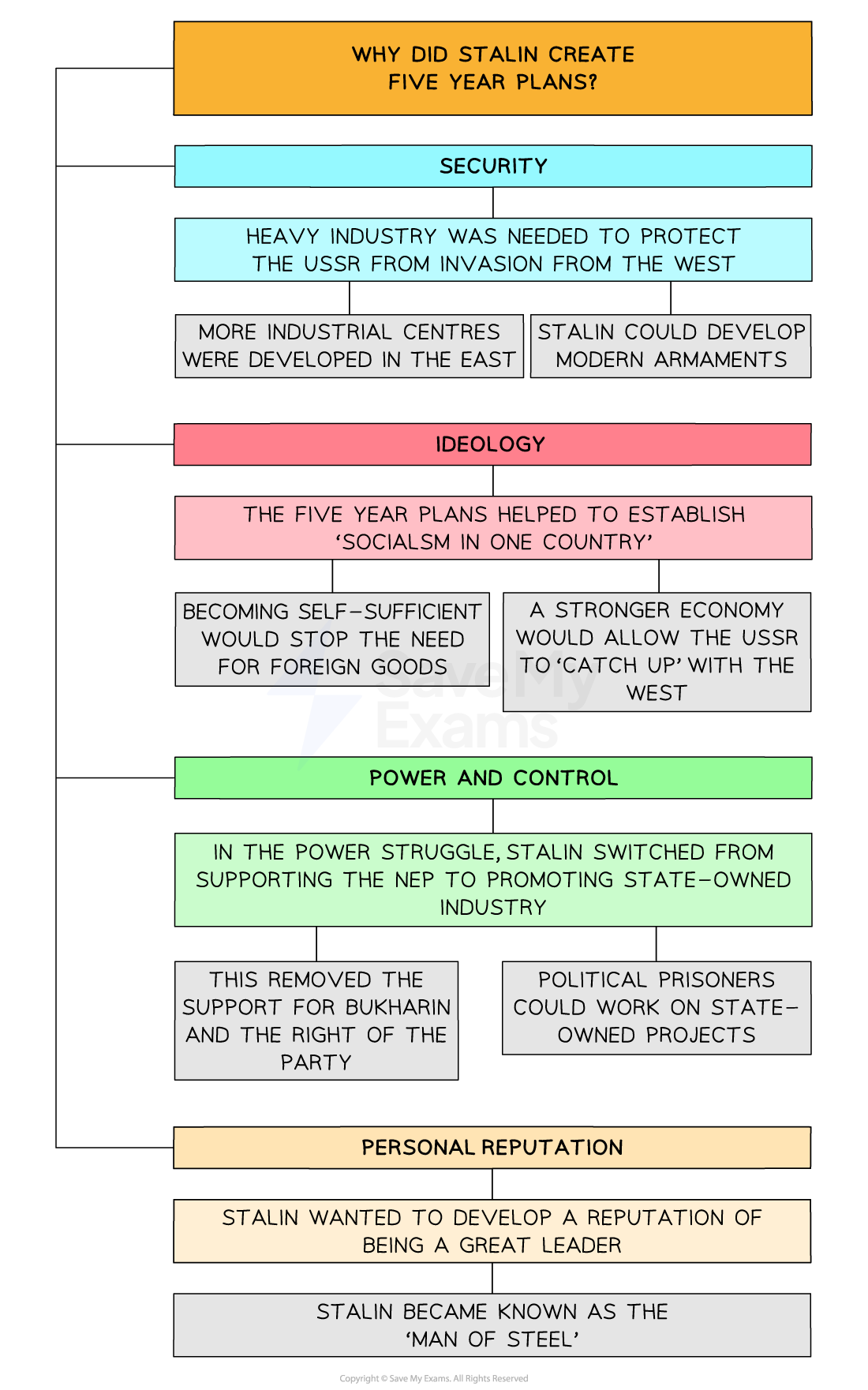
Reasons for the Five-Year Plans
The Five-Year Plans aimed to rapidly industrialise the USSR
Stalin introduced the concept in 1928
There were many motivations behind the Five-Year Plans
Details of Stalin's Five-Year Plans
Details of Stalin's Five-Year Plans
Stalin created Gosplan to organise the Five-Year Plan
Gosplan stood for 'State Committee for Planning'
It set targets for:
Each region
Each factory
Each manager
Each worker
Targets were ambitious and usually unachievable
Stalin utilised foreign help and investment from countries like Britain and the USA to help
In Stalin's regime, there were three Five-Year Plans
The First Five-Year Plan
Dates | Targets | Outcomes |
|---|---|---|
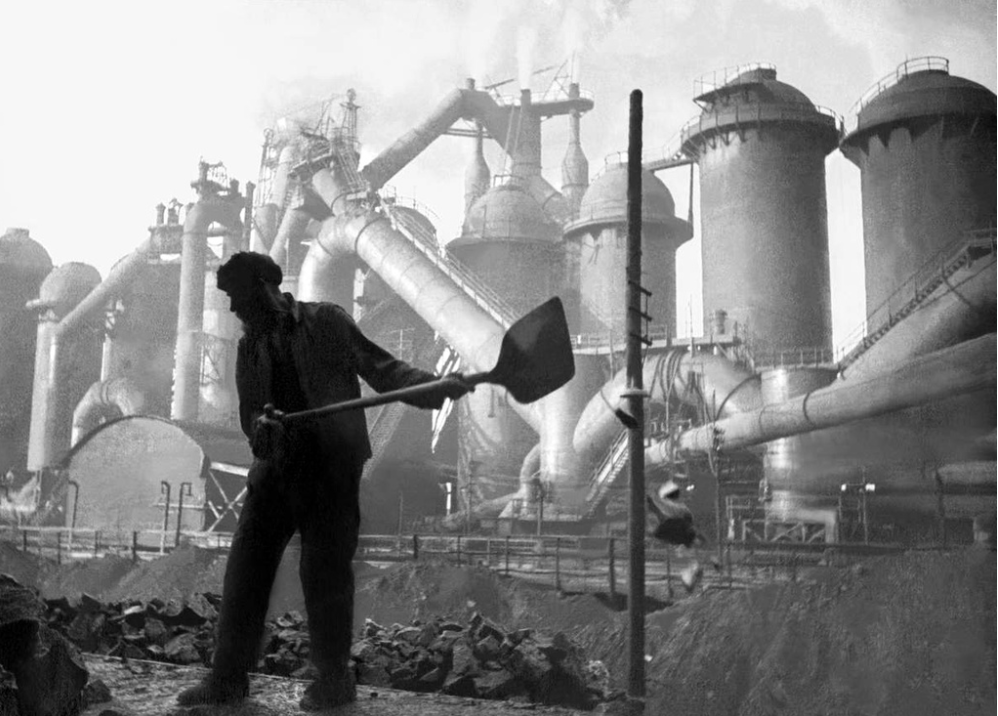
1928-1932 | To develop heavy industry such as coal, iron, steel and electricity | The building of steelworks such as Magnitogorsk. Coal and iron output doubled |
Increase production by 300% | Targets were unrealistic so they could not be met. There was a shortage of skilled workers |
The Second Five-Year Plan
Dates | Targets | Outcomes |
|---|---|---|
1933 - 1937 | To further develop heavy industry | Heavy industry production more than doubled |
To focus on lighter industries such as chemicals, railways and communication | The Moscow Railway was completed. However, targets were still too unrealistic and output was of poor quality |
The Stakhanovite Movement
The movement began during the second Five-Year Plan in 1935
Its name came from Aleksei Stakhanov
Stakhanov reportedly mined 102 tons of coal in less than 6 hours (14 times his quota) on 31 August 1935
The communist government embraced Stakhanov's achievement
Stakhanov travelled the country as a national celebrity
The government gave Stakhanov a home, extra pay and more holiday
The government organised contests all over the country to find the best worker in each industry
The publicity attracted people to follow Stakhanov's example
On 1 February 1936, Nikita Izotov reportedly mined 640 tons of coal in a single shift
Stakhanovites were located in multiple industries in towns and the countryside
Stakhanov and his followers likely did not achieve these levels of output
It only increased expectations and pressure on workers and managers
The Third Five-Year Plan
Dates | Targets | Outcomes |
|---|---|---|
1938 - 1941 | To mechanise and improve agriculture | The Second World War meant the plan had to be abandoned |
To produce some consumer goods | There was a lack of good managers and specialists due to Stalin's purges |