Why Did Stalin Introduce Collectivisation?
How Significant was Collectivisation for the USSR? - Summary
Collectivisation was a significant policy introduced by Stalin in 1928. It aimed to combine individual farms into collective farms. Some of these farms were owned and managed by the state. This policy had several significant impacts on the USSR.
Economically, collectivisation aimed to increase agricultural productivity. By creating large farms, peasants could use modern resources and farming techniques. However, the forced collectivisation led to widespread resistance among peasants. Peasants destroyed crops, livestock and infrastructure. Collective farms were also poorly run and inefficient. These factors led to widespread famine and food shortages, particularly in Ukraine (the famine in Ukraine was called the Holodomor).
Collectivisation consolidated Stalin's control over agricultural communities. It began the process of dekulakisation. This aimed to eliminate the influence of wealthy kulaks, who were seen as a threat to the socialist state. Collectivisation strengthened the state's grip on the rural population.
Socially, collectivisation resulted in the suffering of millions of peasants. The state forcibly relocated peasants, causing the loss of their land. Peasants who resisted collectivisation faced punishment. The policy disrupted traditional rural communities and led to social unrest.
Reasons for Collectivisation
Reasons for Collectivisation
While the Five-Year Plans focused on rapid industrialisation, collectivisation aimed to improve agricultural output
Stalin introduced the concept in 1928
There are many motivations behind collectivisation
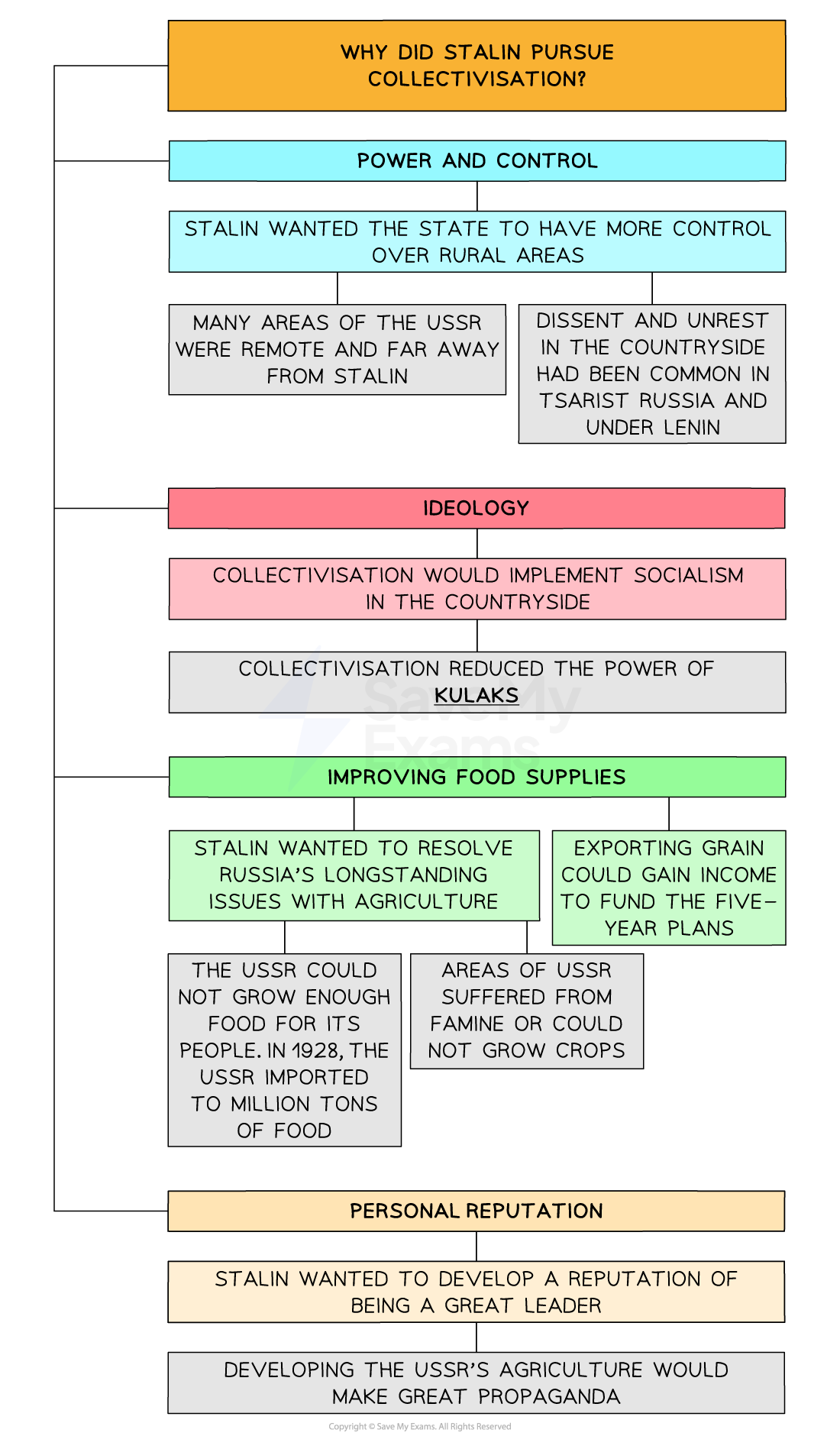
How Did Collectivisation Work?
How did Collectivisation Work?
Stalin was forced to introduce collectivisation in two stages:
Stage One | Stage Two |
|---|---|
Increase the mechanisation of farming and bring the peasants under government control | The slowing down of collectivisation and the introduction of machine tractor stations (MTS) |
The Process of Collectivisation
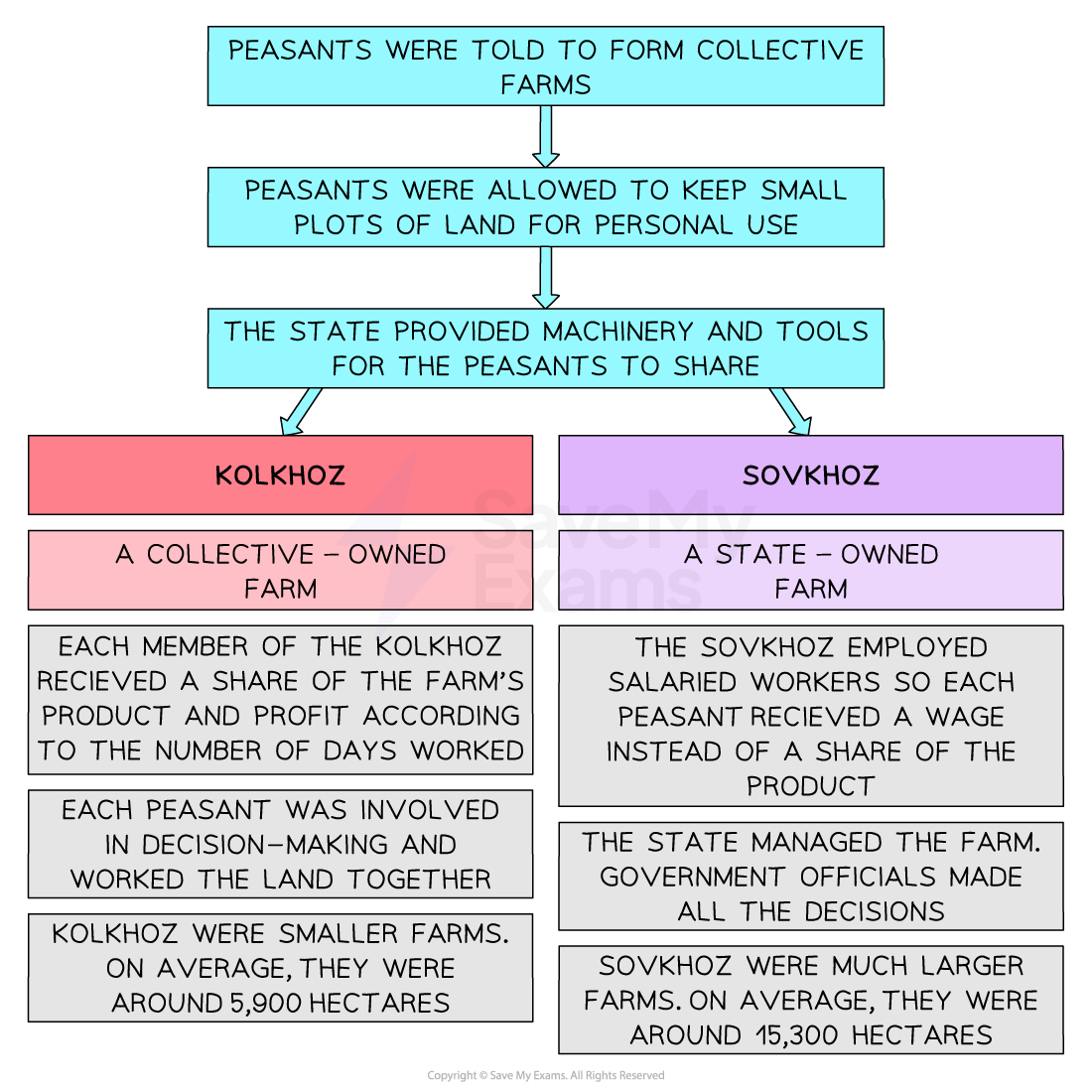
What Issues did Collectivisation Cause?
The state forced peasants to collectivise
Richer and poorer peasants resented the government for forcing them to leave their homes
Peasants continued to rebel
Peasants destroyed crops and animals rather than hand them over to the government
Collectivisation had damaging impacts on Ukraine
Ukraine was a profitable agricultural region of the USSR
It grew a vast amount of grain
Ukraine fought back against collectivisation
Ukraine had a strong cultural and national identity
The government punished Ukrainian peasants
They violently repressed the peasants who refused to collectivise
In 1932, they increased the government quota for grain despite there being a poor harvest
The government caused the 'Holodomor'
This means 'death by hunger'
The government took all the food from peasants who could not meet their quota