Cash Books & The General Journal
The cash & petty cash books
The cash & petty cash books
What are the cash book and the petty cash book?
The cash book and petty cash book are books of prime entry
They record all transactions which involve the exchange of cash
Petty cash is used for small valued transactions
The book-keeper gets the information from:
Receipts
Cheques & cheque counterfoils
Paying-in slips
Bank statements
Petty cash vouchers
The cash book and petty cash book are also part of the double entry system
This is different to the other books of prime entry
The general journal
The general journal
What is the general journal?
The general journal is also referred to as, simply, “the journal”
The journal is used to record all transactions that do not go into the other books of prime entry, such as:
Opening balances when a business is first created
Introducing capital
Taking drawings
Purchasing a non-current asset
Selling a non-current asset
Correcting errors
Transferring balances to the income statement
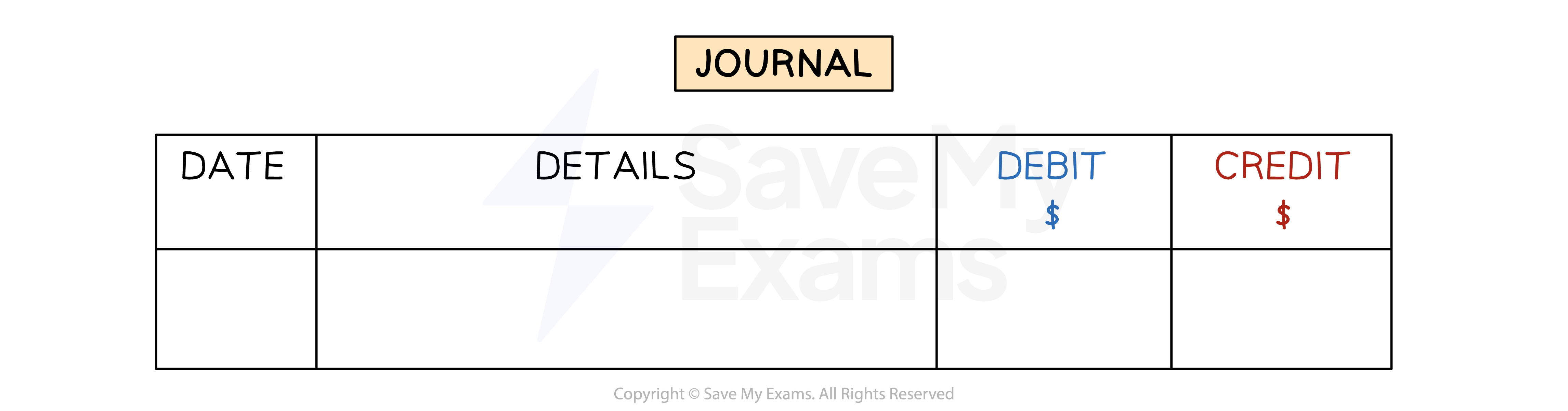
How do I make a journal entry for a transaction?
STEP 1
Enter the dateSTEP 2
Enter the name of the account(s) that need to be debited in the details columnIt is conventional to enter the debit accounts before the credit accounts
STEP 3
Enter the corresponding values in the debit columnSTEP 4
Enter the name of the account(s) that need to be credited in the details columnIt is conventional to leave an indent for the credit entries
STEP 5
Enter the corresponding values in the credit columnMake sure the total debit amount is equal to the total credit amount
STEP 6
Write a narrative for the journal entryThis is a brief explanation of the transaction
This is especially useful for non-regular transactions and for correction of errors