Balancing Accounts
Balancing accounts
Balancing accounts
Why do businesses balance their accounts?
Businesses balance their accounts at regular intervals
Usually at the end of a month
Balancing accounts helps to:
Keep the accounts accurate
See the current balance of an account
Allow managers to monitor progress
How do I balance a ledger account?
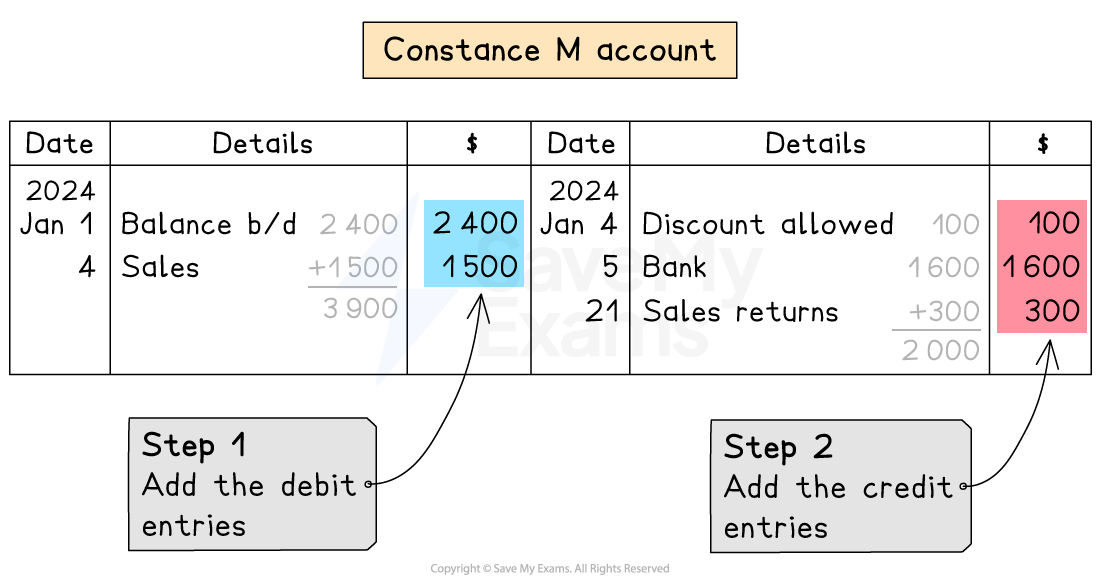
STEP 1
Add up the entries on the debit sideSTEP 2
Add up the entries on the credit sideSTEP 3
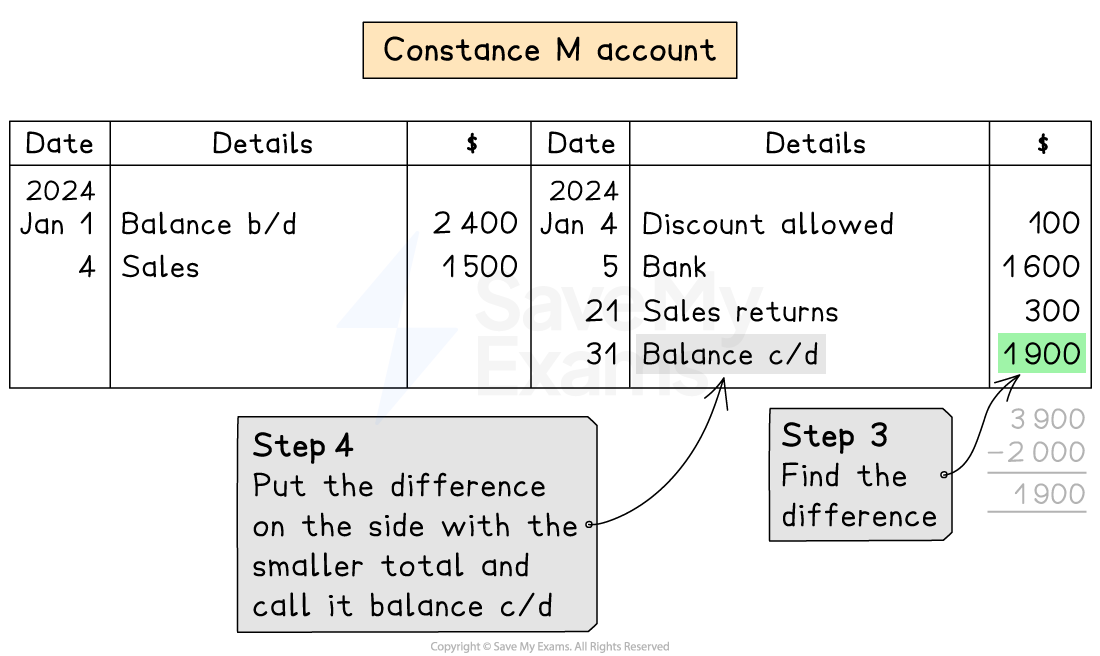
Find the difference between the two totalsSTEP 4
Put an entry with the difference on the side which has the smaller totalPut the date as the last day of that period
Usually the last day of the month
Call this entry balance c/d
c/d stands for carried down
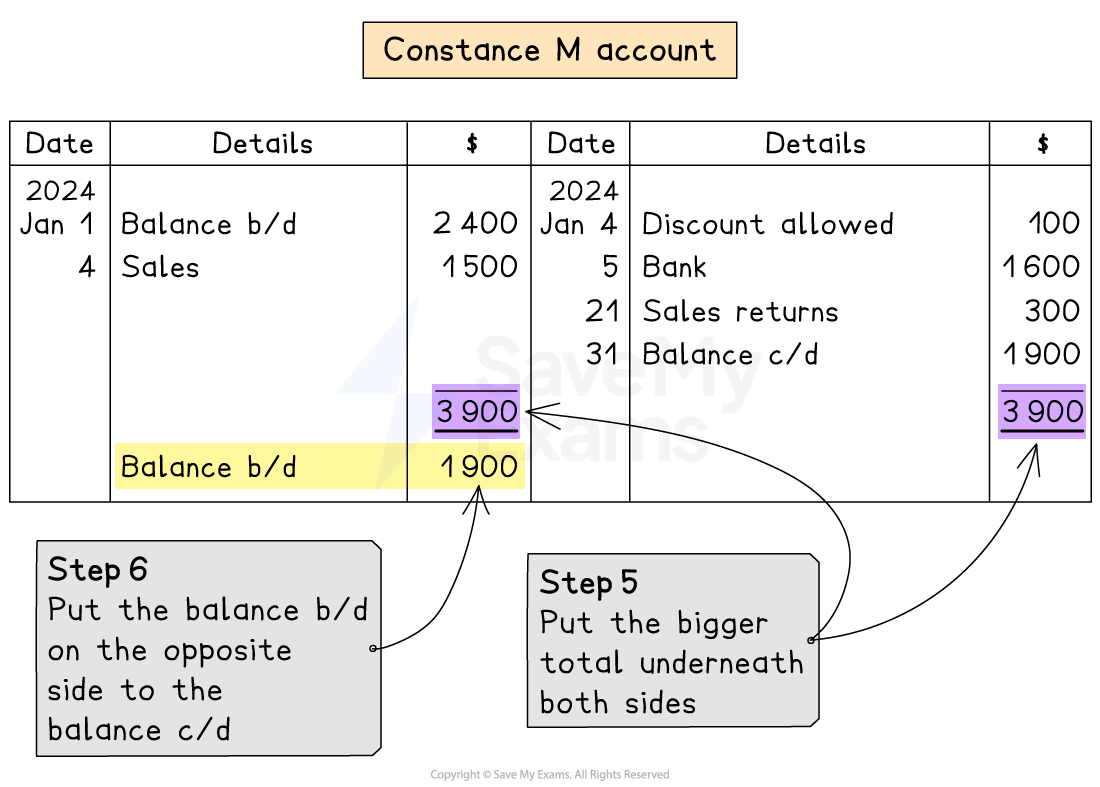
STEP 5
Write the new totals on each side of the accountThe totals should be in line with each other
Put a single line above the totals
Put a bold or double line underneath the totals
STEP 6
Put an entry of equal value to the balance c/d but on the other side after the totalsPut the date as the first day of the next period
Usually the first day of the month
Call this entry balance b/d
b/d stands for brought down
Example of balancing a trade receivable account