Introduction to Books of Prime Entry
Purpose of books of prime entry
Purpose of books of prime entry
What are books of prime entry?
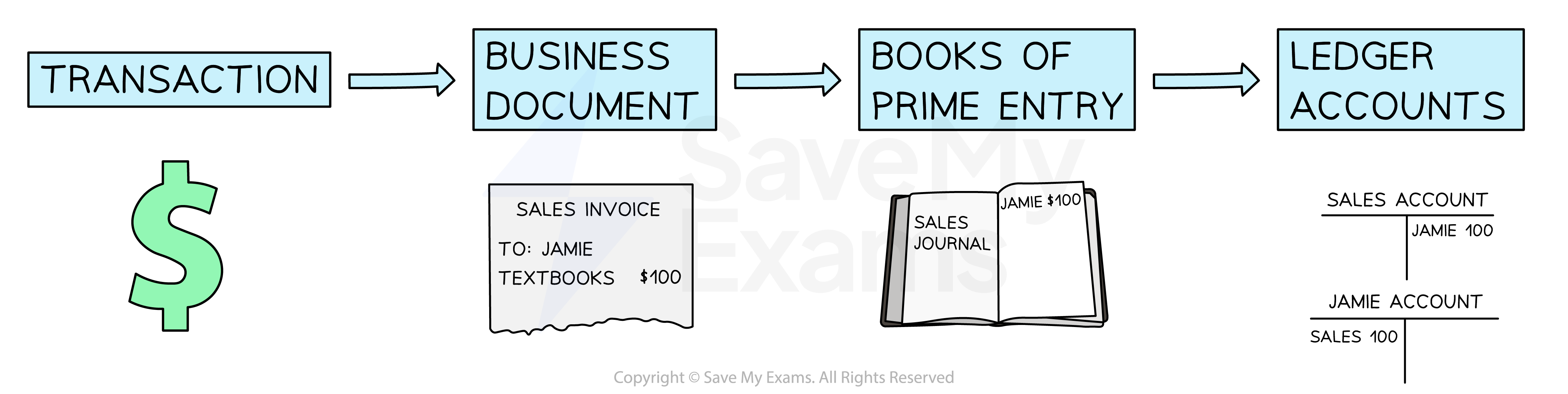
Books of prime entry are used to record the details of a transaction
Older terminology for these books includes
Subsidiary books
Books of original entry
Daybooks
Information is taken from the business documents and entered into the books of prime entry
The details are then transferred from the books of prime entry to the ledger accounts
The seven books of prime entry are:
Sales journal
Purchases journal
Sales returns journal
Purchases returns journal
Cash book
Petty cash book
General journal
What are the advantages of using books of prime entry?
Books of prime entry are another stage which can be used to check for errors
They can help in the preparation of control accounts to check the accuracy of the ledger accounts
Each book of prime entry collects the same type of transaction
The books allow managers to see the totals for different types of transactions easily
Therefore, there are fewer entries in some of the ledger accounts
Bigger businesses may have multiple book-keepers
Different book-keepers can be responsible for different books of prime entry without any risk of work being duplicated or missed
Sales journal
Sales journal
What is the sales journal?
The sales journal is a record of all credit sales
Cash sales are not recorded in the sales journal
They are recorded directly into the cash book
It contains:
The dates of sales
The names of the credit customers
The amounts for each of the sales
The amounts should be after trade discounts have been applied to the list prices
The book-keeper uses the sales invoices that were issued to enter the information into the sales journal
The totals are transferred to the ledger accounts at regular intervals
Credit the sales account with the total
Call this entry “Sales journal”
Debit the individual trade receivables accounts
Sales returns journal
Sales returns journal
What is the sales returns journal?
The sales returns journal is a record of all the returns from credit customers
It contains:
The dates of the returns
The names of the credit customers
The amounts for each of the returns
The book-keeper uses the credit notes that were issued to enter the information into the sales returns journal
The totals are transferred to the ledger accounts at regular intervals
Debit the sales returns account with the total
Call this entry “Sales returns journal”
Credit the individual trade receivables accounts
Purchases journal
Purchases journal
What is the purchases journal?
The purchases journal is a record of all credit purchases
Cash purchases are not recorded in the purchases journal
They are recorded directly into the cash book
Purchases of non-current assets are not recorded in the purchases journal
They are recorded directly into the cash book
It contains:
The dates of the purchases
The names of the credit suppliers
The amounts for each of the purchases
The book-keeper uses the purchases invoices that were received to enter the information into the purchases journal
The totals are transferred to the ledger accounts at regular intervals
Debit the purchases account with the total
Call this entry “Purchases journal”
Credit the individual trade payables accounts
Purchases returns journal
Purchases returns journal
What is the purchases returns journal?
The purchases returns journal is a record of all the returns to credit suppliers
It contains:
The dates of the returns
The names of the credit suppliers
The amounts for each of the returns
The book-keeper uses the credit notes that were received to enter the information into the purchases returns journal
The totals are transferred to the ledger accounts at regular intervals
Credit the purchases returns account with the total
Call this entry “Purchases returns journal”
Debit the individual trade payables accounts