The Cash Book
Cash or Bank
Cash or bank
Do I enter a transaction in the cash account or the bank account?
Enter the transaction in the cash account if physical money is exchanged
Paying a supplier using cash
Receiving cash from a customer
Taking money from the till for personal use
Enter the transaction in the bank account if there is no physical money involved
Transactions involving a bank transfer
Paying an invoice or bill by cheque
Receiving a cheque from a customer
Standing orders and direct debits
Some transactions are entered into both the cash and bank accounts
Depositing cash from the business into the business bank account
Withdrawing cash from the business bank account for business use
The Cash Book
The cash book
What is the cash book?
The cash book has two functions
It is a book of prime entry
It is a ledger account for both the cash and bank accounts
The cash book records all cash transactions
Both physical cash and cash in the bank
The cash book is part of the double entry system
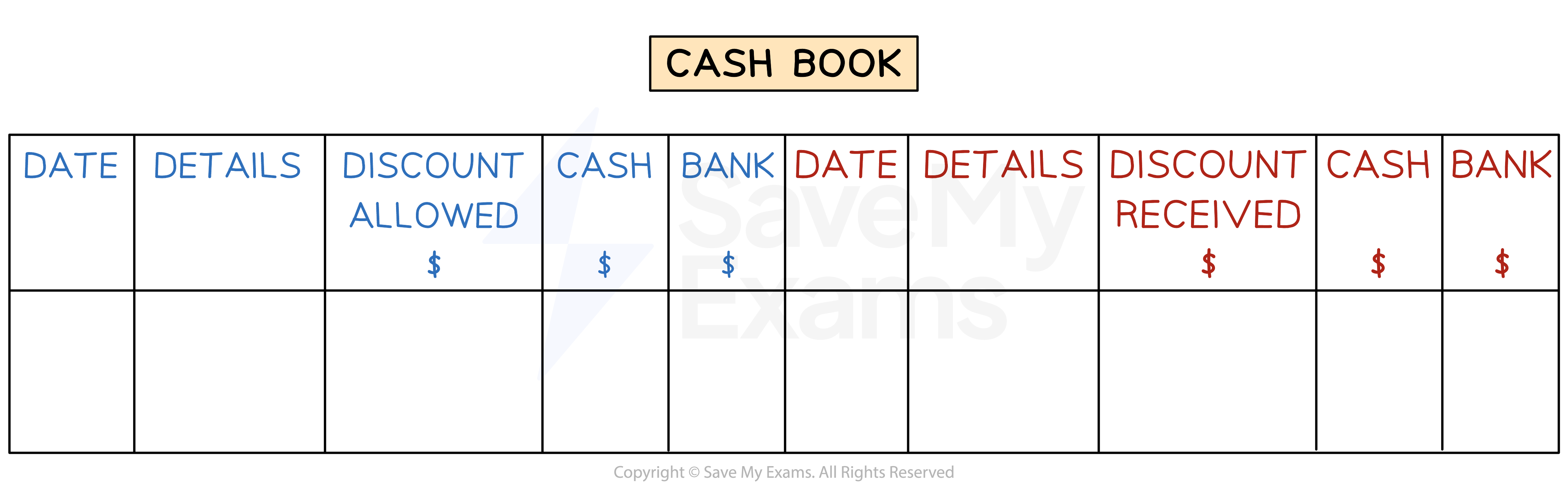
There are columns for the dates and details just like other ledger accounts
There are three columns for the value of the transaction on both sides of the cash book
Discount columns
Discount allowed on the debit side
Discount received on the credit side
Cash columns
Bank columns
Which side should the balances be on?
The balance for the cash account is always on the debit side
Cash is always an asset
It can never be a liability
The balance for the bank account can be on either side
It is on the debit side if the business has money in the bank
It is on the credit side if the business is overdrawn
How do I enter transactions into the cash book?
STEP 1
Identify whether the transaction affects the cash or bank accountSTEP 2
Decide whether the account should be debited or creditedDebit the account if the business is receiving money
Credit the account if the business is losing money
STEP 3
Include any discount that was allowed or received
What are contra entries in the cash book?
A contra entry is for a transaction that is entered into both sides of the cash book
It will be entered in the cash column on one side
It will be entered in the bank column on the other side
The two transactions which result in contra entries are:
Withdrawing cash from the business bank account for business use
Debit the cash account
Credit the bank account
Depositing cash from the business into the business bank account
Debit the bank account
Credit the cash account
Balancing the Cash Book
Balancing the cash book
How do I balance the cash book?
Balance the cash columns just like any other ledger account
Ignore the other columns
Remember the balance is always brought down onto the debit side
Balance the bank columns just like any other ledger account
Ignore the other columns
The balance will be brought down onto the:
debit side if the business has money in the bank
credit side if the business is overdrawn
Do not balance the discount columns
You just need to total them up
They will likely be different totals
Where do I put the totals for the discount columns?
The cash book is the book of prime entry for discount
It records the discounts allowed and received
It is not part of the double entry system for discount
Enter the discount in the relevant accounts
The total on the left-hand side is the discount allowed
Debit the whole total to the discount allowed account
Label the entry as “cash book”
You do not need to put a separate entry for each transaction
Credit the relevant trade receivables accounts in the sales ledger
The total on the right-hand side is the discount received
Debit the relevant trade payables accounts in the purchases ledger
Credit the whole total to the discount received account
Label the entry as “cash book”
You do not need to put a separate entry for each transaction