Fossil Fuels
Common Fossil Fuels
Common Fossil Fuels
A fuel is a substance which when burned, releases heat energy
This heat can be transferred into electricity, which we use in our daily lives
Most common fossil fuels include coal, natural gas and hydrocarbons such as methane and propane which are obtained from crude oil
Hydrocarbons are made from hydrogen and carbon atoms only
The main constituent of natural gas is methane, CH4
Petroleum & Fractional Distillation
Petroleum & Fractional Distillation
Petroleum
Petroleum is also called crude oil and is a complex mixture of hydrocarbons which also contains natural gas
It is a thick, sticky, black liquid that is found under porous rock (under the ground and under the sea)
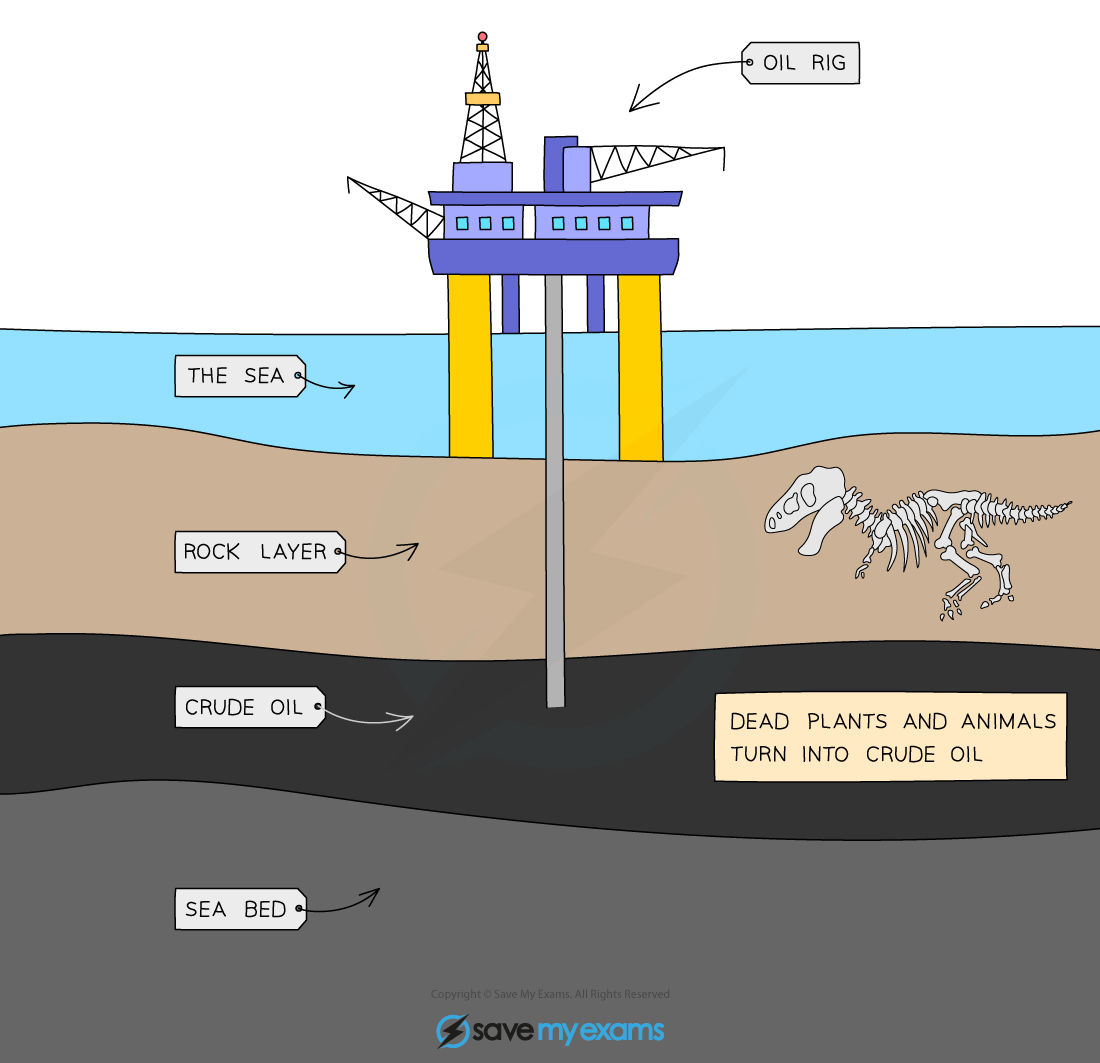
Diagram showing crude oil under the sea
Petroleum itself as a mixture isn't very useful but each component part of the mixture, called a fraction, is useful and each fraction has different applications
The fractions in petroleum are separated from each other in a process called fractional distillation
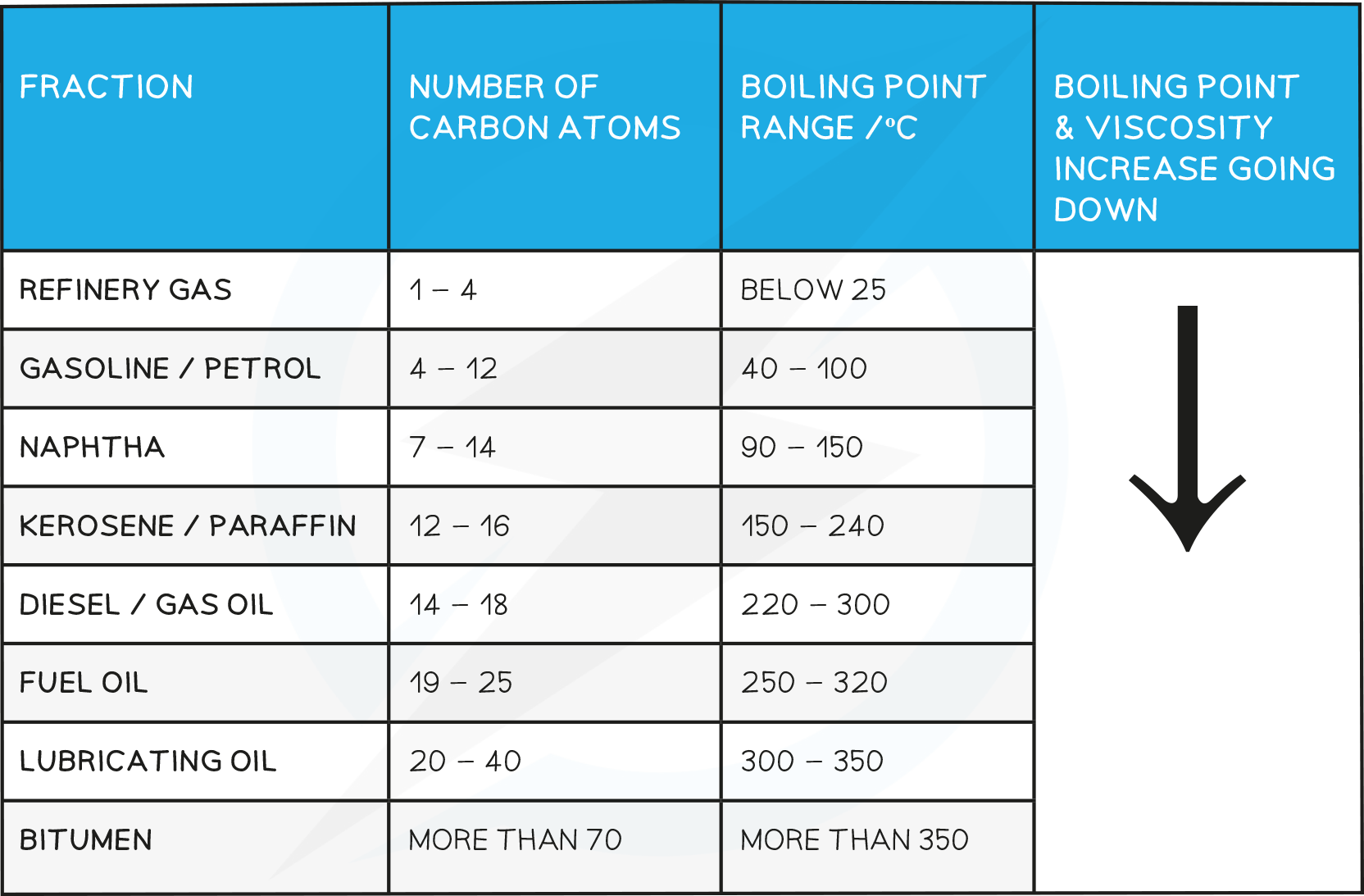
The molecules in each fraction have similar properties and boiling points, which depend on the number of carbon atoms in the chain
The boiling point and viscosity of each fraction increase as the carbon chain gets longer
Fractional Distillation
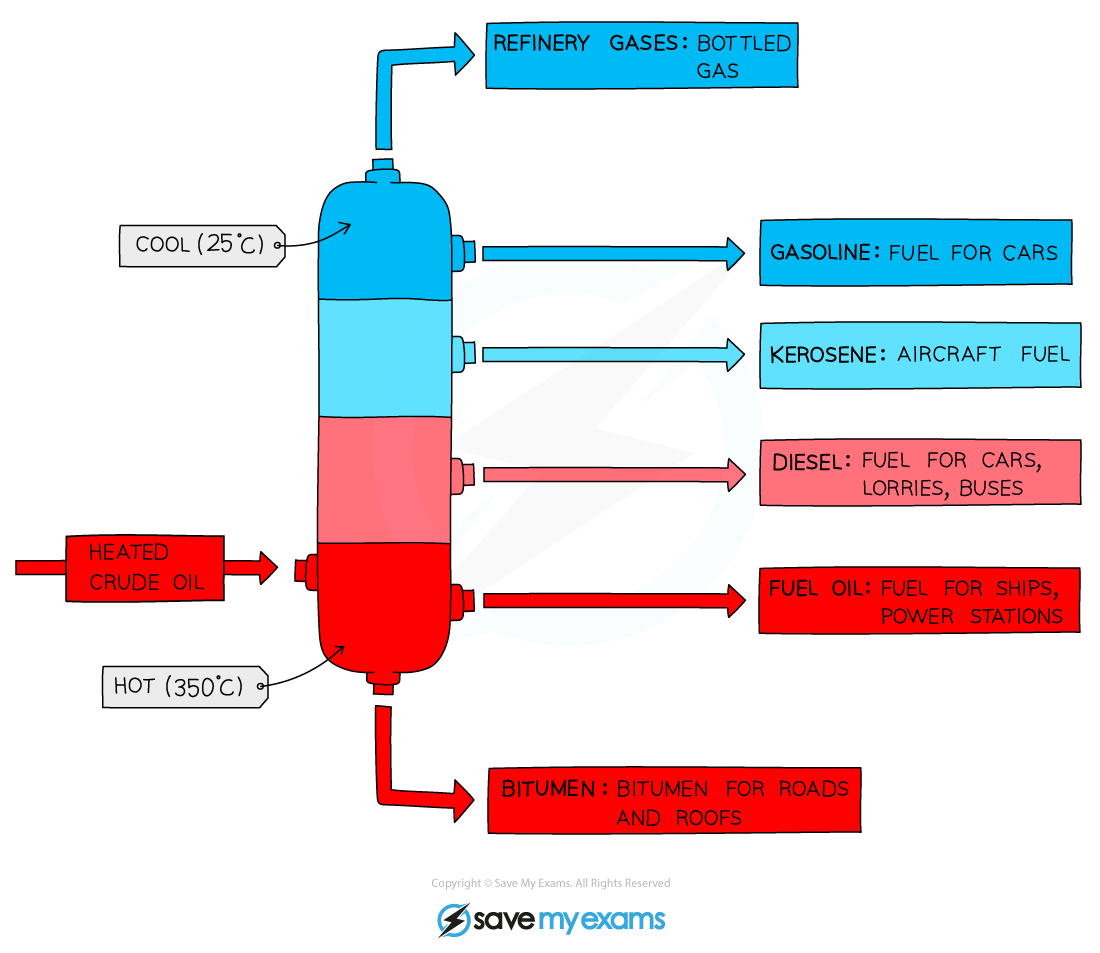
Diagram showing the process of fractional distillation
Fractional distillation is carried out in a fractionating column
The fractionating column is hot at the bottom and cools at the top
Crude oil enters the fractionating column and is heated so vapours rise
Vapours of hydrocarbons with very high boiling points will immediately turn into liquid and are tapped off at the bottom of the column
Vapours of hydrocarbons with low boiling points will rise up the column and condense at the top to be tapped off
The different fractions condense at different heights according to their boiling points and are tapped off as liquids.
The fractions containing smaller hydrocarbons are collected at the top of the fractionating column as gases
The fractions containing bigger hydrocarbons are collected at the lower sections of the fractionating column
Properties of Fractions
Viscosity
This refers to the ease of flow of a liquid.
High viscosity liquids are thick and flow less easily.
If the number of carbon atoms increases, the attraction between the hydrocarbon molecules also increases which results in the liquid becoming more viscous with the increasing length of the hydrocarbon chain.
The liquid flows less easily with increasing molecular mass
Colour
As carbon chain length increases the colour of the liquid gets darker as it gets thicker and more viscous
Melting point/boiling point
As the molecules get larger, the intermolecular attraction becomes greater.
More heat is needed to separate the molecules.
With increasing molecular size there is an increase in boiling point
Volatility
Volatility refers to the tendency of a substance to vaporise.
With increasing molecular size hydrocarbon liquids become less volatile.
This is because the attraction between the molecules increases with increasing molecular size
Uses of Fractions
Refinery gas: heating and cooking
Gasoline: fuel for cars (petrol)
Naphtha: raw product for producing chemicals
Kerosene: for making jet fuel (paraffin)
Diesel: fuel for diesel engines (gas oil)
Fuel oil: fuel for ships and for home heating
Lubricating oil: for lubricants, polishes, waxes
Bitumen: for surfacing roads
Trends in Properties