Polymers
Polymers: The Basics
Polymers: The Basics
Polymers are large molecules built by linking 50 or more smaller molecules called monomers
Each repeat unit is connected to the adjacent units via covalent bonds
Some polymers contain just one type of unit
Examples include poly(ethene) and poly(chloroethene), commonly known as PVC
Others contain two or more different types of monomer units and which are called copolymers
Examples include nylon and biological proteins
Different linkages also exist, depending on the monomers and the type of polymerisation
Examples of linkages are covalent bonds, amide links and ester links
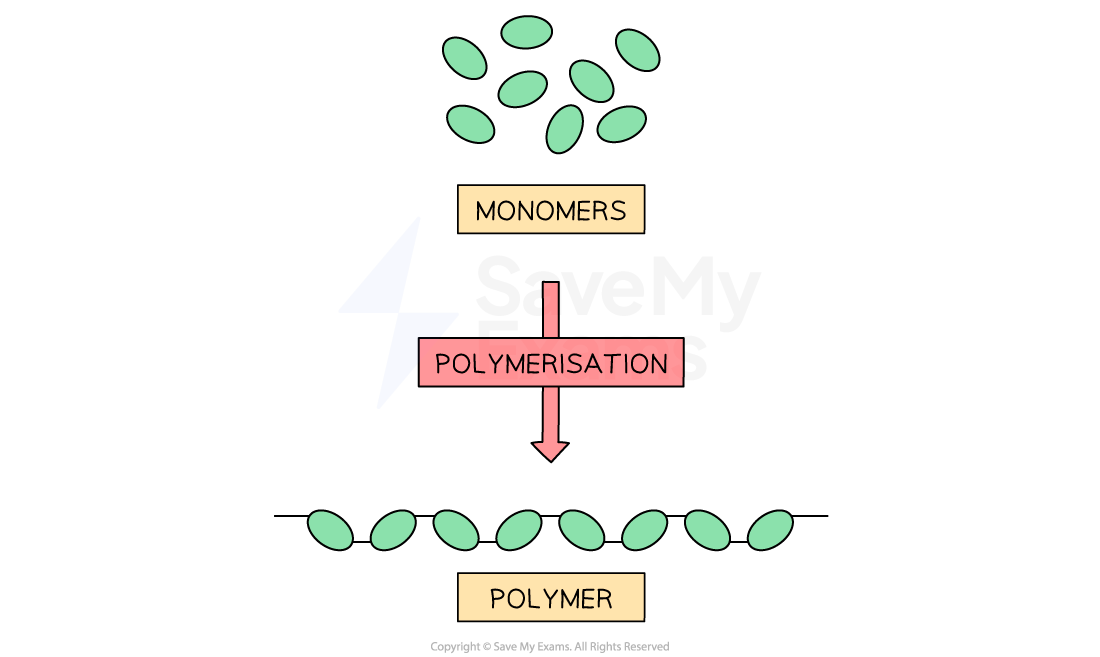
Diagram showing how lots of monomers bond together to form a polymer
Poly(ethene) is formed by the addition polymerisation of ethene monomers
Addition polymerisation involves the addition of many monomers to make a long chained polymer
In this case, many ethene monomers join together due to the carbon carbon double bond breaking
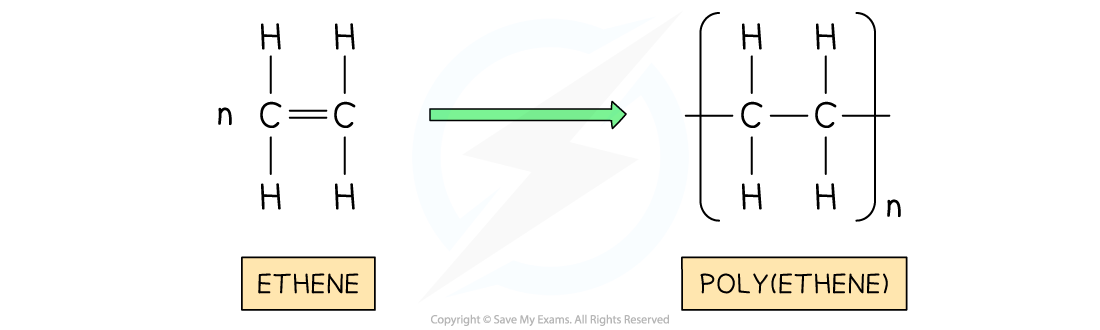
Poly(ethene) is formed by addition polymerisation using ethene monomers