Alkenes
Catalytic Crackingvideo
Catalytic Cracking
Alkenes are unsaturated hydrocarbons with carbon-carbon double bonds (C=C)
Their general formula is CnH2n
The presence of the double bond, C=C, means they can make more bonds with other atoms by opening up the C=C bond and allowing incoming atoms to form another single bond with each carbon atom of the functional group
Each of these carbon atoms now forms 4 single bonds instead of 1 double and 2 single bonds
This makes them much more reactive than alkanes
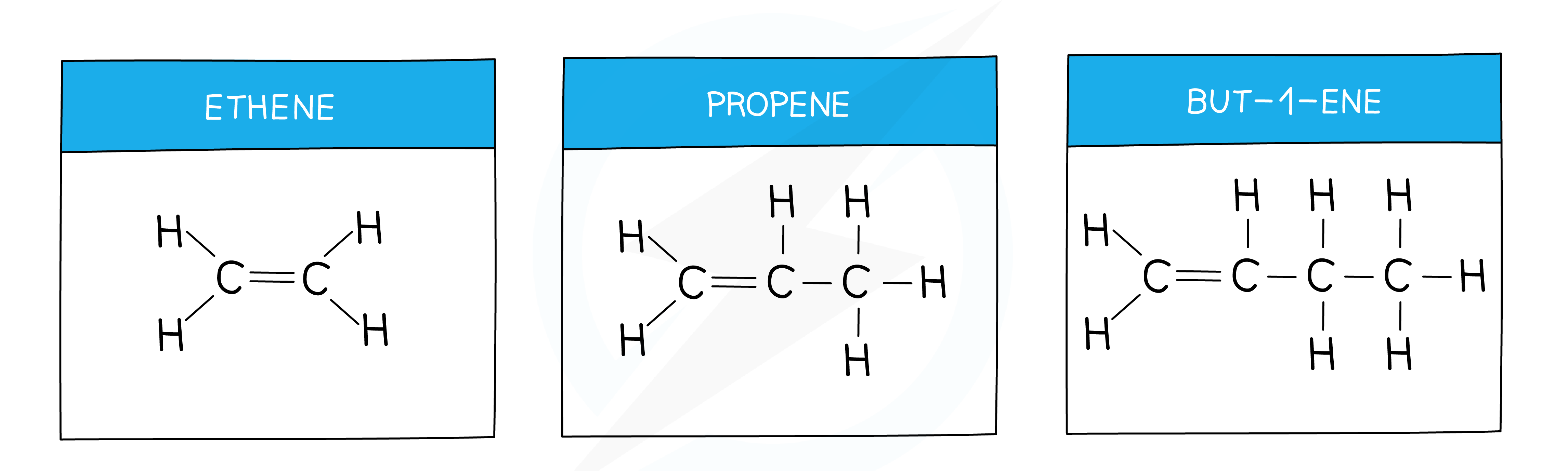
The displayed formula of the first three alkenes
Manufacture of Alkenes
Although there is use for each fraction obtained from the fractional distillation of crude oil, the amount of longer chain hydrocarbons produced is far greater than needed
These long chain hydrocarbon molecules are further processed to produce other products
A process called catalytic cracking is used to convert longer-chain molecules into short-chain and more useful hydrocarbons
Shorter chain alkanes, alkenes and hydrogen are produced from the cracking of longer chain alkanes
Alkenes can be used to make polymers and the hydrogen used to make ammonia
Kerosene and diesel oil are often cracked to produce petrol, other alkenes and hydrogen
Cracking involves heating the hydrocarbon molecules to around 600 – 700°C to vaporise them
The vapours then pass over a hot powdered catalyst of alumina or silica
This process breaks covalent bonds in the molecules as they come into contact with the surface of the catalyst, causing thermal decomposition reactions
The molecules are broken up in a random way which produces a mixture of smaller alkanes and alkenes
Hydrogen and a higher proportion of alkenes are formed at higher temperatures and higher pressure
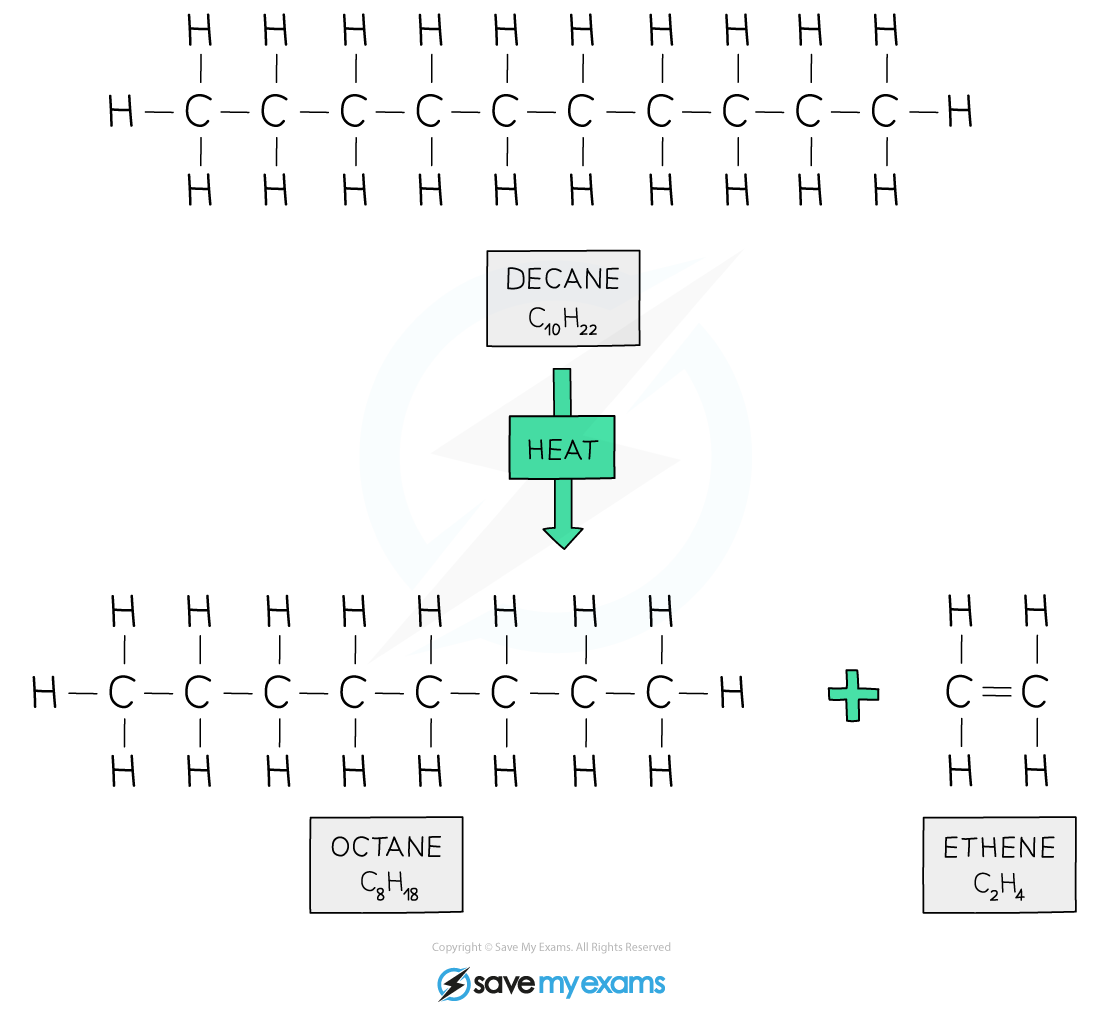
The 10 carbon molecule decane is catalytically cracked to produce octane for petrol and ethene for ethanol
Distinguishing from Alkanes
Distinguishing from Alkanes
Distinguishing Between Alkanes & Alkenes
Alkanes and alkenes have different molecular structures
All alkanes are saturated and alkenes are unsaturated
The presence of the C=C double bond allows alkenes to react in ways that alkanes cannot
This allows us to tell alkenes apart from alkanes using a simple chemical test using bromine water
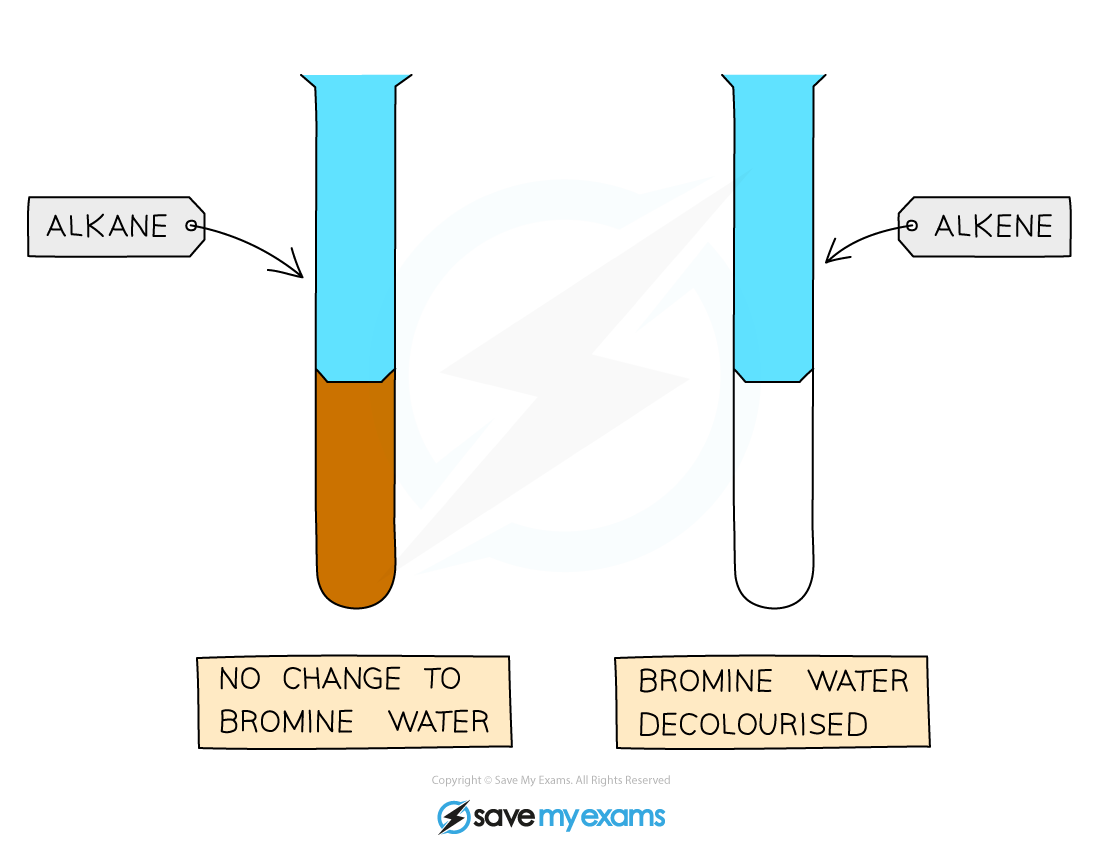
Bromine water is an orange coloured solution of bromine
When bromine water is shaken with an alkane, it will remain as an orange solution as alkanes do not have double carbon bonds (C=C) so the bromine remains in solution
When bromine water is shaken with an alkene, the alkene will decolourise the bromine water and turn colourless as alkenes do have double carbon bonds (C=C)
The bromine atoms add across the C=C double bond hence the solution no longer contains the orange coloured bromine
This reaction between alkenes and bromine is called an addition reaction
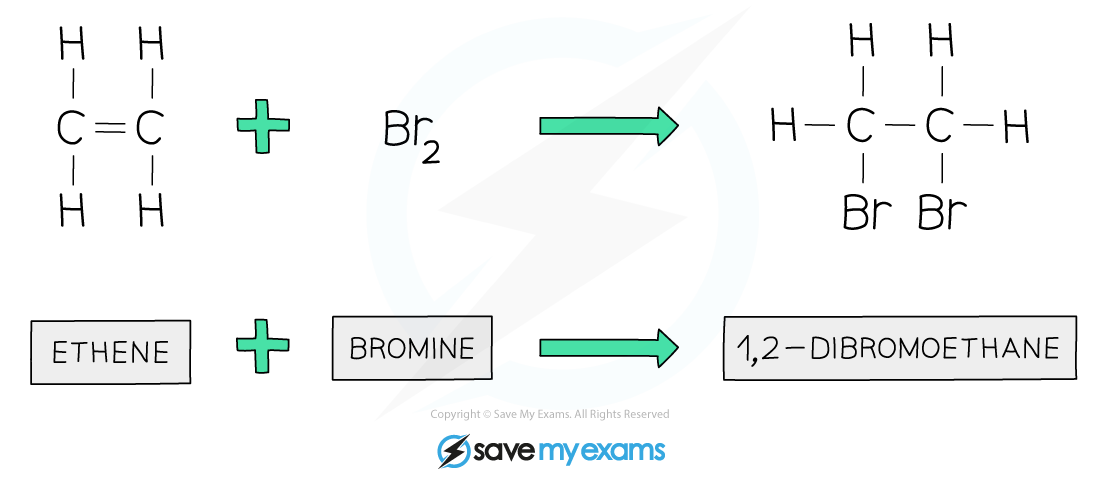
Each carbon atom of the double bond accepts a bromine atom, causing the bromine solution to lose its colour