Accounts for Clubs & Societies
Clubs & societies
Clubs & societies
What types of businesses are clubs and societies?
Clubs and societies are classed as non-trading organisations
These types of businesses provide a service or facility for a fee called a subscription
They do not operate with the sole aim of making a profit
What financial statements are prepared for clubs and societies?
Clubs and societies do not always keep a full set of accounting records
Their main accounting records tend to be
A receipts and payments account
This is a simple cash book
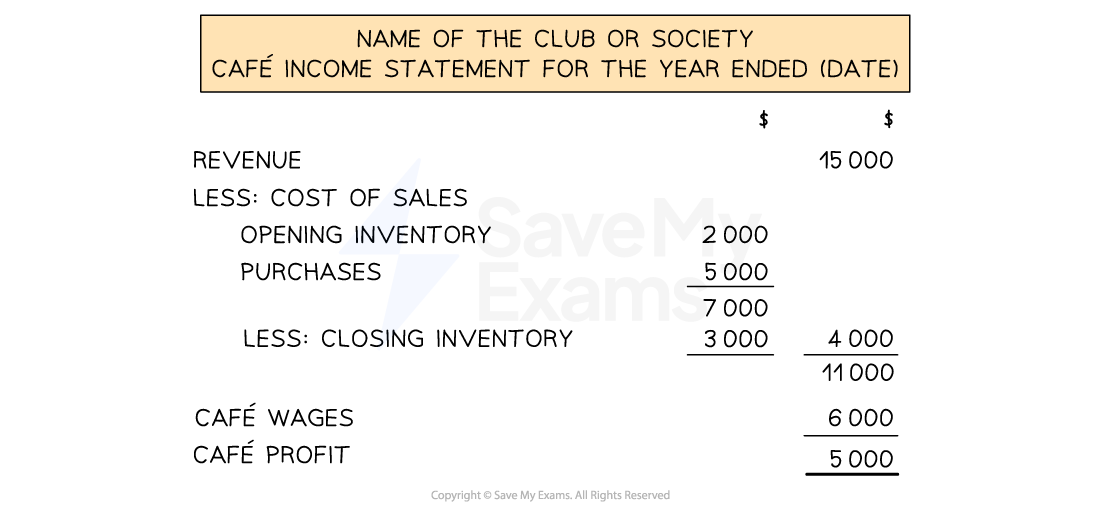
Trading sections of income statements for each one of any trading activities
Such as a café or a shop
These are prepared in the same way as for sole traders
An income and expenditure account
This shows the sources of income and expenses of the organisation
This is equivalent to the income statement for a sole trader
A subscription account
This calculates the fees that should have been received from members during the year
A statement of financial position
This is prepared in a similar way to that of sole traders
Income statement for clubs & societies
Income statement for clubs & societies
Why might clubs and societies prepare income statements?
Income statements are prepared when the club or society involves a trading activity which buys and sells goods to raise extra money
A separate income statement is prepared for each trading activity
The profits or losses made from the trading activities are transferred to the income and expenditure account
What is included in the income statements for trading activities?
The income statement is prepared similarly to the trading section of the income statement of any other business
The main difference is that the gross profit is not always calculated