Statement of Affairs
Statements of affairs
Statements of affairs
What is a statement of affairs?
A statement of affairs is similar to a statement of financial position
The difference is that the business has not used a full set of accounting records
Therefore the business cannot complete an income statement to find the profit or loss
It is prepared to find the missing capital figure at the start or the end of the financial year
It is prepared from the assets and liabilities of the business
The capital can be found using a rearrangement of the accounting equation
Capital = Assets - Liabilities
How do I prepare a statement of affairs?
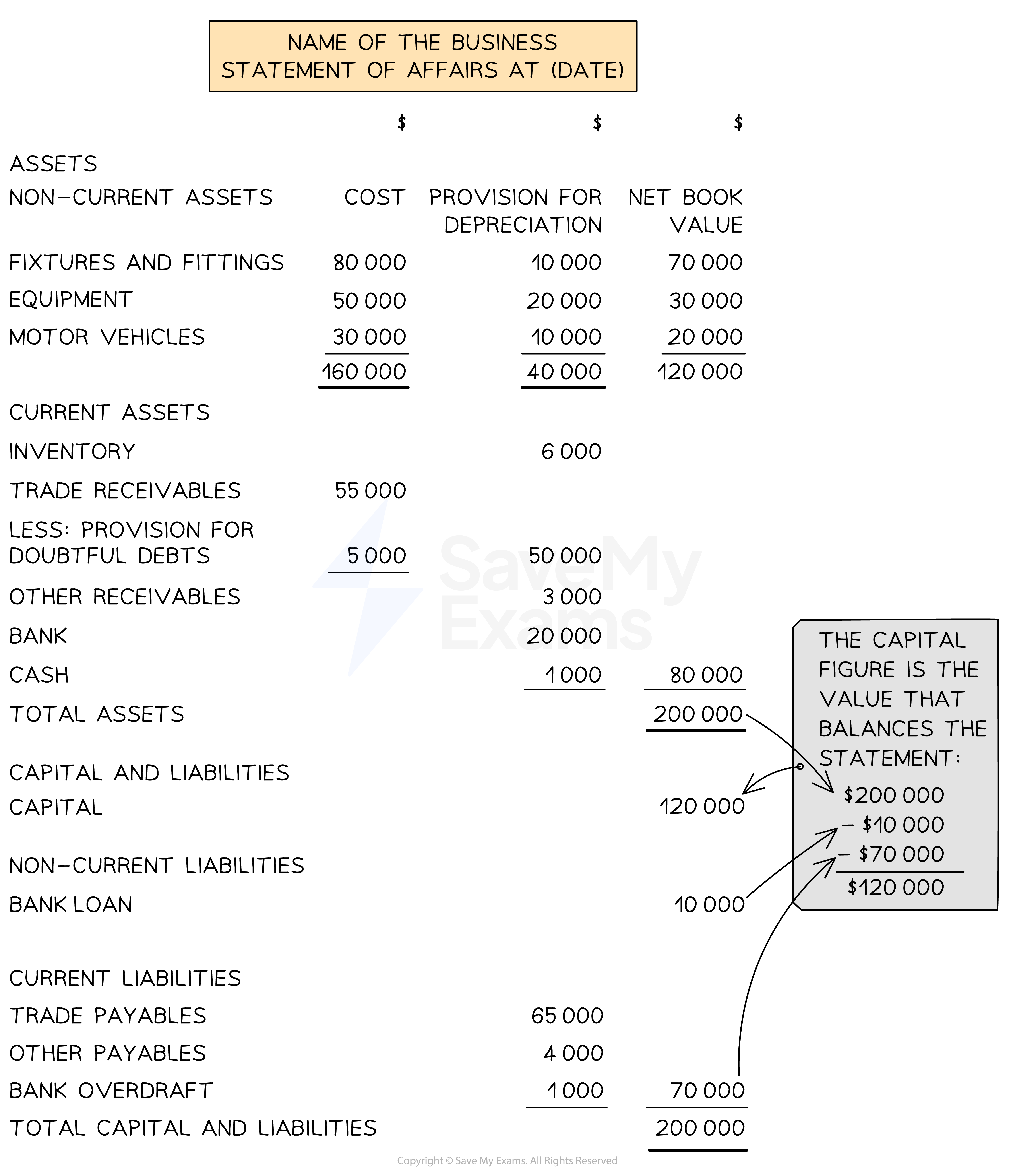
STEP 1
List all the assets and calculate the total assetsNon-current assets
Current assets
STEP 2
Write down the value for the total capital and liabilitiesIt is the same as the total assets
Leave the capital value blank for now
STEP 3
List all the liabilitiesNon-current liabilities
Current liabilities
STEP 4
Find the missing capital valueSubtract the total liabilities from the total assets
How can I use a statement of affairs to calculate the profit or loss for the year?
You can use a statement of affairs to calculate the opening or closing capital value
This can then be used to calculate the profit or loss for the year
Closing capital is calculated using:
Closing capital = Opening capital + Capital introduced - Drawings + Profit (or - Loss)
You can rearrange this to find the profit or loss:
Profit or loss = Closing capital - Opening capital + Drawings - Capital introduced
A positive value indicates a profit, a negative value indicates a loss
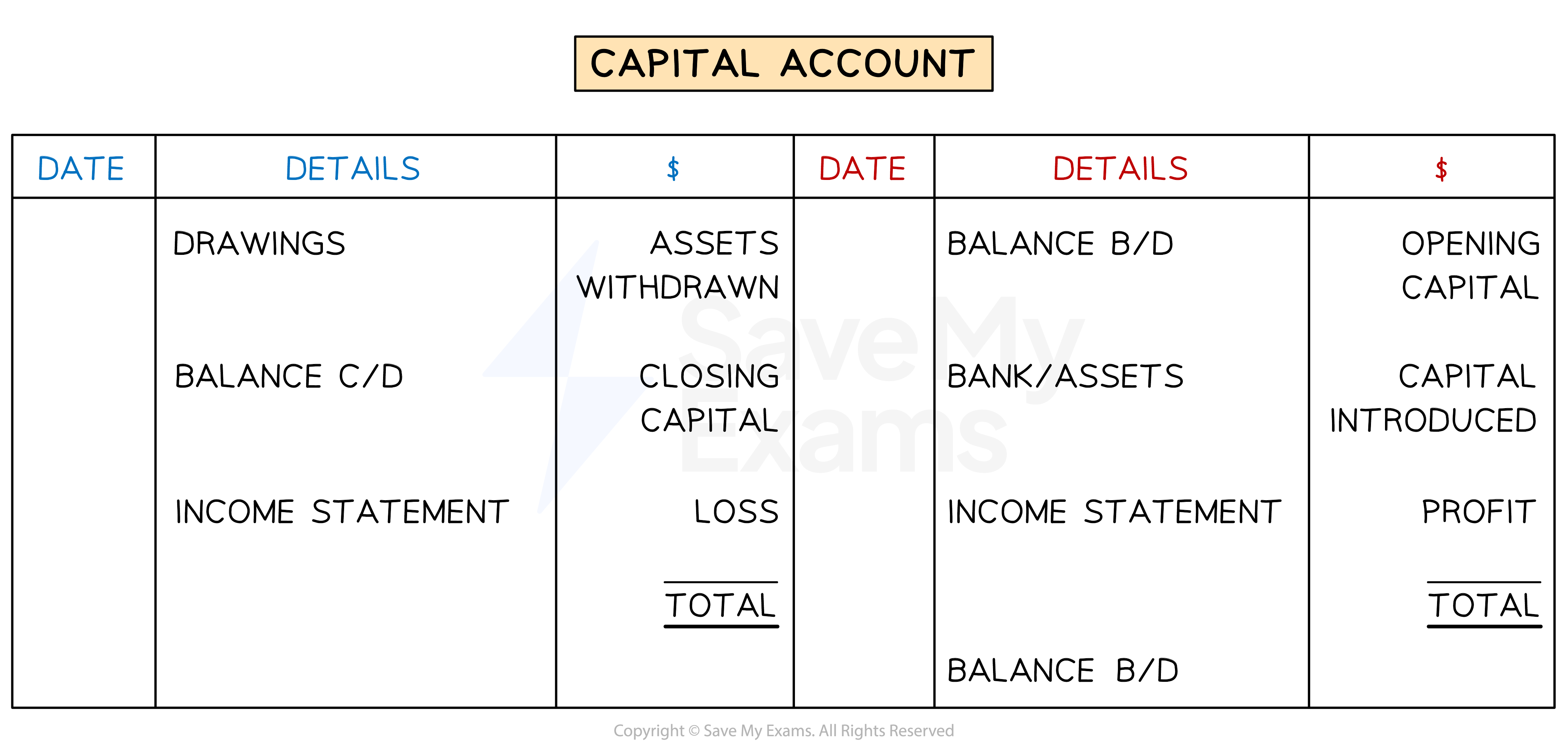
Alternatively, you can draw up the capital ledger account and find the value that balances the account
If the balancing value is on the debit side then it represents a loss
If the balancing value is on the credit side then it represents a profit