3.3.1 Industrial Systems
Industrial Systems
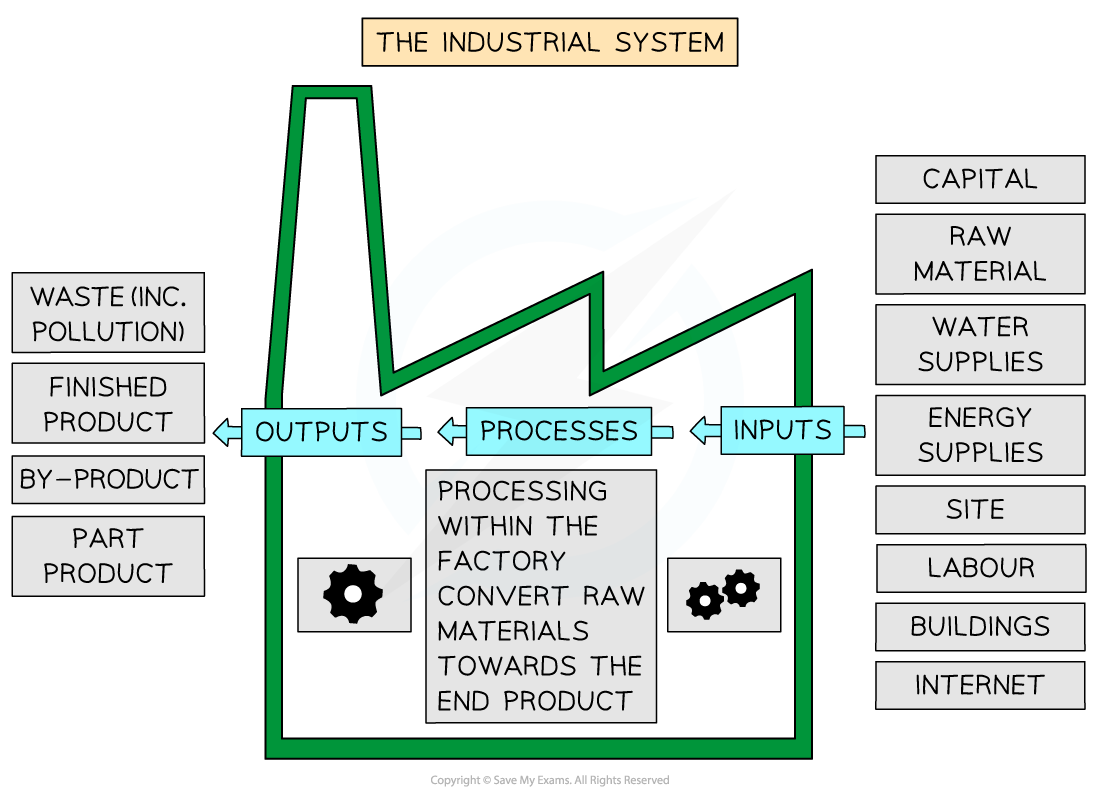
Industrial systems have inputs, processes and outputs
Inputs - basic items needed to begin the process
Raw materials, labour, energy, capital, land and buildings etc.
Processes - activities that take place to make a finished product (goods)
Cutting, sewing, welding, brewing, painting, steel moulding etc.
Outputs - finished products, by-products, products for continued manufacturing elsewhere and waste
Finished products such as cars, clothing, beer, shoes etc.
By-product such as Marmite from beer brewing
Continued manufacturing (part manufacturing) such as cleaning wool or cotton, weaving wool or cotton for material, material made into clothes for a finished product etc.
Waste is produced with all manufacturing; it has no value but creates a cost for disposal
Manufacturing can be classified as:
Heavy - iron and steel manufacturing is heavy industry as it uses large, bulky raw materials on a huge scale producing big items
Light - computer manufacturing, smart phone assembly, clothing, micro-brewing etc.
Some industries need a lot of processes or processing, and this can lead to heavy pollution
Industry | Input | Processes | Output | Impact |
|---|---|---|---|---|
Specialised steel production | alloys such as chromium, cobalt | electric arc furnace, oxygen furnace, rolling, cutting | steel slabs, ingots, sheets, waste, slag, gases | noise, dust, air pollution, smell, water pollution |
Iron production | iron ore, coke, limestone to separate iron from impurities, water, recycled scrap iron, | blast furnace to melt iron ore, coke oven, rolling into sheets, cutting into lengths | cast iron, pig iron, slag, sulphur dioxide, carbon dioxide, hydrogen sulphide, water, heat | large building, noise, air pollution, smell, water pollution, contaminated cooling water, scrubber waste, risk of fire and explosions |
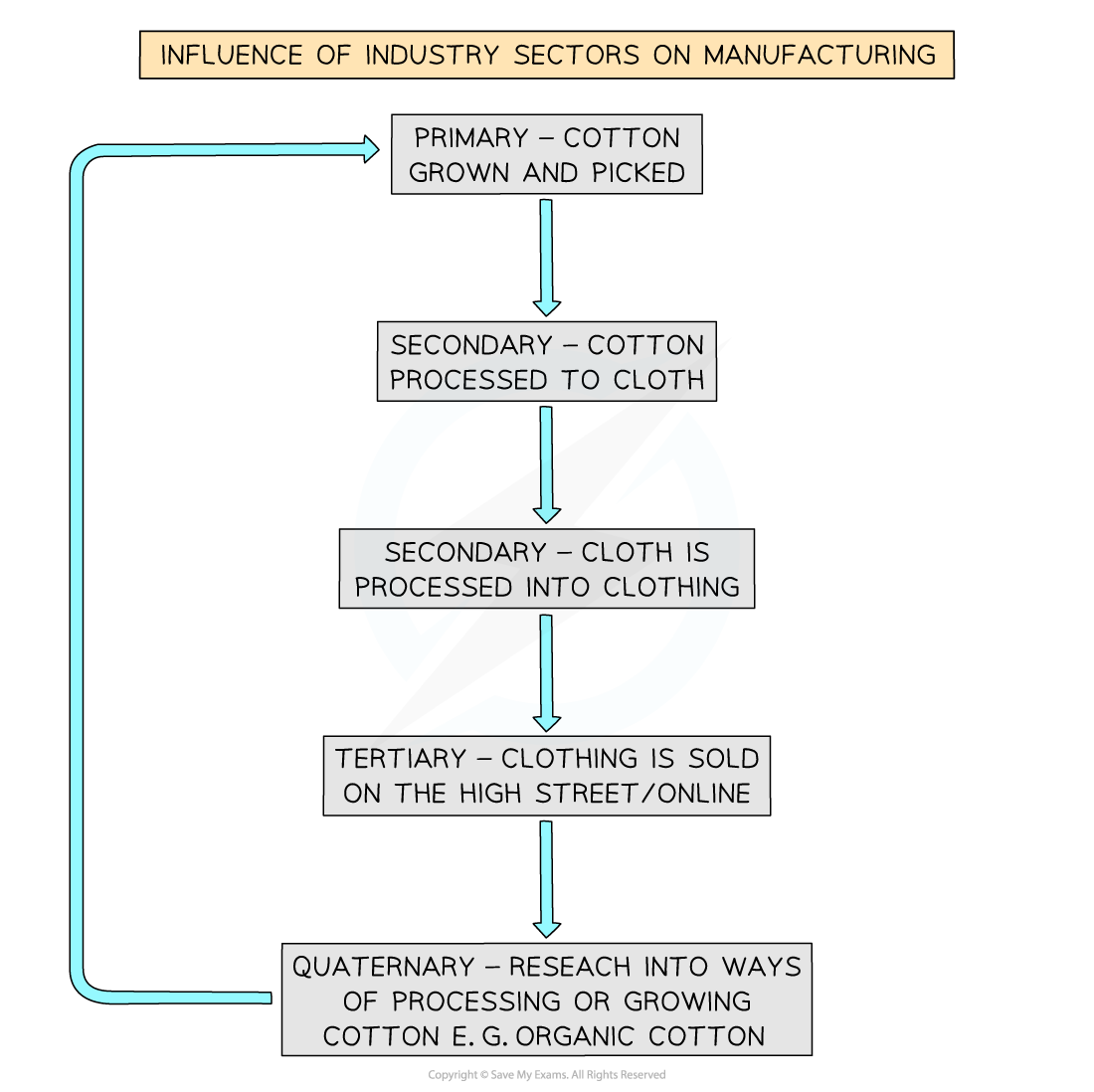
The sectors of industry are interrelated, and an individual industry will often use more than one sector to produce product
High-tech industry
Fastest growing industry in the world
Most MEDCs and NICs have at least one hub of high-tech industry
The industry has a high degree of research and development to maintain a competitive edge
Manufacturing is mostly computer automated
Outputs include precision instrumentation, pharmaceuticals, biotechnology, mobile phones, vaccines etc.