3.4.3 Management of Tourism
Management of Tourism
Management of Tourism
Tourism has become so large-scale in so many parts of the world that it needs to be managed
Key tourist destinations are looking to sustainability to protect their incomes but also their environments
Some areas of sustainable tourism have been more successful than others, and it's important to remember that not all schemes work
Sustainable tourism
Organised so that environmental, social and economic levels can be maintained in the future without compromising the present areas
Tourism operates in a world of finite resources where its impact is becoming an issue
People and environmental groups are becoming more aware of the destination footprint and urge people to:
Fly less and stay longer
Consider slow travel
Stay locally
Avoid international chain hotels and inclusive holidays
Carbon-offset their flight
Ecotourism
The most easily recognised of sustainable tourism
This is a specialised form of tourism in which small numbers of people experience unusual or niche environments such as coral reefs, tropical rainforests, remote mountain areas, Antarctica, and other conservation areas
Community based tourism are becoming more popular in fragile environments of LEDCs, bringing larger benefits to the local community and employment
Ecotourism in Bhutan
Ecotourism is all about visitors leaving as small a carbon footprint as possible to the benefit of the community and environment
As one of the poorest developing nations, Bhutan can claim to have one of the most sustainable tourist industries in the world
Bhutan's tourist sector is one of the most exclusive travel destinations in the world with a reputation for a spectacular natural environment, authenticity, remoteness and a well-protected cultural heritage
Ecotourism is usually run by private enterprises; however, Bhutan's government has adopted a different approach of 'high value but low volume' tourism creating a sense of exclusivity
After 300 years of self-isolation, Bhutan opened its borders to tourists in 1974
Due in part to the realisation that hotels built for the King's coronation could be used to accommodate paying guests so boosting foreign exchange and providing much-needed revenue for the country's development
Initially only 2500 foreign visits were allowed, today that number has doubled reinforcing the exclusivity
All tourists are escorted in groups to specific locations and must travel on officially approved tour operators
All are expected to pay a 'Sustainable Development Fee' or surcharge of $200 (£167) per day
The surcharge goes towards offsetting tourist's carbon footprint and upskilling workers along with protecting Bhutan's unique heritage and spectacular mountain scenery
However, some argue that all it does is attract wealthier visitors and promote Bhutan as a niche destination
Ultimately, Bhutan's strategy does control the volume and impact of tourism
Protected areas
This involves protecting vast areas from development
National Parks - Yellowstone was the first to be established in 1872 and now there are more than 4000 worldwide
Many countries have National Forests, Country Parks, Areas of Outstanding Natural Beauty, World Heritage Sites and other areas considered important to protect
Tourist hubs
Concentratin of tourism into one particular area of a country or region
Impacts are seen to be kept to one place
However, it is difficult to keep tourism within boundaries and overspill occurs
Any benefits are kept within that area and not spread throughout the community
Creates division within the area
Quotas
Number of tourists would not be allowed to exceed a sustainable level
Based on a lottery system of so many places being available
Can be difficult to administer and causes tension
Conservation areas have permits allowing visitors to see unique areas or animals - coral reefs, mountain gorillas, Galapagos Islands etc
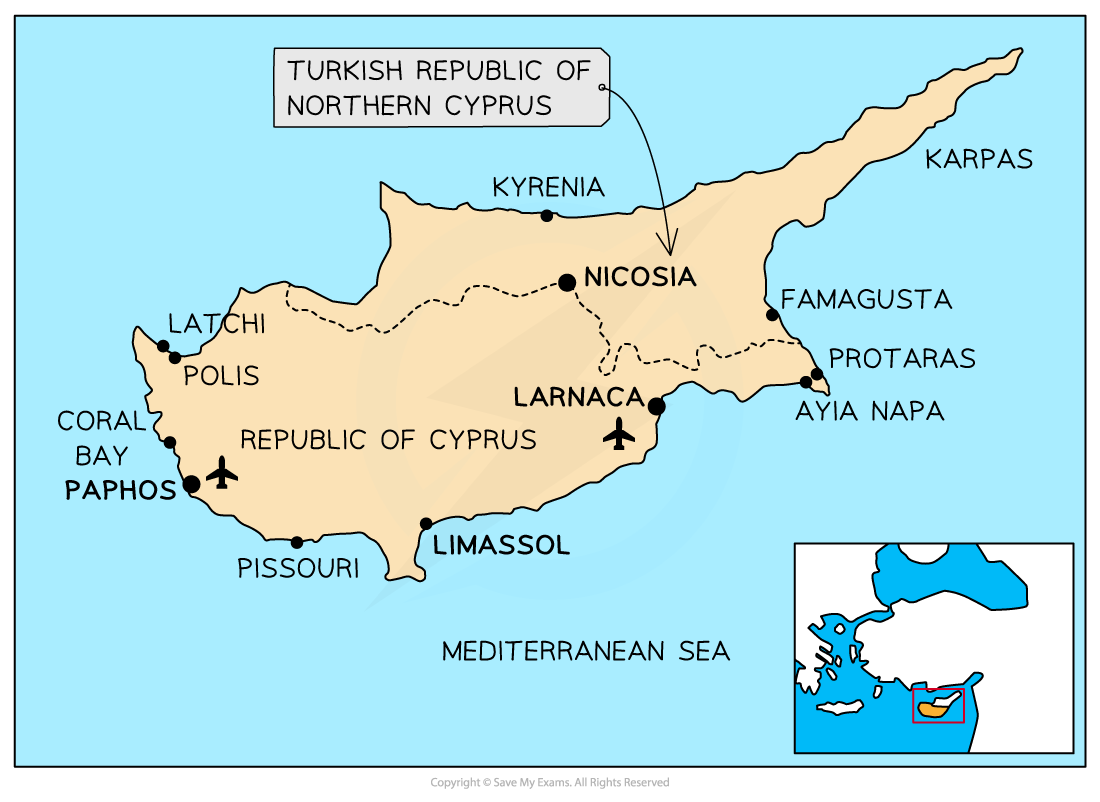
Case Study - Importance of Tourism to Cyprus
Case Study - Importance of Tourism to Cyprus
Tourism is important to Cyprus as it provides thousands of jobs and contributes an average of 20% to the country's GDP
Cyprus island is partitioned into the Turkish Northern Cyprus and the Greek Cypriot Republic of Cyprus
This case study will be focusing on the southern Greek part of the island
Cyprus has a Mediterranean climate with hot, dry summers (average 28°C) and rainy winters (average 10°C)
Due to a series of water shortages, annual demand now outstrips supply and Cyprus is classified as 'water poor'
There is an increasing reliance on desalinisation plants which increases energy consumption but only provides 45% of the increased demand and is harmful to the environment
In 2006 the Cyprus Sustainable Tourism Initiative (CSTI) was launched to develop a sustainable approach to tourism in Cyprus through:
Improve the quality of life in poorer communities disadvantaged by tourism
Promote the preservation, conservation and protection of Cyprus's environment, whilst sustainably using its natural resources
Reduce its carbon footprint due to tourism
Promote research and education in sustainability
Some of the projects undertaken are:
Managing water, energy and water -
Gardens and landscaping account for up to 22% of a hotel's water consumption
Limit the use of grass and exotic vegetation which require frequent watering
Encourage hotels to use native plants as they naturally adapt to less rainfall and are representative of Cyprus
Reduce the number of swimming pools
Increase the use of renewable energy - solar power is a major source of energy for Cyprus
Use of energy saving devices in hotels and public spaces
Reduce the use of plastic and plastic waste
Improve conditions on beaches through organised beach cleaning events
Working with the tourism sector to reduce demand and consumption of single use plastics in tourist hotspots such as Ayia Napa
Organise turtle watches during hatching time to ensure the hatchlings get to the sea and not into hotel resorts
Encourage rural tourism to spread the benefits among poorer communities through art and history projects, accommodation and local events
The reduction of Cyprus's carbon footprint in a significant manner is difficult as most tourists arrive by air and tour the island either by car or coach