3.5.1 Non-Renewble Fossil Fuels
Importance of Non-Renewable Fossil Fuels
Importance of Non-Renewable Fossil Fuels
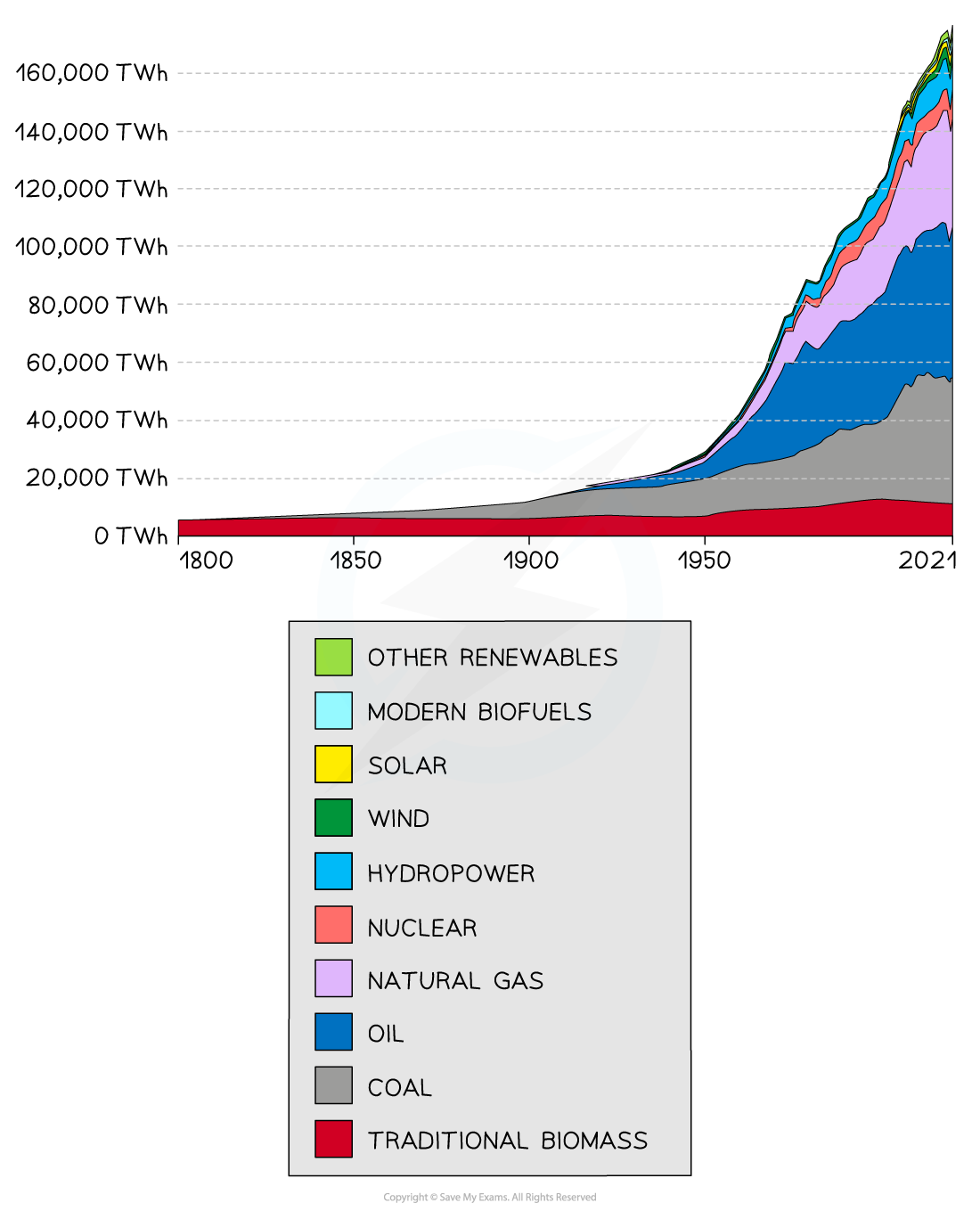
The demand for energy across the globe is rising
Population growth and development are the two main causes of the increase in energy demand:
The higher demand for food leads to more intensive farming which requires more energy for machines, light and heat
Increasing industry requires energy for heating, lighting and machinery
There is more transport all of which requires energy in the form of petrol, diesel or electricity
Urbanisation increases with development increasing domestic appliances, heating, lighting
Increased wealth means people buy more appliances and technology which require energy
World Energy Demand
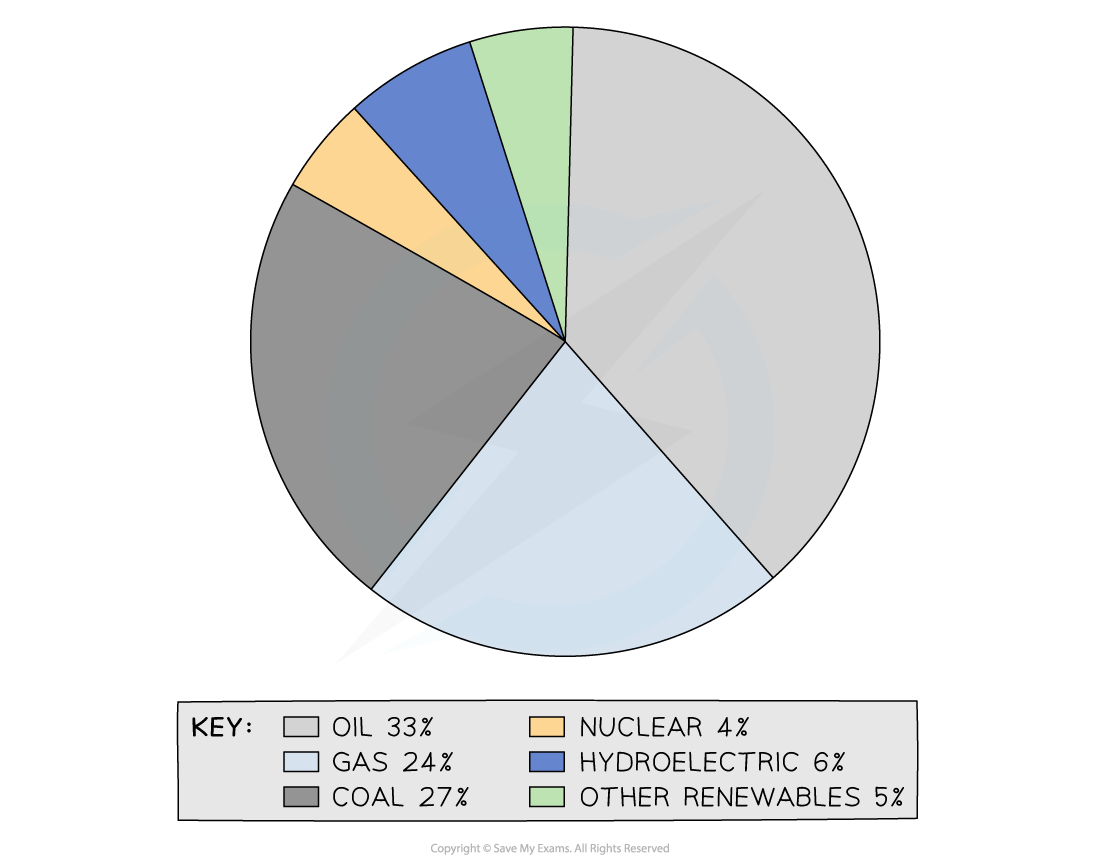
Over 80% of the world's energy is provided by fossil fuels (coal, oil and gas)
33% oil
27% coal
24% gas
Fossil fuels are fuels formed from the remains of living organisms (plants/animals)
These are non-renewable as they cannot be replaced at a speed which keeps up with consumption
It is estimated that based on current use and availability, gas and oil will run out by 2080
World Energy Mix
The use of nuclear and renewable energy is growing but non-renewables fossil fuels still dominate energy production
It is predicted that the use of gas and oil will continue to increase over the next 30 years and these fossil fuels are expected to still provide over 75% of the world's energy by 2040
Energy Source | Advantages | Disadvantages |
|---|---|---|
Coal |
|
|
Oil and gas |
|
|
Energy use
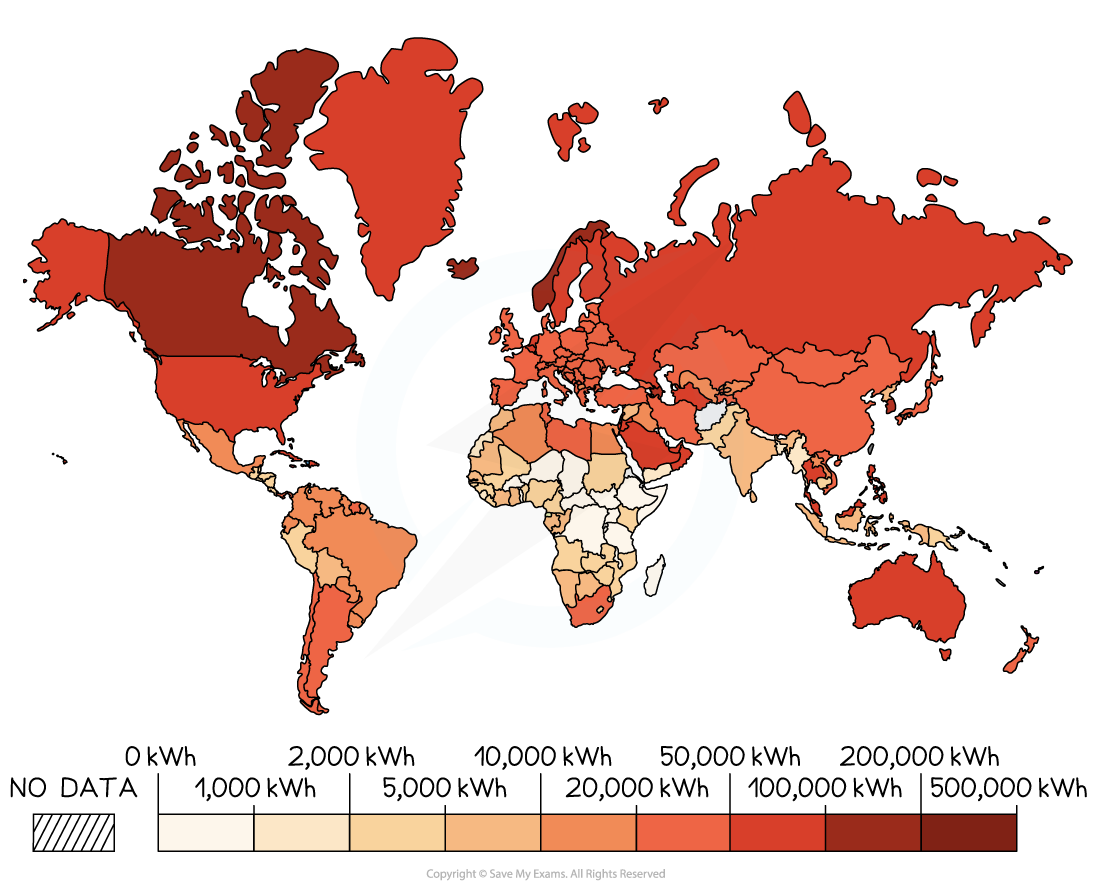
MEDCs use more energy than LEDCs
Countries with the highest energy consumption per person tend to be MEDCs and include Canada, Norway and Saudi Arabia
Countries with the lowest energy consumption per person are LEDCs which are all in Africa and include Niger, Chad and Tanzania
The greatest growth in energy use in LEDCs and newly emerging economies such as China and India
Development means more use of energy in
Businesses and factories
In homes as people buy more appliances and technology
Transport
Energy Use per Person in kwh
Energy security
An energy gap is when a country cannot meet the demand for energy using its own resources
When countries have an energy gap, they have to import energy to meet the demand
Having an energy gap means that a country is not energy secure
To be energy secure a country needs an:
Uninterrupted supply of energy
Affordable supply
Accessible supply
The UK has a widening energy gap and is not energy secure because:
Renewable energy is not as efficient and so cannot replace full energy from fossil fuels
It is cheaper to import fossil fuels than it is to exploit the resources in the UK
The commitment of many countries to tackling climate change and reducing the use of fossil fuels has increased energy insecurity in many countries
Energy security can also be affected by:
Energy sources running out
War/conflict
Natural hazards
Political disputes
Energy mix
The energy mix in countries varies dependent on the level of development
The most economically developed have a wider use of renewables and nuclear energy
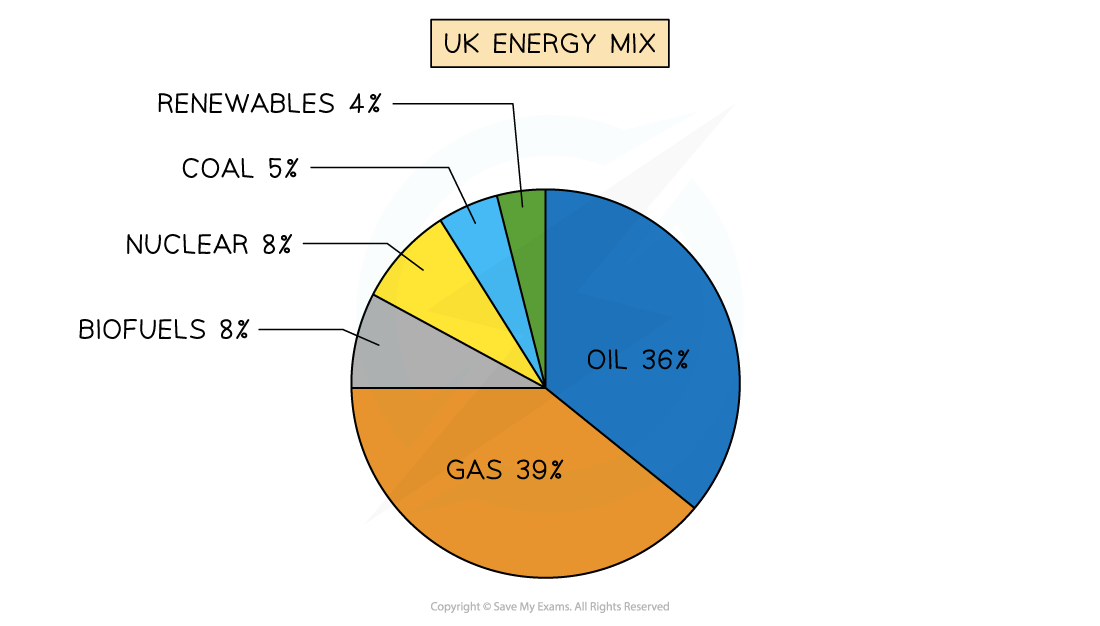
The newly emerging countries are more dependent on fossil fuels
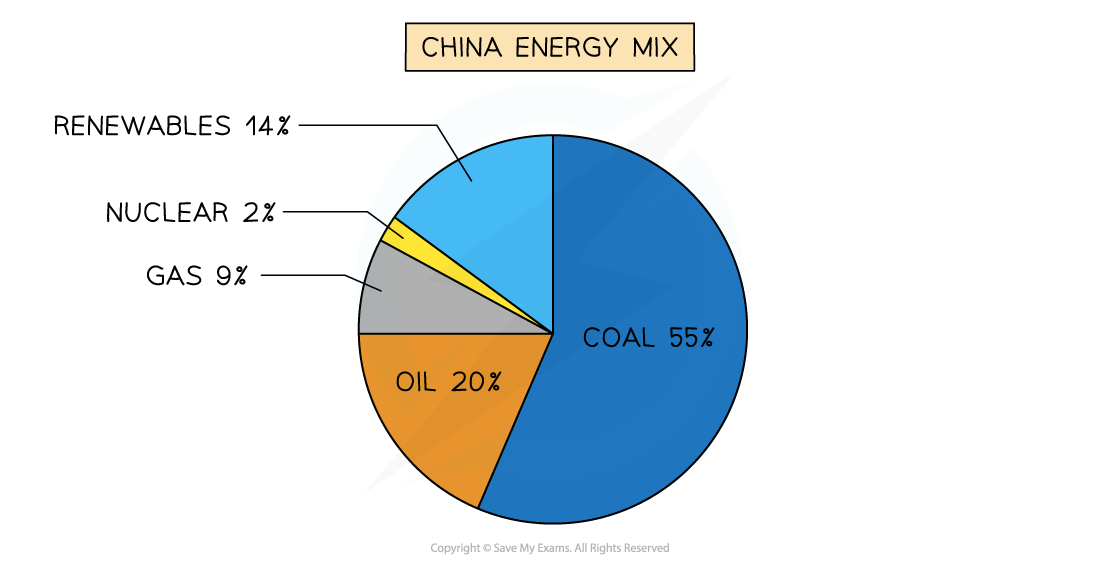
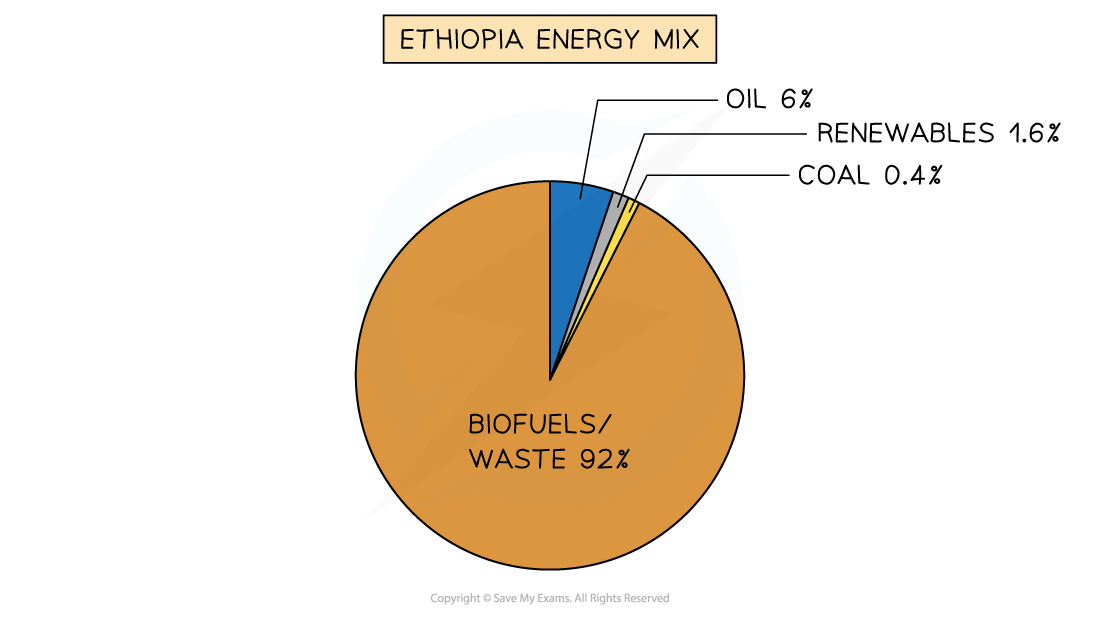
The least economically developed countries are dominated by biofuels which is mostly fuel wood used for heating and cooking particularly in rural areas