What was the Impact of the Treaty of Versailles on Germany?
The 'Diktat'
The 'Diktat'
The Treaty of Versailles took force on 10th January 1920
Many Germans argued that the Weimar Republic should not have signed the Treaty of Versailles
They believed that German politicians committed a ‘dolchstoss’ - or a ‘stab in the back’
The politicians who signed the Treaty of Versailles were called ‘November Criminals’. This was because November was the month the government signed the armistice
Many Germans felt humiliated and weaker than the rest of Europe
German people and politicians called the treaty a ‘diktat’
German representatives were not allowed to attend the peace talks
Germany had to accept the terms of peace otherwise the Allies would take control of the country
What Sections of the Treaty of Versailles Angered the German People?
Area of the treaty | Why did this anger the German people? |
|---|---|
The War Guilt Clause | The German public did not think it was fair that they had to take all of the blame for the First World War. Other countries were planning for war in the 1910s |
Restrictions on armed forces | The armed forces were a source of pride for the German people. Many Germans felt humiliated and vulnerable to attack. They were bitter that the rest of Europe was not forced to disarm |
Reparations | Many Germans believed that the reparations were set too high. Germany had already been financially ruined by the First World War. From 1922, Germany could not pay its reparations bill |
Territorial losses | The Treaty of Versailles placed German citizens under the rule of other countries. Many Germans felt that the Allies had taken away their cultural identity |
Rise of Extremism: The Kapp Putsch
Rise of Extremism: The Kapp Putsch
The Spartacist Revolt in January 1919 came close to overthrowing the new Republic
The Weimar Republic used the Freikorps to stop the communist uprising
The Freikorps was a right-wing group
They were armed ex-soldiers who became unemployed after the Treaty of Versailles restricted the German Army
In March 1920, President Ebert planned to disband the Freikorps units in Berlin
5,000 Freikorps members and their leader, Wolfgang Kapp, attempted to overthrow the government in a putsch
Kapp and the Freikorps invited the Kaiser back to govern Germany
Many of the lower classes would not support the Kaiser returning to Germany
They had achieved more rights and freedoms since the Kaiser’s abdication
The workers, with the Weimar government’s encouragement, called for a general strike
Berlin lost gas, electricity and water supplies
There was no public transportation
After four days, Kapp left Berlin
The Freikorps continued to cause issues in the Weimar Republic after the Kapp Putsch
Within the first three years of the Weimar Republic, there were 376 political assassinations
In August 1921, two members of the Freikorps shot and killed Matthias Erzberger. Erzberger signed the armistice
Occupation of the Ruhr
Occupation of the Ruhr
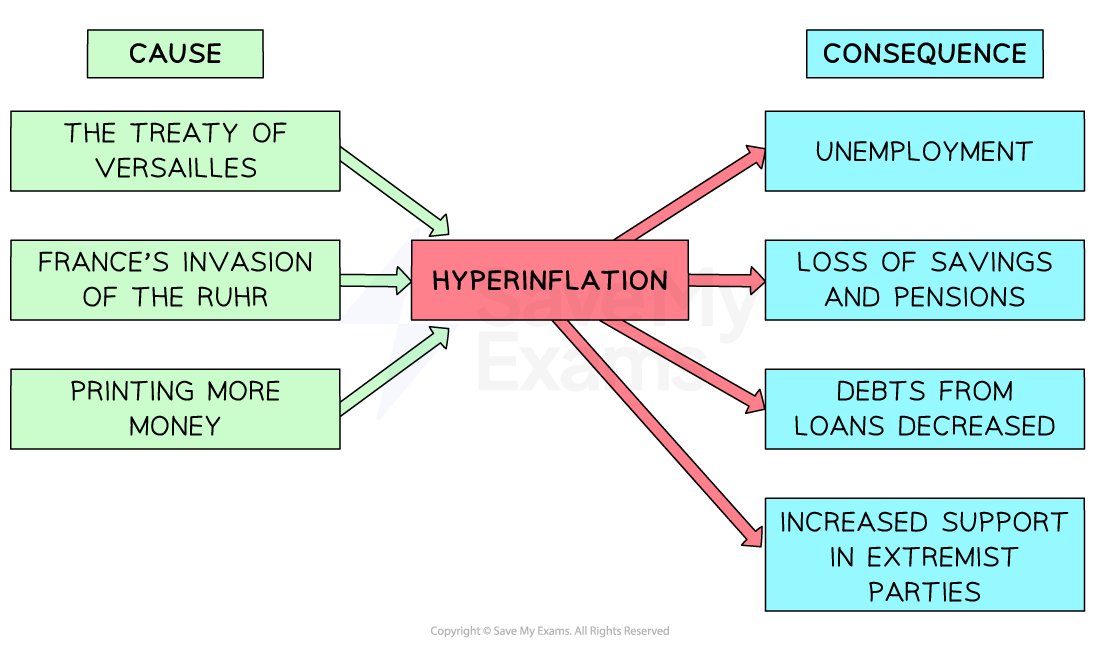
In December 1922, France accused Germany of not sending the amount of coal required by the Treaty of Versailles
French and Belgian troops entered the Ruhr in January 1923
The soldiers seized coal, manufactured products and machinery
Chancellor Cuno urged the coal workers to use passive resistance
The workers:
Went on strike
Sabotaged machinery
The French responded by bringing their own workers into the Ruhr
The Weimar government could not force the soldiers out of the Ruhr because the Treaty of Versailles:
Restricted Germany’s army to 100,000 men
The French had 750,000 soldiers
Contained terms that legalised France’s actions
The French occupation of the Ruhr destroyed Germany’s economy because the Weimar government:
Insisted on paying wages to the striking workers
Began importing coal from other countries to meet demand
Could not provide factories with enough coal
Germans experienced shortages in everyday items. This increased the prices of these products
Hyperinflation, 1923
Hyperinflation, 1923
The term inflation means the increase in prices
Inflation happens in an economy over time
For example, a loaf of bread in January 1971 cost 10p. The average price of bread in January 2023 was £1.06
Inflation is measured as a percentage
Hyperinflation is when prices rise rapidly and become out of control
Wages struggle to match the cost of living
In extreme cases, a country’s currency loses its monetary value
To pay the striking Ruhr workers and purchase coal, the Weimar government decided to print more money
In 1923, there were 300 paper mills and 2,000 printers whose sole purpose was to print currency
The decision to print an excessive amount of money caused the hyperinflation crisis
By November 1923, the German currency (the mark) had become worthless
Some workers received pay twice a day so they could purchase essential goods before their wages became worthless
People filled wheelbarrows full of money to buy a loaf of bread
Causes and Consequences of Hyperinflation
Rise of Extremism: The Munich Putsch
Rise of Extremism: The Munich Putsch
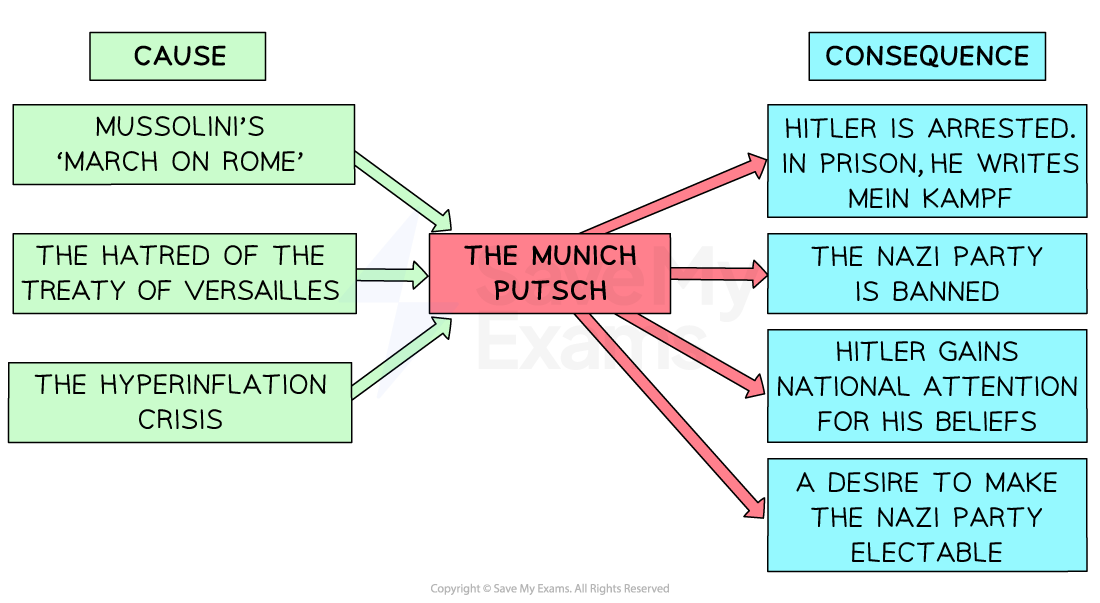
Causes of the Munich Putsch | ||
|---|---|---|
Long-term | Mid-term | Short-term |
The people were angry with the Weimar government from its beginnings. The Treaty of Versailles in 1919 was a ‘dolchstoss’ for many Germans | Mussolini, the fascist leader of Italy, inspired Hitler. Mussolini led his successful ‘March on Rome’ in 1922. He implemented a putsch using his paramilitary force | The French invasion of the Ruhr caused many shortages of goods in Germany |
From 1920, the NSDAP was growing in popularity in Munich and Bavaria | The hyperinflation crisis reached its worst state towards the end of 1923. People resented the Weimar government for how they handled the crisis | |
In November 1923, Hitler decided that the Nazi Party was ready to take control of Germany
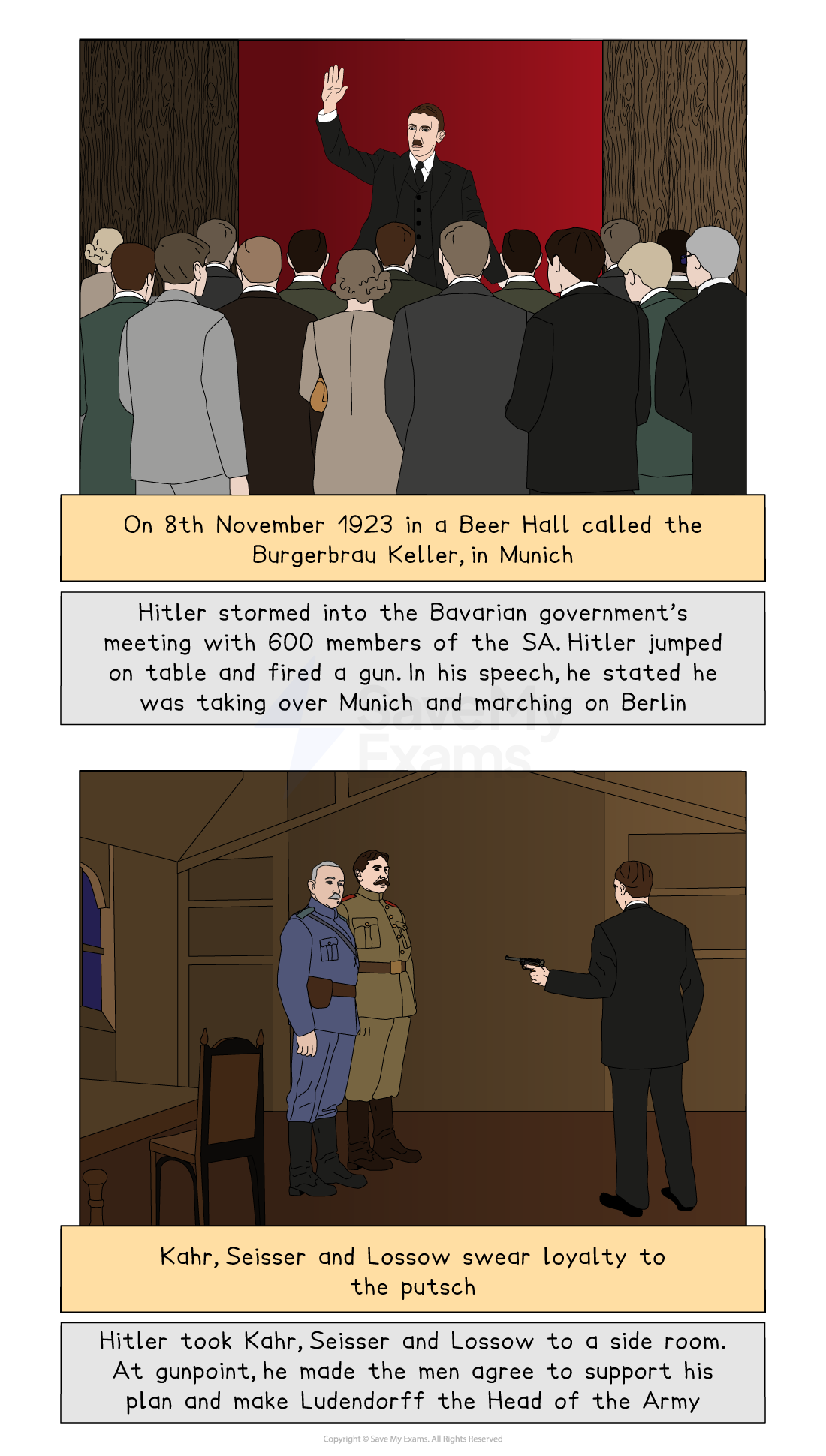
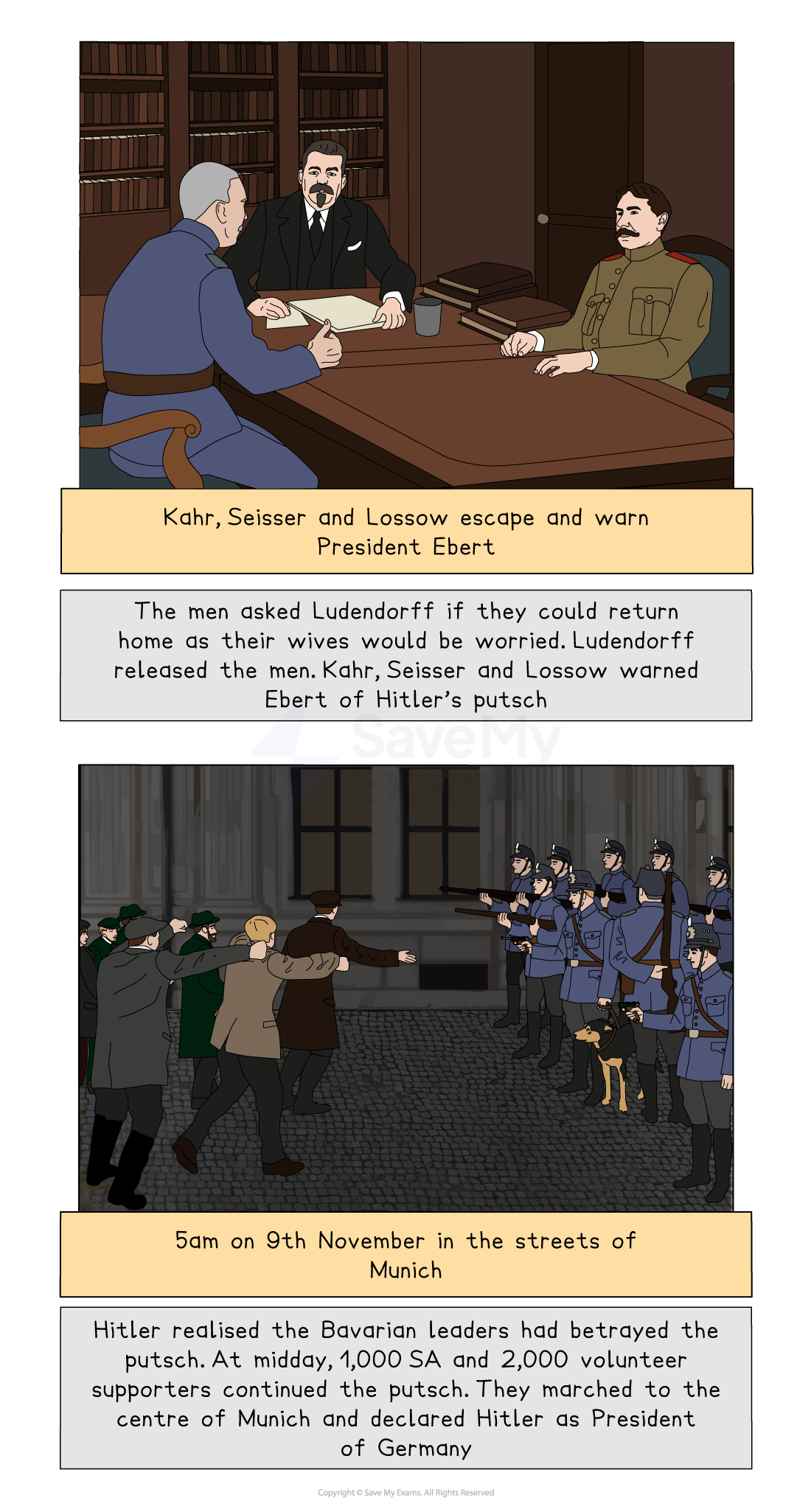
The putsch relied upon the support of Kahr, Seisser and Lossow
These were key officials in Bavaria
Hitler knew that, if he established control of Bavaria, it would be easier for him to take over Berlin
What Happened in the Munich Putsch?
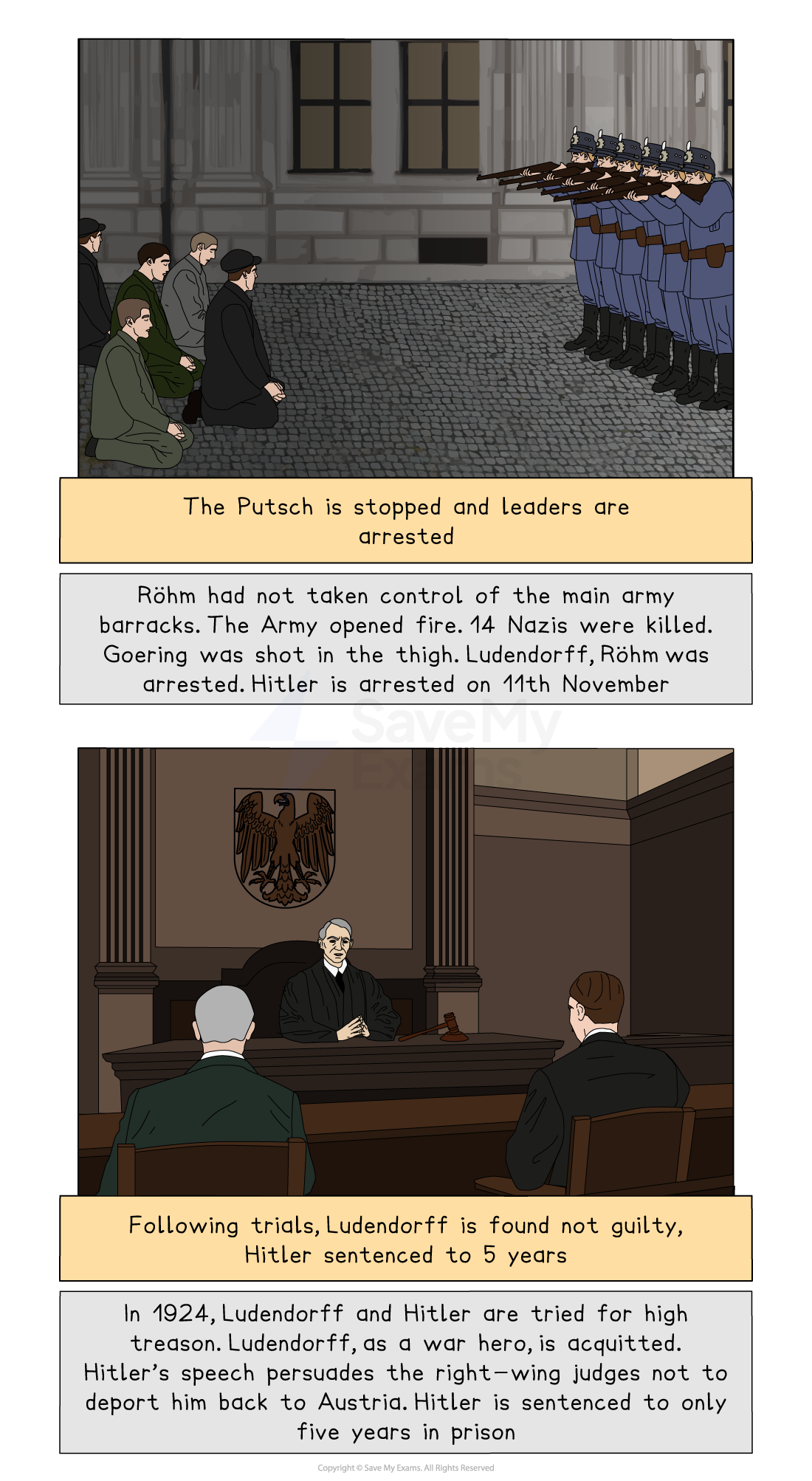
The Munich Putsch failed and Hitler was arrested for high treason
Causes and Consequences of the Munich Putsch