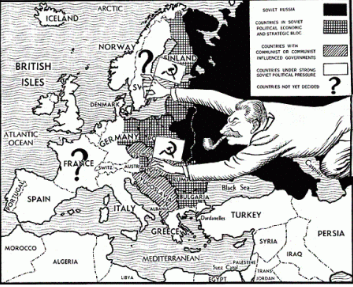
How had the USSR Gained Control of Eastern Europe by 1948?
Why did Stalin Want Control of Eastern Europe?
Why Did Stalin Want Control of Eastern Europe?
From 1943 to 1945, the Soviet Red Army liberated many countries in Eastern Europe from Nazi control
After 1945, Stalin wanted to keep control of these countries
He wanted them to act as a buffer zone between the East and West
These countries were called satellite states
They had to stay in the orbit of the USSR, meaning:
They relied on the USSR
The USSR influenced the countries’ actions and politic
As each Eastern European country fell to communism, it
Confirmed Truman’s concern about the spread of communism
Heightened US anti-communist attitudes
Encouraged Churchill’s ‘Iron Curtain’ speech
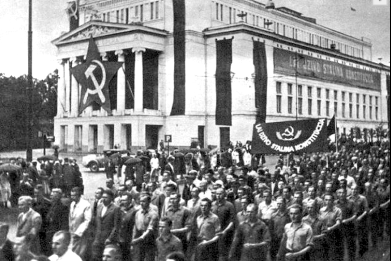
The ‘Baltic States’, 1940
The ‘Baltic States’, 1940
The Soviet Union took over the ‘Baltic States’ during the Second World War
The Soviet Union saw them as legitimate Soviet states
The Baltic States wanted independence
They stated that the USSR’s actions were illegal
Poland and The Warsaw Uprising, 1944-45
Poland and The Warsaw Uprising, 1944-45
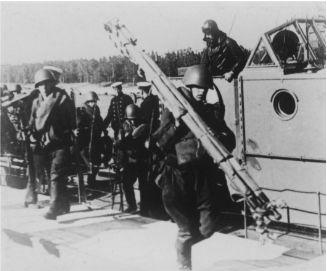
In 1944, Poland attempted to overthrow their Nazi German occupiers
The event is called the Warsaw Uprising
Germany defeated the Warsaw Uprising
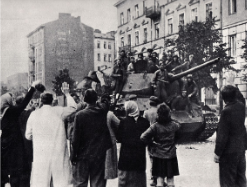
The Red Army waited until the defeat to occupy Poland
At the Yalta Conference, the Grand Alliance agreed to free elections in Poland
Stalin did not want Poland to have a non-communist government
In June 1945, Poland had a coalition government
It contained communist supporters and a few members of the London Poles
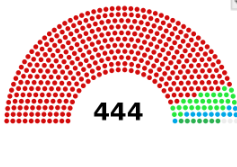
During the 1947 elections, the USSR led a campaign of violence and intimidation
The communists gained 80% of the vote
The election was either rigged or people voted for the communists out of fear
Romania, Bulgaria and East Germany, 1944-45
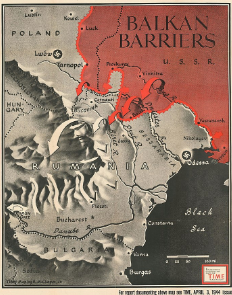
Romania, Bulgaria and East Germany, 1944-45
At the Yalta Conference, the Grand Alliance agreed that East Germany would fall under the USSR’s influence
Romania and Bulgaria both lost their monarchies, which were replaced by Communist governments
Hungary 1945-49
Hungary 1945-49
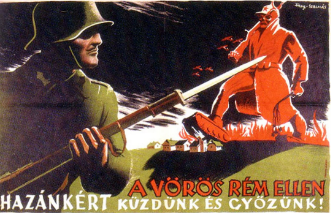
Non-Communists won the 1945 election in Hungary
A Communist politician called Rakosi took control of the secret police
He imprisoned political opponents
This pressure forced the resignation of the Hungarian Prime Minister
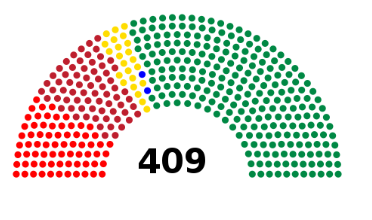
The Communists won the 1947 election
All other political parties were banned in 1949
Czechoslovakia, 1948
Czechoslovakia, 1948
Czechoslovakia was a democracy from 1919 to 1938
Nazi Germany occupied the Sudetenland and then the whole of Czechoslovakia in 1938
After 1945, a non-Communist called Edward Benes led a coalition government
Stalin saw this as a threat to his buffer zone and wanted a Communist government in power
In 1948, pro-communist Klement Gottwald led a coup
He took over the government with support from the USSR
Communism in Yugoslavia and Albania
Communism in Yugoslavia and Albania
The Soviet Union viewed Yugoslavia and Albania as satellite states
They were never occupied by the Soviet Red Army
They had established their own Communist governments
They were given more independence than countries neighbouring the USSR
The Satellite States of the USSR

The USA’s Reaction to the Satellite States
The USA’s Reaction to the Satellite States
In 1945, Roosevelt and Churchill had accepted that the USSR would influence Eastern Europe
They still saw the importance of allowing free elections
Truman saw the creation of satellite states as a deliberate attempt to spread Communism
Churchill’s ‘Iron Curtain’ speech in 1946 worsened relations between East and West
The satellite states challenged Truman’s policy of containment
This prompted Truman to establish the Truman Doctrine and Marshall Plan