The Atom
Atomic Structurevideo
Atomic Structure
Atoms are the building blocks of all matter
They are incredibly small
Atoms have a tiny nucleus at their centre, with electrons orbiting around the nucleus
They consist of small positively charged nuclei, surrounded by negatively charged electrons
The Structure of an Atom
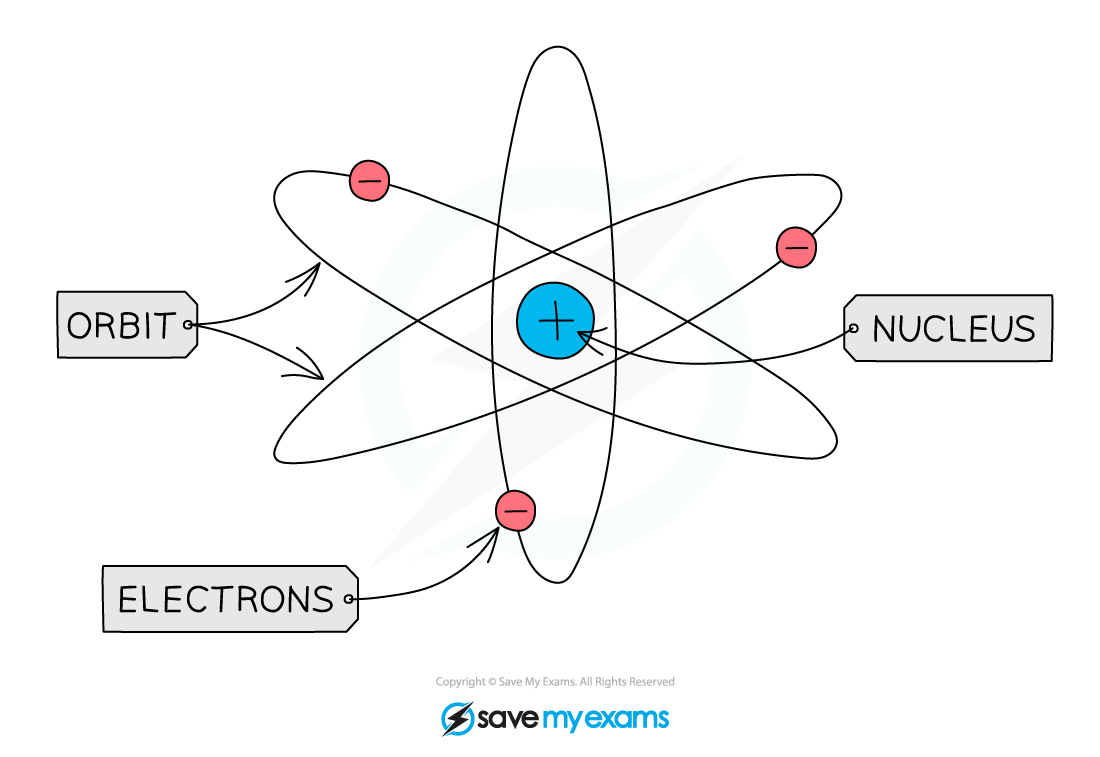
An atom has a small positive nucleus, surrounded by orbiting negative electrons
Rutherford's Experiment
Rutherford's Experiment
In 1909 Ernest Rutherford was investigating their ideas about the structure of the atom
This involved the scattering of alpha (α) particles by a sheet of thin metal supports the nuclear model of the atom
A beam of alpha particles was directed at a thin gold foil
They expected the alpha particles to travel straight through the gold foil with only a small amount of deflection
Instead, they discovered that :
Most of the alpha particles passed straight through the foil
Some of the alpha particles changed direction but continued through the foil
A few of the alpha particles bounced back off the gold foil
Alpha Particles Passing Through Atoms in a Gold Foil
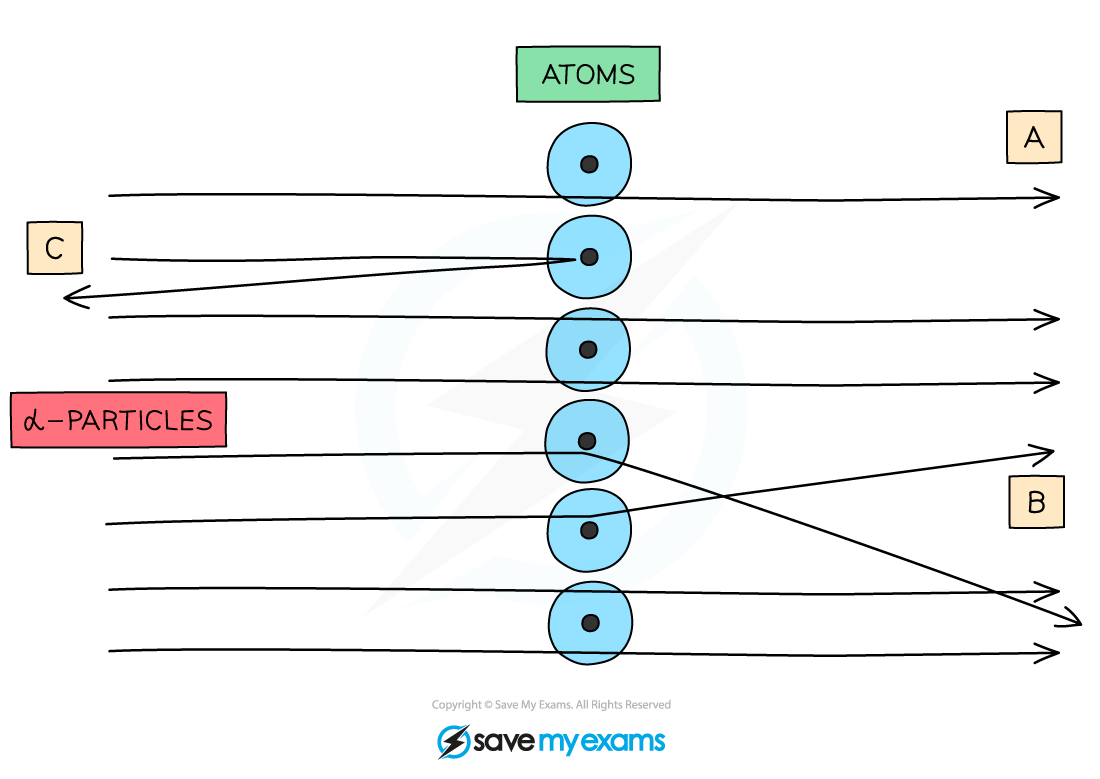
When α-particles are fired at thin gold foil most of them pass straight through but a very small number bounce straight back
When α-particles are fired at thin pieces of gold foil:
The majority of them go straight through (A)
This happens because the atom is mainly empty space
Some are deflected through small angles (B)
This happens because the positive α-particles are repelled by the positive nucleus which contains most of its mass
A very small number are deflected straight back (C)
This is because the nucleus is extremely small