Detection of Radioactivity
Detection of Radioactivity
Detection of Radioactivity
Ionising nuclear radiation is measured using a detector connected to a counter
Detection of Alpha Particles
α-particles are detected using a cloud chamber or spark counter
Cloud Chambers
There are several different types of cloud chambers
A cloud chamber contains:
A metal plate on the bottom, cooled using dry ice
A transparent viewing film at the top with a light source at one side, allowing the observer to identify what is happening
A thin film of alcohol evaporated inside the chamber forming a vapour
A radioactive source placed in the chamber
A magnetic field at right angles to the chamber
A Simple Cloud Chamber Set-Up
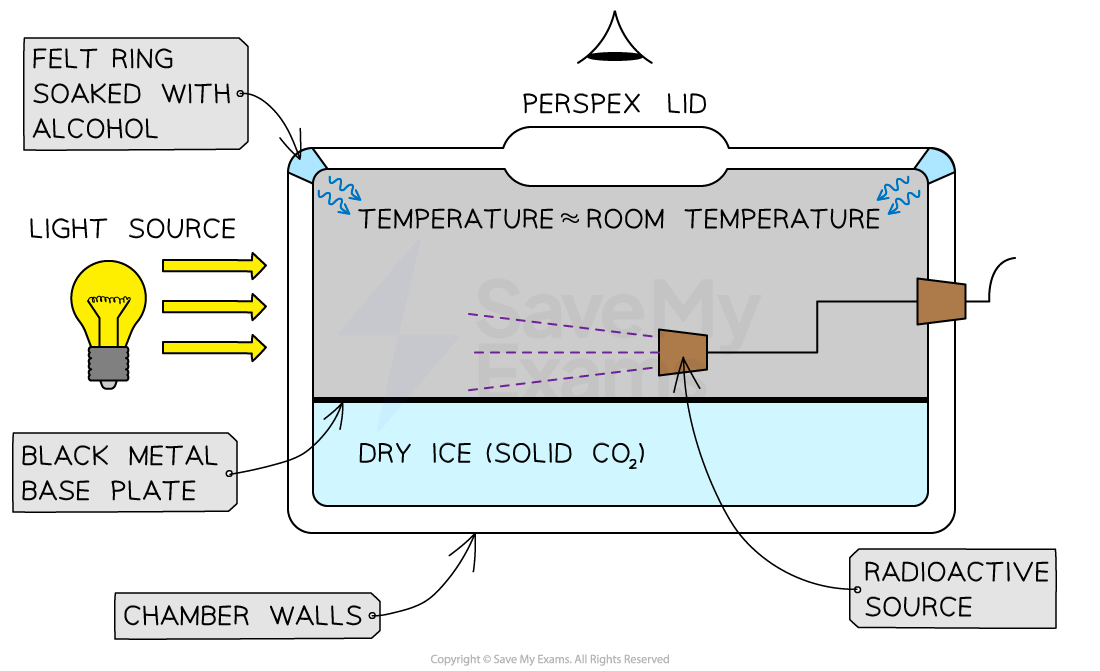
A cloud chamber contains vapour obtained from the cooling of alcohol using dry ice
When charged particles pass through the cloud chamber:
They collide with gas molecules
Creating ions as the alcohol condenses
Forming a path of condensation within the chamber
α-particles can be identified because they produce thick short tracks and curl slowly in one direction
An Alpha Particle Path in a Cloud Chamber
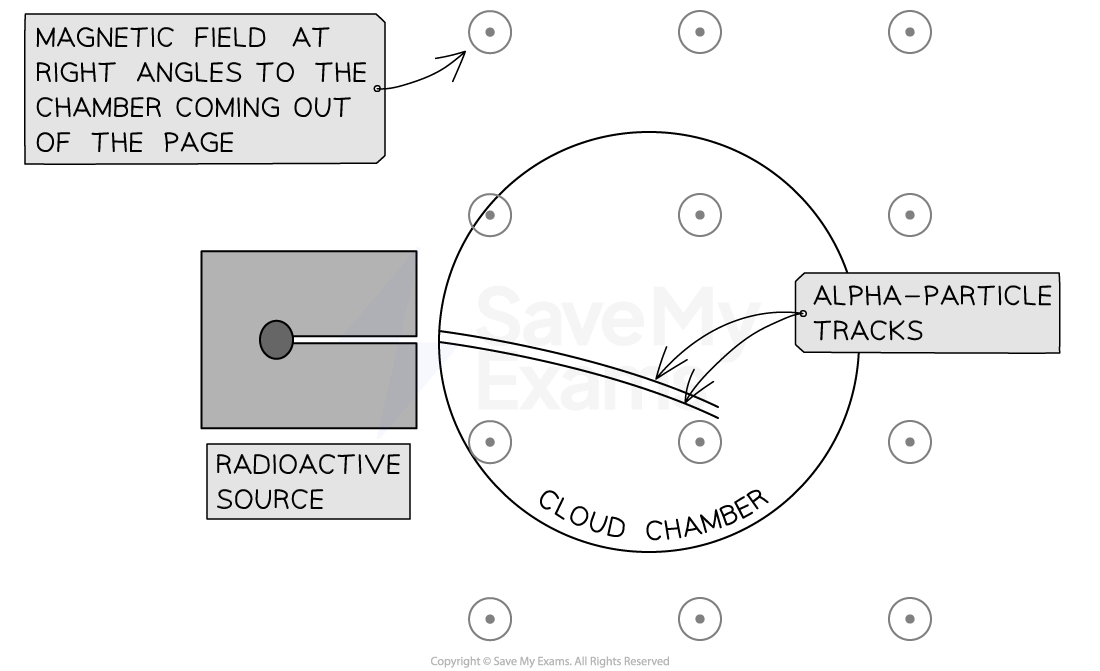
Alpha particles can be identified by their short thick tracks that bend slightly in one direction
Spark Counters
A spark counter consists of a thin metal gauze mounted very close (about a mmm) to a thin wire
A large voltage (around 5000 V) is applied across the gauze and the wire to cause sparking between them
The voltage is then reduced until no more sparking occurs
When an alpha radiation source is brought close to the gauze it will ionise the air around it
Creating sparks between the gauze and the wire
A Spark Counter Set-Up
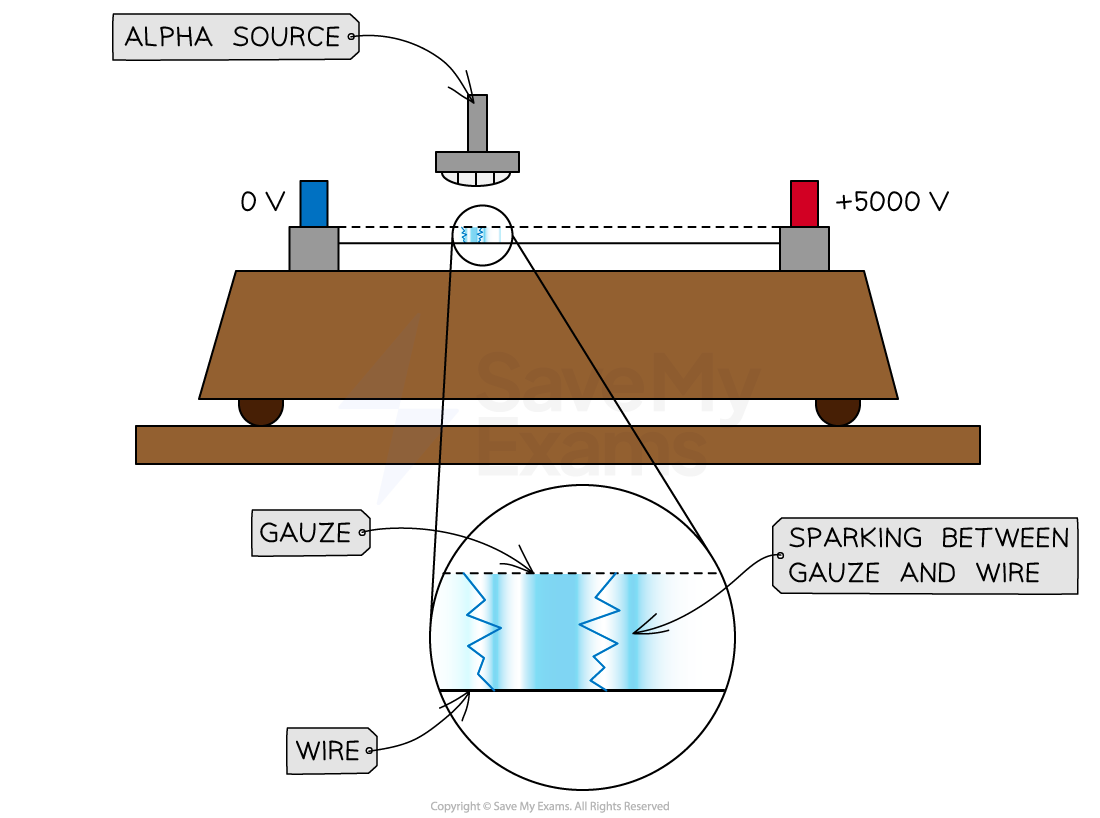
A spark counter contains a high voltage placed between a gauze and a wire to create sparking
Count Rate
The count rate is the number of decays per second recorded by a detector and recorded by the counter
It is measured in counts/s or counts/min
The count rate decreases the further the detector is from the source
This is because the radiation becomes more spread out the further away it is from the source
Detection of Beta Particles and Gamma Radiation
The Geiger-Müller tube is the most common device used to measure and detect β-particles and γ-radiation
Each time it absorbs radiation it transmits an electrical pulse to a counting machine called a counter
This makes a clicking sound or displays the count rate on a screen
The greater the frequency of clicks heard, or the higher the count rate seen, the more radiation the Geiger-Müller tube is absorbing
Therefore, it matters how close the tube is to the radiation source
The further away from the source, the lower the count rate detected
A Geiger-Müller Counter
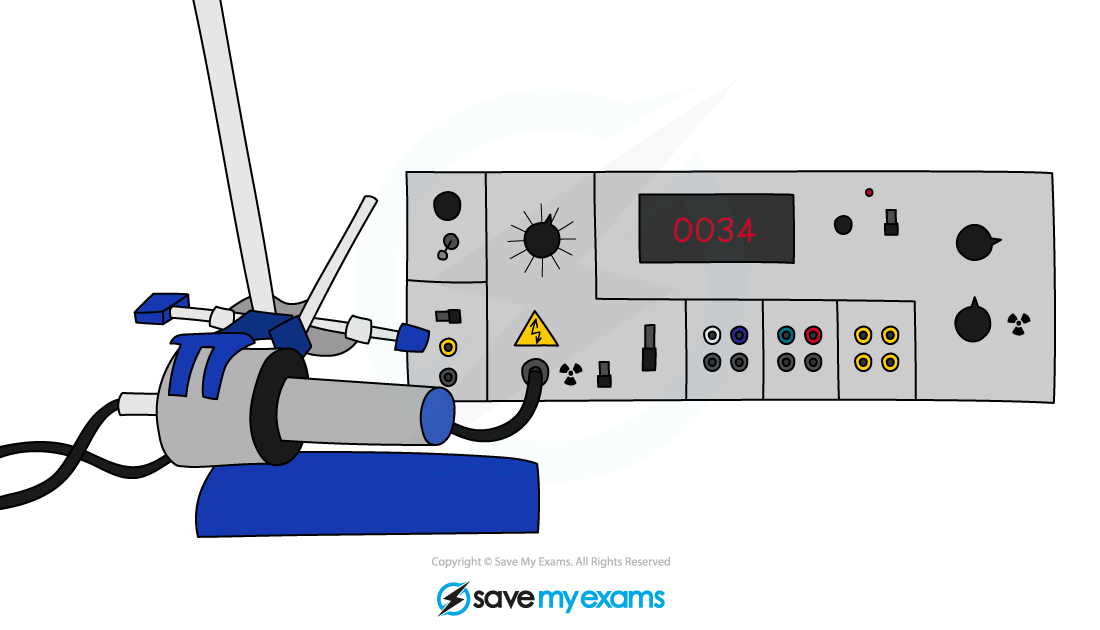
A Geiger-Müller tube (or Geiger counter) is a common type of radiation detector