Uses of Radiation
Uses of Radiationvideo
Uses of Radiation
Radiation is used in a number of different ways, for example:
Medical procedures (including diagnosis and treatment of cancer)
Sterilising food (irradiating food to kill bacteria)
Sterilising medical equipment (using gamma rays)
Determining the age of ancient artefacts
Measuring and controlling the thickness of materials
Household fire (smoke) detectors
The properties of the different types of radiation determine which one is used in a particular application
Smoke Detectors
Alpha particles are used in smoke detectors
The alpha radiation will normally ionise the air within the detector, creating a current
The alpha emitter is blocked when smoke enters the detector
The alarm is triggered by a microchip when the sensor no longer detects alpha
Smoke Detector in Normal Operation
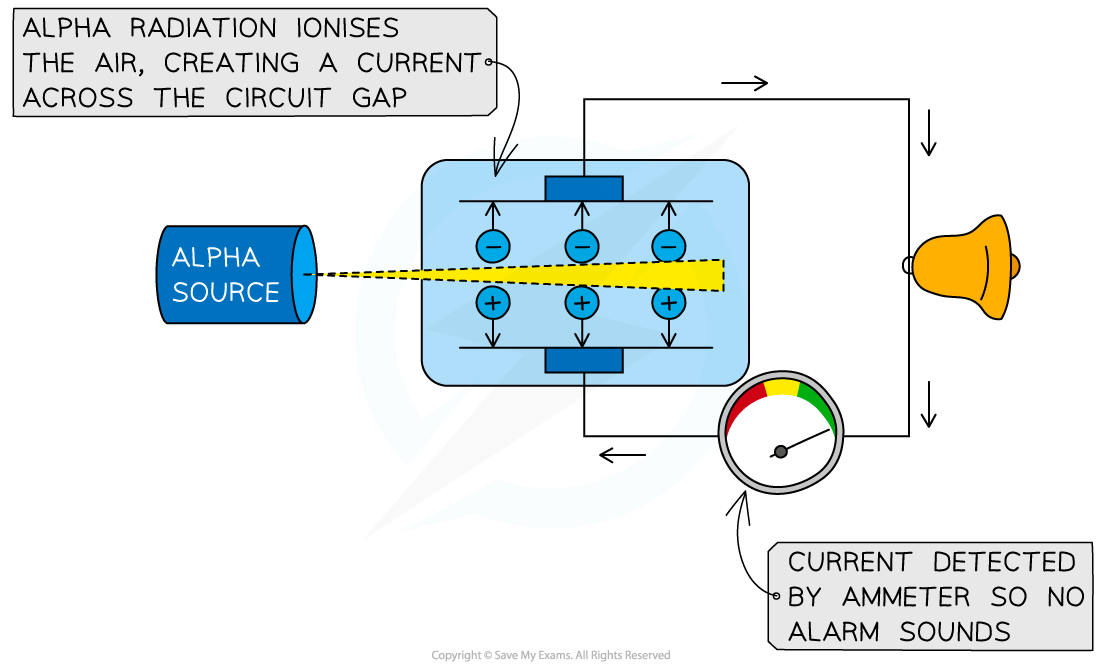
How is smoke detected in a smoke alarm?
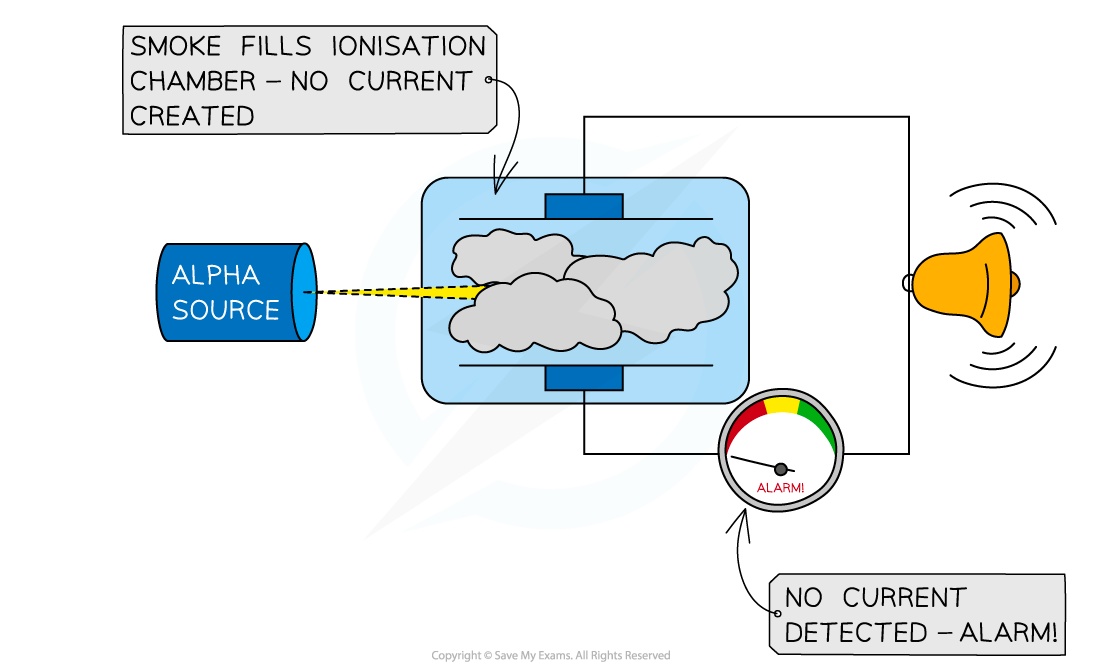
When alpha particles are stopped by the smoke, this prevents the flow of current and triggers the alarm
Measuring the Thickness of Materials
Radiation can be used for tracing and gauging thickness
Beta particles are most commonly used for this
As the material moves along a belt above a beta source, the particles that are able to penetrate it can be monitored using a detector on the other side
If the material gets thicker, more particles will be absorbed by the material, meaning less will arrive at the detector
If the material gets thinner, more particles will arrive at the detector
This allows the machine to make adjustments to keep the thickness of the material constant
Measuring the Thickness of Aluminium using Beta Radiation
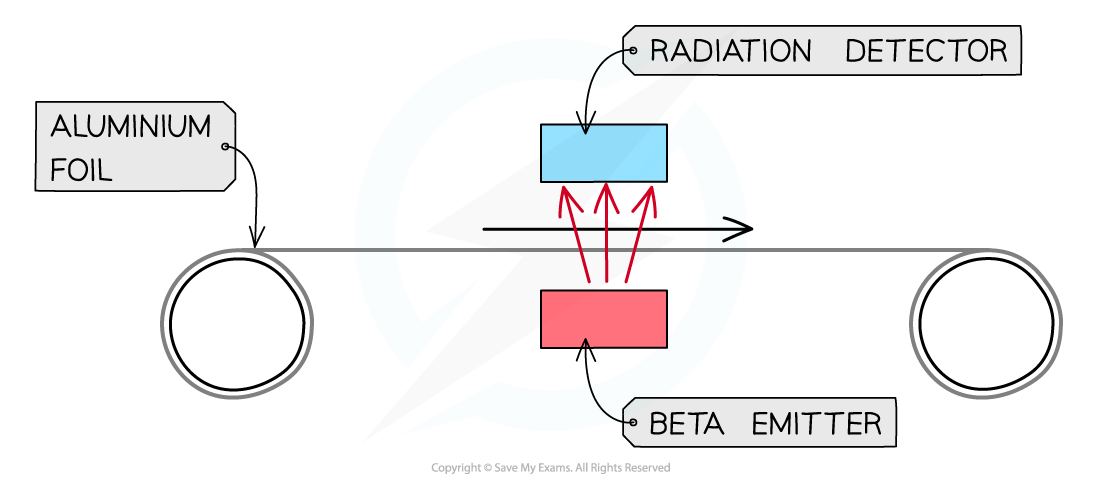
Beta particles can be used to measure the thickness of thin materials such as paper, cardboard or aluminium foil
Beta radiation is used because it will be partially absorbed by the material
If alpha particles were used all of them would be absorbed and none would get through
If gamma were used almost all of it would get through and the detector would not be able to sense any difference if the thickness were to change
Diagnosis and Treatment of Cancer
Radiotherapy is the name given to the treatment of cancer using radiation
Whereas, chemotherapy is the treatment of cancer using chemicals
Although radiation can cause cancer, it is also highly effective at treating it
Radiation can kill living cells
Some cells, such as bacteria and cancer cells, are more susceptible to radiation than others
Beams of gamma rays are directed at the cancerous tumour
Gamma rays are used because they are able to penetrate the body, reaching the tumour
The beams are moved around to minimise harm to healthy tissue whilst still being aimed at the tumour
A tracer is a radioactive isotope that can be used to track the movement of substances, like blood, around the body
A PET scan can detect the emissions from a tracer to diagnose cancer and determine the location of a tumour
Radiation Therapy for Cancer Treatment
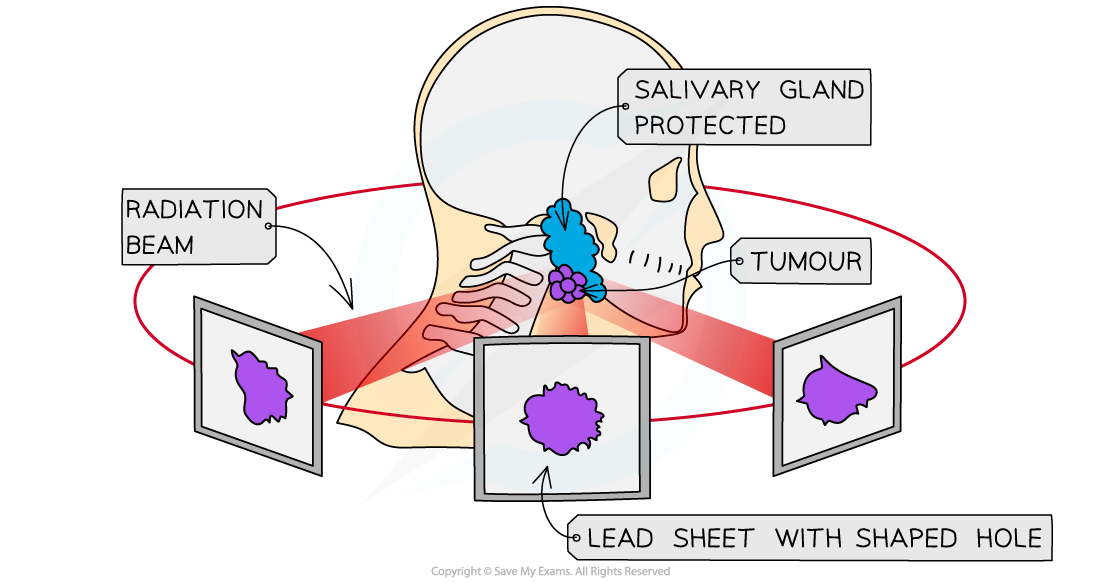
Radiation therapy to remove a tumour
Sterilising Food & Medical Equipment
Gamma radiation is widely used to sterilise medical equipment
Gamma is most suited to this because:
It is the most penetrating out of all the types of radiation
It is penetrating enough to irradiate all sides of the instruments
Instruments can be sterilised without removing the packaging
Food can be irradiated in order to kill any microorganisms that are present in it
This makes the food last longer and reduces the risk of food-borne infections
The Radura Symbol

Food that has been irradiated carries this symbol, called the Radura. Different countries allow different foods to be irradiated