Dangers of Radiation
Dangers of Radioactivity
Dangers of Radioactivity
Ionising radiation can damage human cells and tissues at high doses:
This could be in terms of:
Cell death
Tissue damage
Mutations
Cancer
As a result, its use needs to be kept to a minimum
However, the benefits of using radiation in medicine can out way the potential risks
The risks posed by the radiation are smaller than the risks associated with leaving the condition untreated
For example, if a person has a cancerous tumour that is likely to kill them, then it is less of a risk to use radiotherapy than to leave the tumour
Tissue Damage
Radiation is effectively used to destroy cancerous tumour cells
However, it can cause damage to healthy tissue if it is not properly targeted
This is mostly from high-energy radiation such as gamma rays and X-rays
Mutations
If the atoms that make up a DNA strand are ionised then the DNA strand can be damaged
If the DNA is damaged then the cell may die, or the DNA may be mutated when it reforms
If a mutated cell is able to replicate itself then a tumour may form
This is an example of cancer, which is a significant danger of radiation exposure
Mutation of a Cell by Ionising Radiation
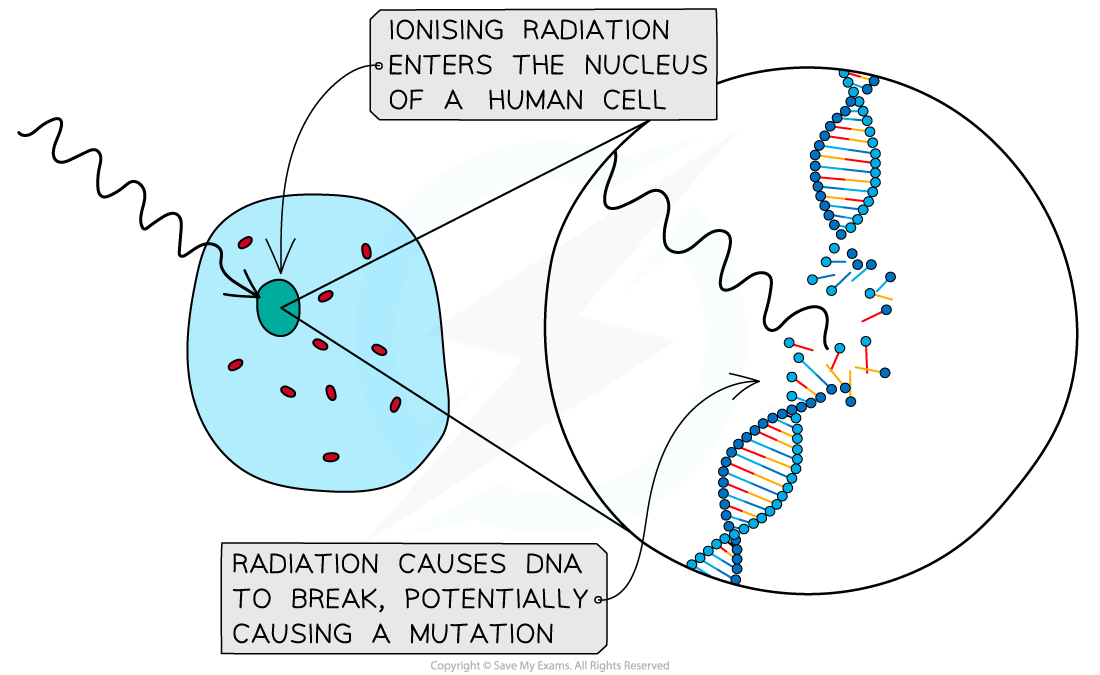
Diagram showing the damage caused to DNA by ionising radiation. Sometimes the cell is able to successfully repair the DNA, but incorrect repairs can cause a mutation
Acute radiation exposure can have other serious symptoms:
It can cause skin burns, similar to severe sunburn
Radiation can reduce the amount of white blood cells in the body, making a person more susceptible to infections by lowering their immune system
Because of this, it is very important to handle radioactive sources carefully
Safe Storage
Safe Storage
The risks associated with handling radioactive sources can be minimised by following a few simple procedures:
Sources must be stored in lead-lined boxes and kept at a distance from people
Sources must be handled for the minimum time possible and then returned to their boxes immediately
During use, sources should be handled with a pair of tongs at arm’s length
When using tongs, gloves and safety specs are usually unnecessary when handling radioactive materials, unless there is a risk of the material leaking onto other items
Hazard Symbol for Radioactivity
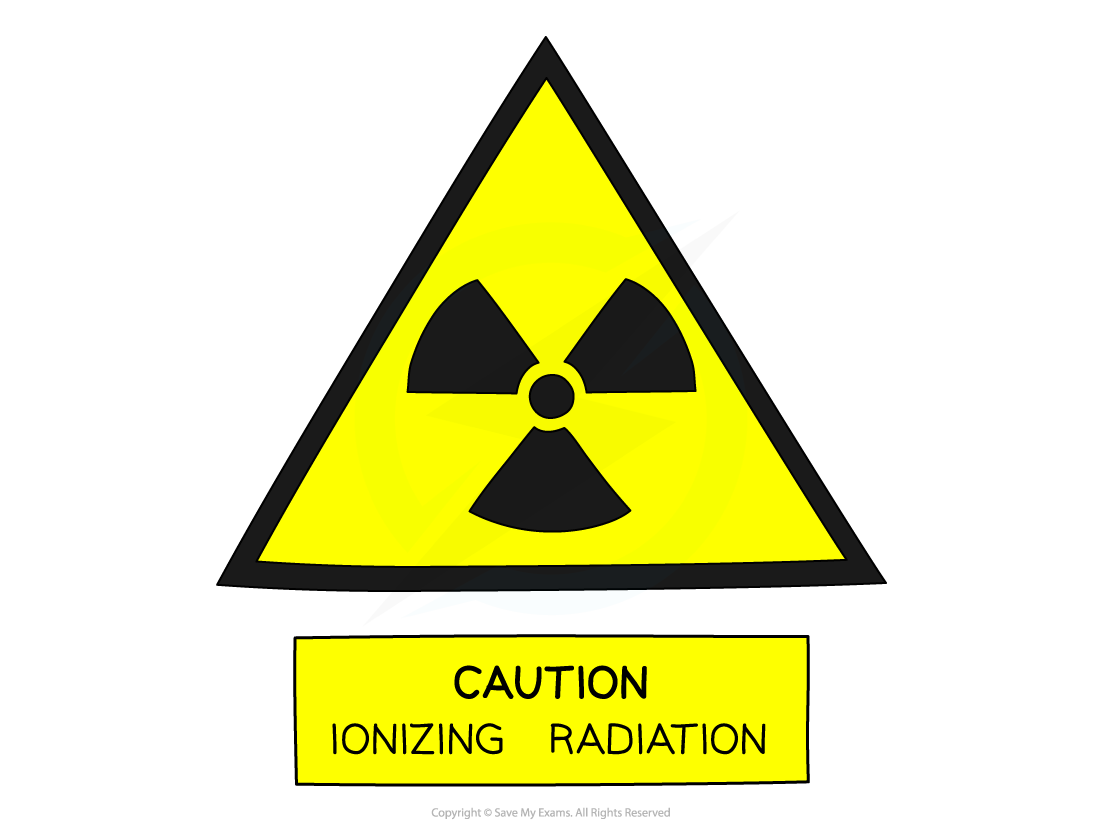
Whenever you see this symbol, it means a source of ionising radiation is nearby and you should proceed with caution
Disposing of Radioactive Waste
If an isotope has a long half-life then a sample of it will decay slowly
Although it may not emit a lot of radiation, it will remain radioactive for a very long time
Sources with long half-life values present a risk of contamination for a much longer time
Radioactive waste with a long half-life is buried underground to prevent it from being released into the environment
Disposal of Radioactive Waste
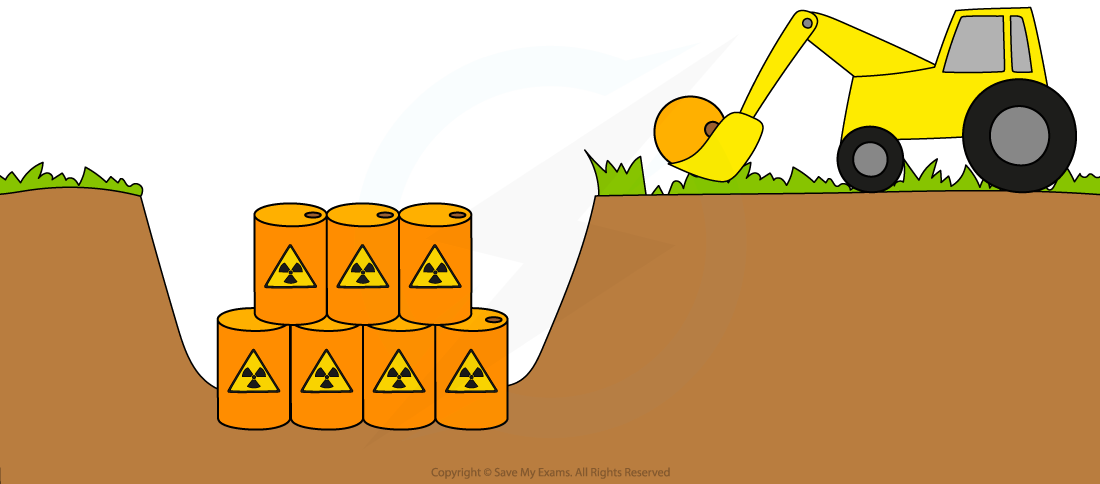
Radioactive waste with a long half-life must be buried deep underground