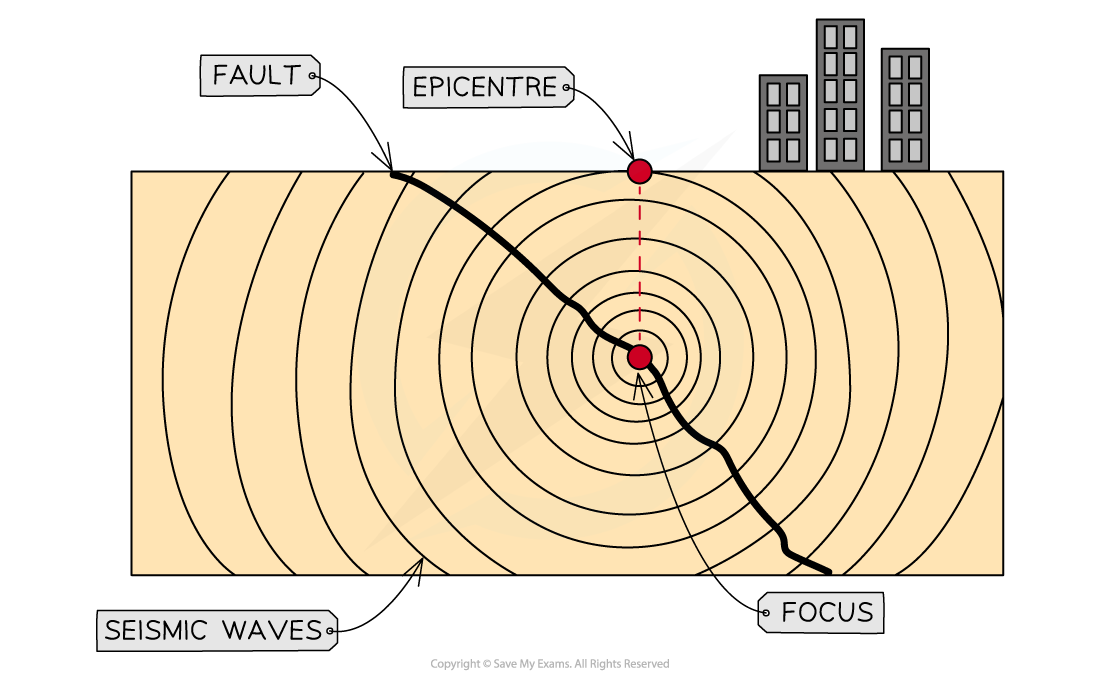
2.1.3 Causes of Earthquakes & Volcanoes
Causes of Earthquakes & Volcanic Eruptions
Causes of Earthquakes & Volcanic Eruptions
The structure of the Earth
The Earth is composed of four main layers
Inner core - about 1400km in diameter, a solid and dense layer composed of iron and nickel with temperatures of about 5500oC
Outer core - about 2100km thick, a semi-molten metal layer with temperatures between about 5000-5500oC
Mantle - about 2900km thick, a semi-molten layer which is less dense than the outer core
Crust - the thickness varies and it is made up of two types of crust
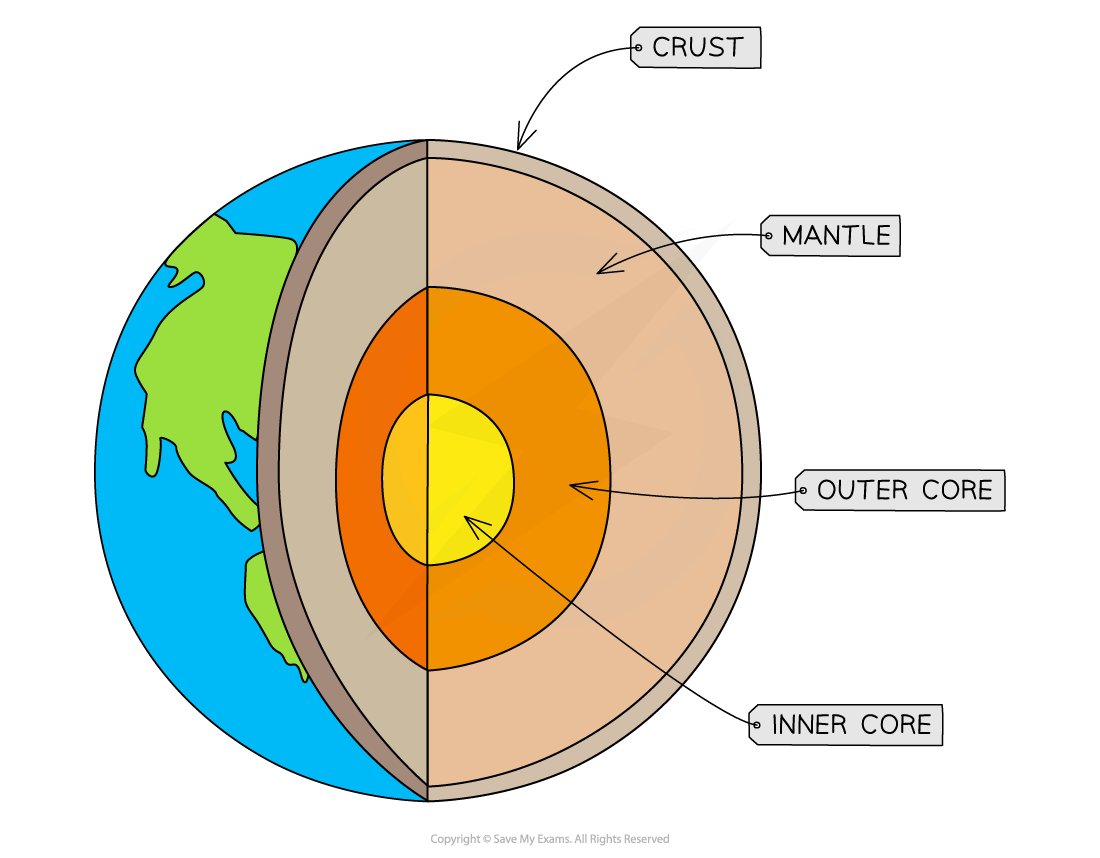
Structure of the Earth
Crust
There are two types of crust
Continental crust is thick (25-90km), old and not as dense as oceanic crust
Oceanic crust is thinner (5-10km), heavier and denser than continental crust
Oceanic crust is continually being created and destroyed as a result of plate movement where it is denser and so subducts under the continental crust
Plate tectonics
The crust is broken into a number of tectonic plates
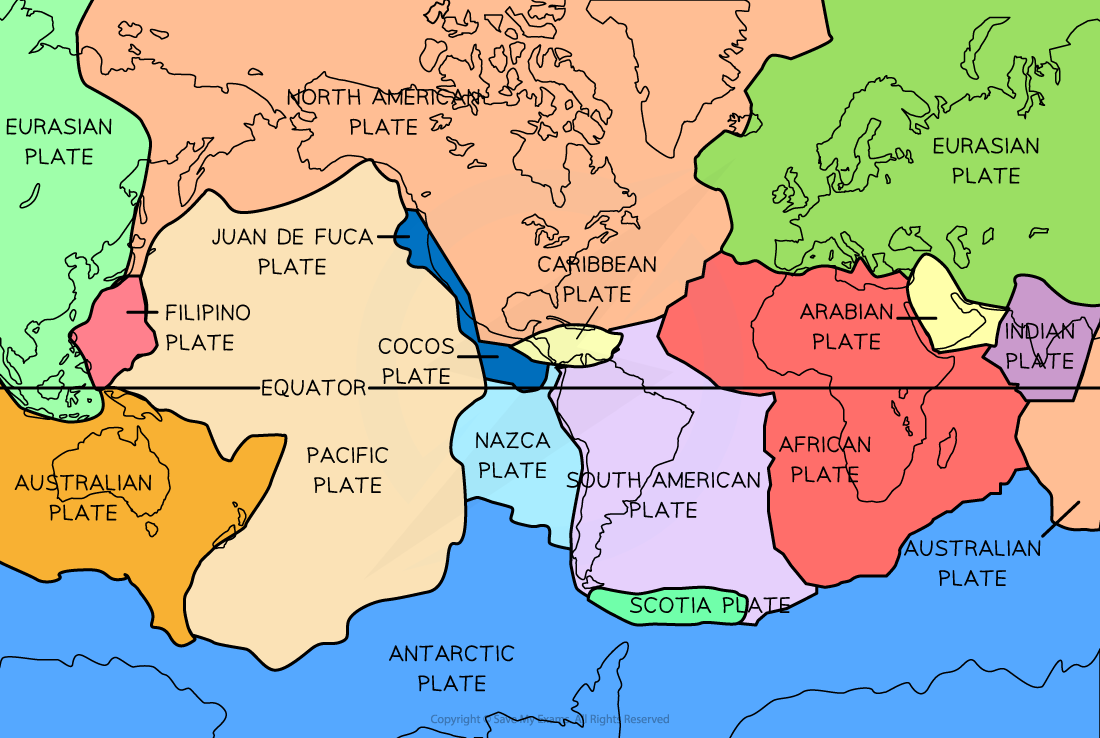
Tectonic Plates
These plates move on top of the semi-molten mantle below.
The movement of the plates is in part due to the convection currents within the mantle
A plate boundary or margin is where two plates meet
Types of plate boundary
Volcanic eruptions and earthquakes most commonly occur at or near plate boundaries
There are four main types of plate boundaries:
Divergent (constructive)
Convergent (destructive)
Collision
Transform (conservative)
Divergent (constructive) plate boundary
At a divergent boundary the plates are moving apart
The Mid Atlantic Ridge is an example of a divergent plate boundary
Both volcanic eruptions and earthquakes can occur at this type of plate boundary

Divergent (constructive) plate boundary
Convergent (destructive) plate boundary
At a convergent (destructive) plate boundary the plates are moving towards each other
The denser, heavier oceanic plate subducts under the lighter, less dense continental plate
The boundary between the Nazca plate and the South American plate is an example
Both volcanic eruptions and earthquakes occur at this type of plate boundary
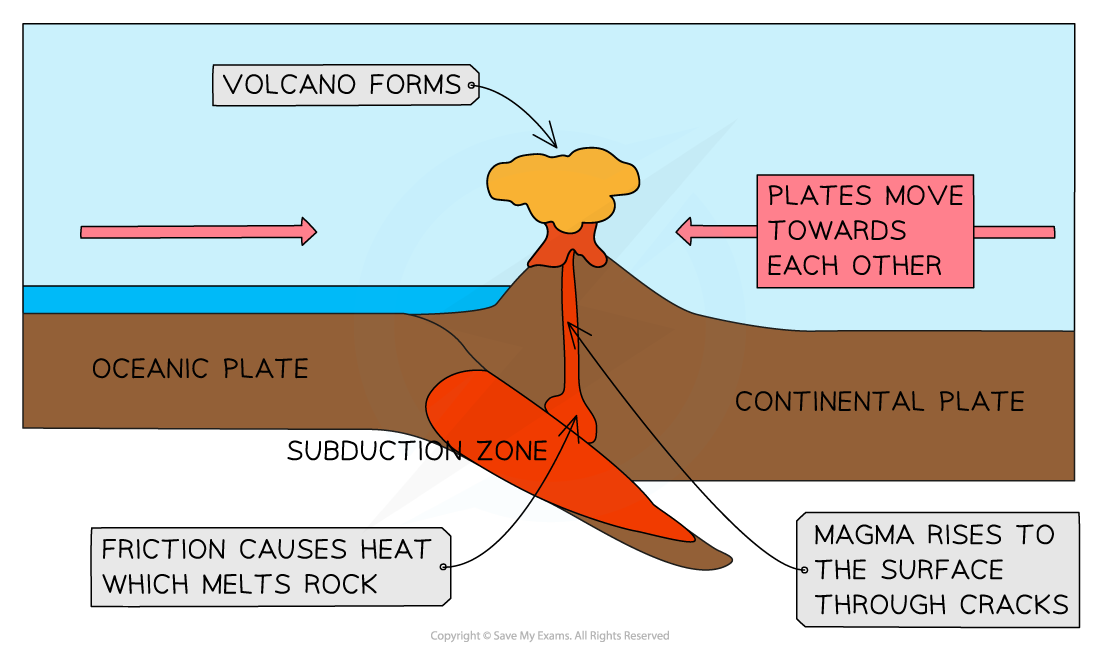
Convergent (destructive) Plate Boundary
Collision boundary
At a collision boundary two plates of similar density move towards each other
Neither is dense enough to subduct, so the land is pushed upwards
This forms fold mountains such as the Himalayas
Earthquakes are the main hazard at this type of plate boundary
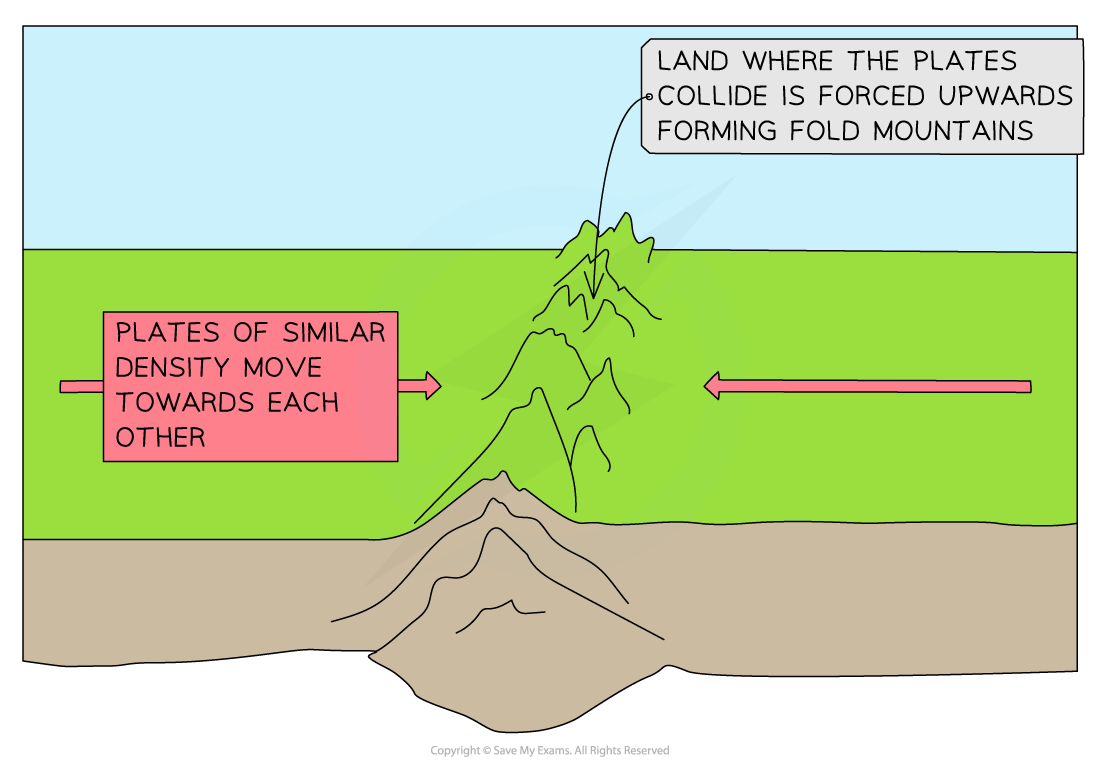
Collision Boundary
Transform (conservative) boundary
At a transform (conservative) boundary the plates move passed each other in opposite directions or in the same direction at different speeds
Earthquakes are the only hazard at this type of boundary
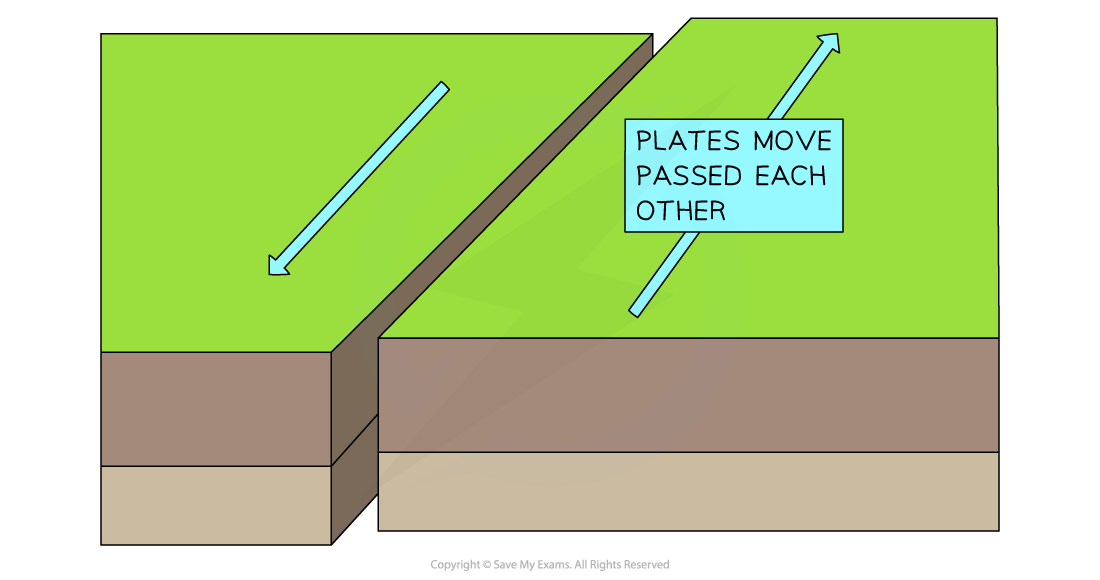
Transform (conservative) Boundary
The Structure of the Earth & Plate Boundaries
The Structure of the Earth & Plate Boundaries
Volcanoes occur at divergent (constructive), convergent (destructive) plate boundaries and hot spots
Volcanoes do not occur at collision boundaries or transform (conservative) boundaries
Volcanoes at constructive boundaries
At a divergent (constructive) the tectonic plates are moving away from each other:
Divergent plate boundaries often occur under the sea/ocean
The lava escapes through the gap left as the plates move apart
The lava cools and hardens forming a new crust
At divergent plate boundaries the lava tends to be runny, and eruptions are less explosive
These types of eruption form shield volcanoes which have gently sloping sides
Volcanoes at destructive boundaries
At a destructive (convergent) boundary the tectonic plates are moving towards each other:
The heavier, denser oceanic plate subducts under the lighter continental plate
In the subduction zone the two plates come together causing friction
Friction causes heat and the plate material melts forming magma
The magma rises to the surface through cracks in the crust
The cooling lava and ash build up forming a volcano
At destructive plate boundaries the lava tends to be sticky and produces explosive eruptions
These eruptions tend to form composite or stratovolcanoes
Volcanoes at hot spots
At a hot spot the tectonic plate passes over a plume of magma:
The magma rises to the surface through cracks in the crust
As the tectonic plate moves slowly over the magma plume a line of islands may form e.g. Hawaii
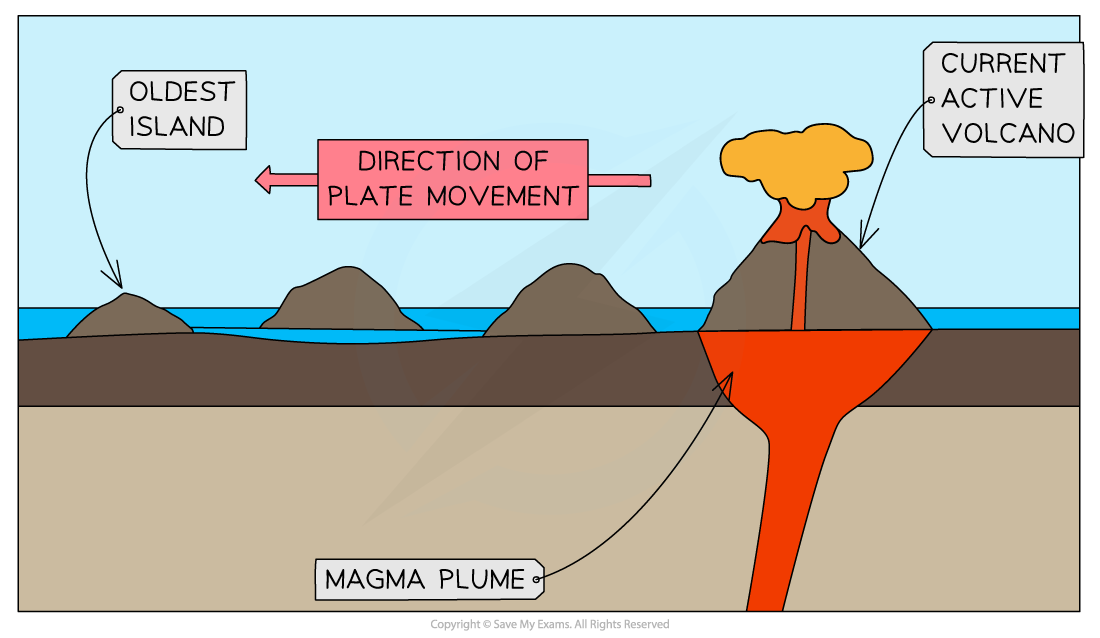
Causes of Earthquake Hazards
Causes of Earthquake Hazards
Earthquakes and plate boundaries
Earthquakes can occur anywhere but mostly occur at or near plate boundaries
Earthquakes happen at all plate boundaries - divergent (constructive), convergent (destructive), collision and transform (conservative)
At a divergent (constructive) plate boundary, earthquakes tend to be weaker as the plates are moving apart
At convergent (destructive), collision and conservative (transform) plate boundaries earthquakes tend to be stronger