2.2.1 Hydrological Characteristics
The Characteristics & Processes of Rivers
The Characteristics & Processes of Rivers
Water on Earth
Only 2.5% of the water on Earth is freshwater
68.7% of freshwater is stored in glaciers and ice sheets and 30% is groundwater
The remaining 1.3% of freshwater is in rivers, soil moisture, lakes and the atmosphere
All water is part of the hydrological cycle
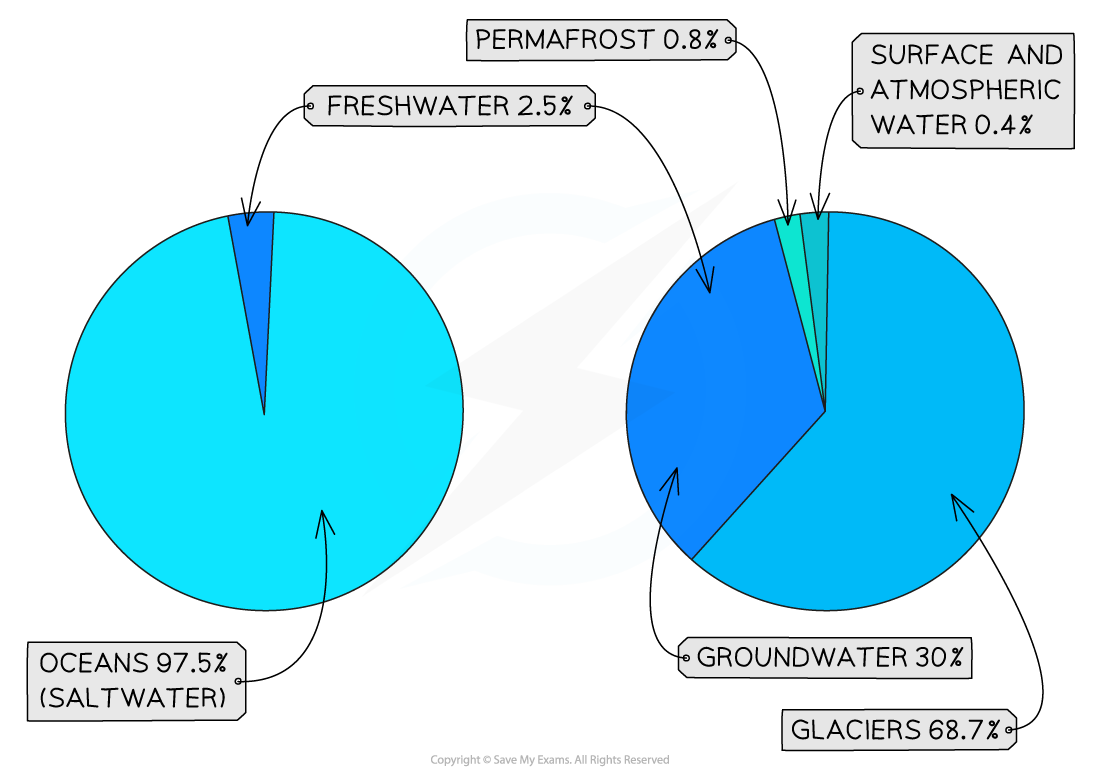
Sources of Water
Hydrological cycle
The hydrological cycle is a closed system
Water is constantly recycled through the system
Within the hydrological cycle, there are stores and transfers (flows)

The Hydrological Cycle
Stores are those places where water is held for a period of time. These include:
Water in the atmosphere in the form of water vapour or water droplets in clouds
Surface stores such as puddles, lakes, rivers and reservoirs
Interception is how precipitation is prevented from reaching the ground, usually by being caught on leaves or branches
Aquifers are permeable rocks such as limestone and sandstone which can hold water
Ice and snow
Seas and oceans
Flows are the ways in which water is moved around the hydrological cycle. They include:
Evaporation
Condensation
Transpiration
Evapotranspiration
Precipitation
Overland flow
Infiltration
Percolation
Through flow
Groundwater flow