2.2.3 River Processes
River Processes
River Processes
Erosion is the wearing down of surfaces
There are four erosion processes which change the shape of the river channel:
Hydraulic action
Abrasion
Attrition
Corrosion (solution)

Types of Erosion
Erosion can be mainly vertical or lateral:
Vertical erosion is dominant in the upper course of rivers. It increases the depth of the river and valley, as the river erodes downwards
Lateral erosion is dominant in the middle and lower course of rivers. It increases the width of the river and valley as it erodes sideways
There are four processes of transportation:
Traction
Saltation
Suspension
Solution
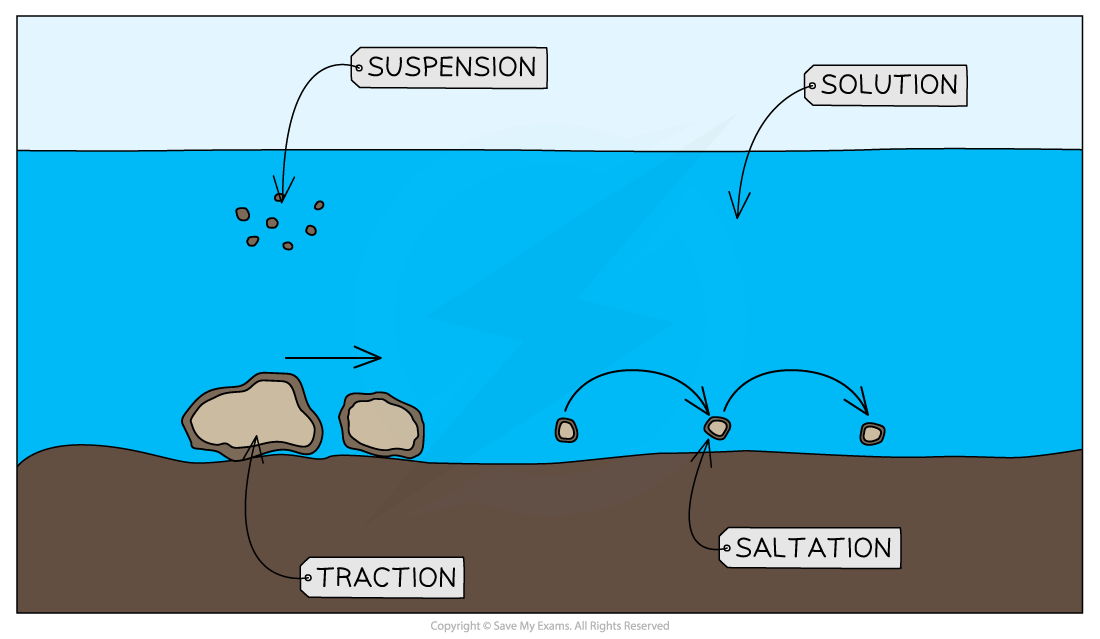
Transportation Processes
Deposition
When a river does not have enough energy to carry materials it drops them. This is deposition
The causes of reduced energy include:
Reduced discharge due to a lack of precipitation or abstraction upstream
Decreased gradient
Slower flow on the inside of a river bend or where the river is shallower
When the river enters a sea/ocean or lake
The heaviest material is deposited first, this is known as the bedload
The lighter materials, gravel, sand and silt are known as alluvium and they are carried further downstream
The dissolved materials are carried out to sea
As a result of erosion, transportation and deposition the character of a river changes as it moves down stream
These changes are summarised in the Bradshaw model

The Bradshaw Model
River characteristics
All rivers have a long and cross profiles
Each river's long and cross profiles are unique but they do have some characteristics in common
These profiles show changes in river characteristics from the source to the mouth
Long profile
The long profile of a river shows the changes in the river gradient from the source to the mouth
Most long profiles have a concave shape with similar characteristics:
The source is usually in an upland area
The upper course of the river includes areas which are steep with uneven surfaces
In the middle course the gradient decreases
In the lower section the gradient decreases further until it becomes almost flat
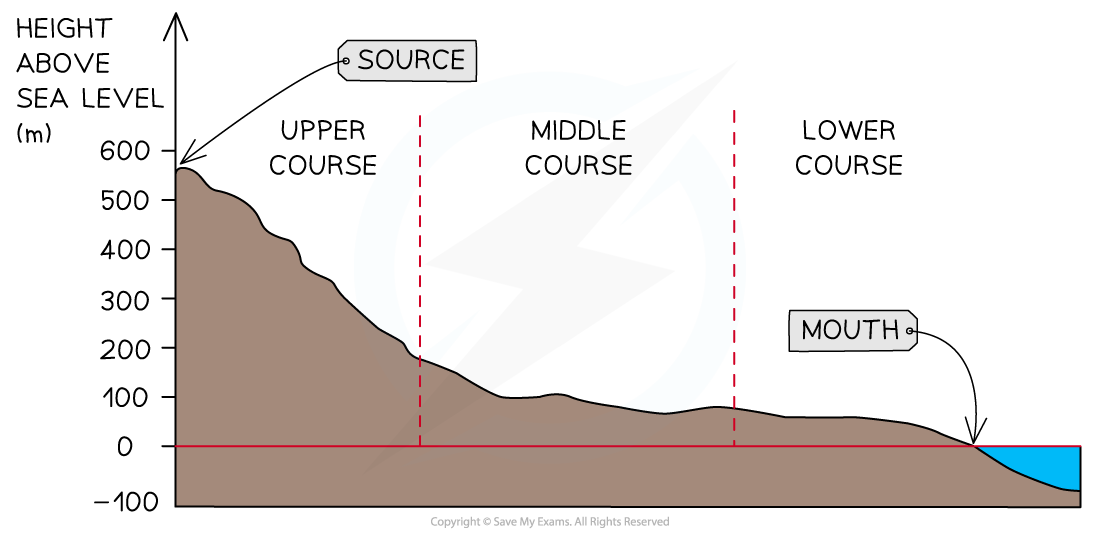
Long Profile
Cross profiles
The cross profiles of a river are cross-sections from one bank to another
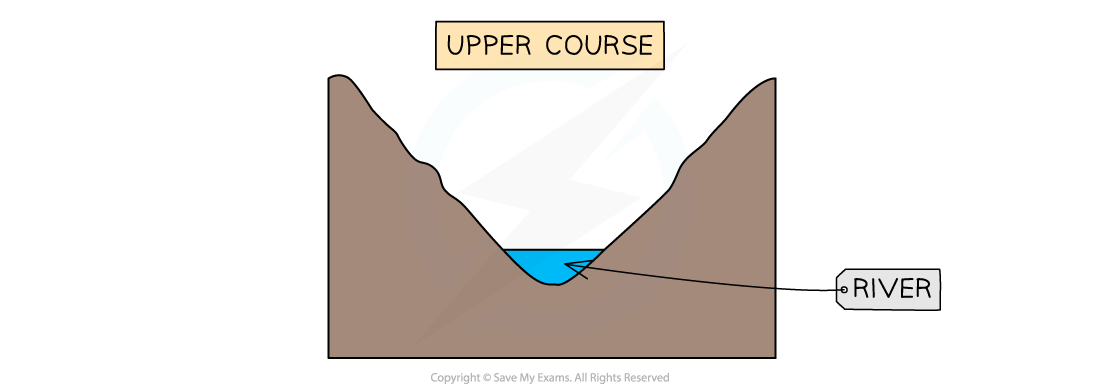
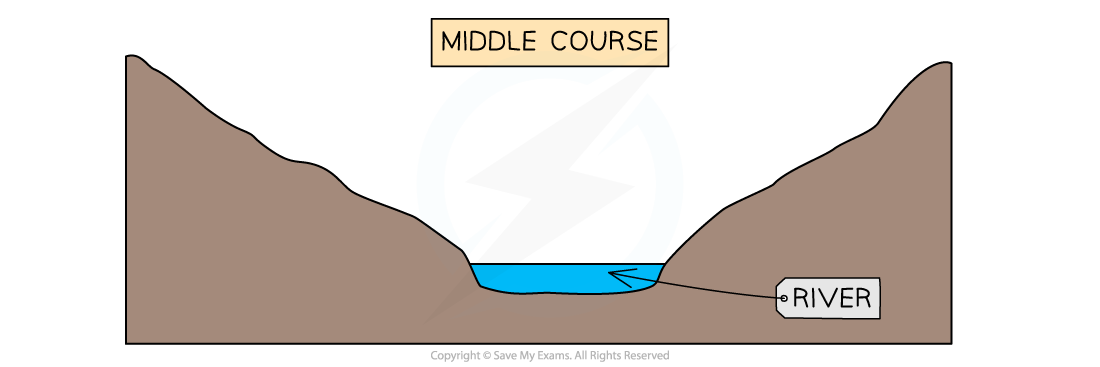
Cross profiles of the upper, middle and lower courses show the changes in the river channel
Upper course characteristics include:
Shallow
Steep valley sides
Narrow
Low velocity
Large bedload
Rough channel bed
High levels of friction
Vertical erosion
Middle course characteristics:
Deeper than upper course channel
Gentle valley sides
Wider than upper course channel
Greater velocity than upper course channel
Material in river decreases in size
Smoother channel bed
Lower levels of friction than upper course channel
Lateral erosion
Lower course characteristics:
Deeper than middle course channel
Flat floodplains
Wider than middle course channel
Greater velocity than the middle course channel (apart from as the river enters the mouth)
Material carried mainly sediment and alluvium
Smooth channel bed
Lowest friction
Deposition is dominant
