Public Sector Businesses
The Public Sector
The public sector
The public sector is a key element of mixed economies
Public sector firms are owned and controlled by the government and are usually funded through taxation
Their main goal is to provide services such as education, healthcare or emergency services that may not be provided by profit-focused businesses
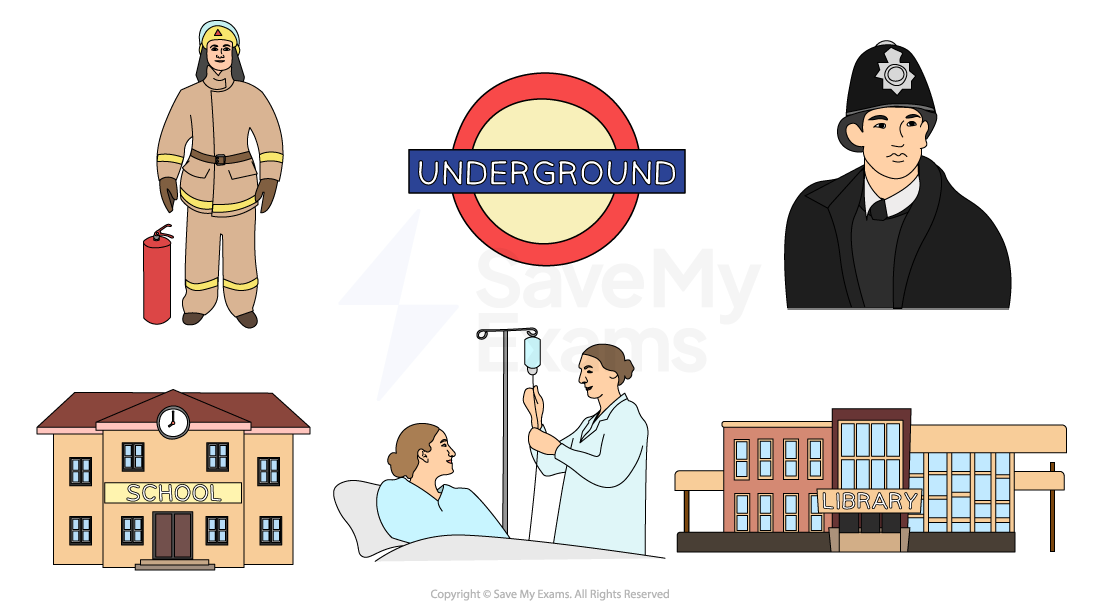
Public sector firms operate on a local, regional or national government level
Transport for London provides local transport in the London region
Caribbean Airlines operates across several countries in the Caribbean, with ownership shared by the governments of Trinidad and Tobago, Jamaica and Guyana
Comboios de Portugal provides train services across the country and in to Spain
Governments are likely to retain ownership of organisations in the public sector for several reasons
They are strategically important to the country, such as the defence or justice systems
They provide essential services such as water, electricity supply or emergency services
They are merit goods that may not be provided in sufficient quantities by private businesses, such as education or health services
Public corporations
Public corporations are owned by the government
They are usually businesses which were once owned by private individuals and have been nationalised
In 2022, the German government nationalised Uniper, the country's largest importer of gas, to improve energy security as a result of the conflict between Russia and Ukraine
In 2008, the UK government nationalised Northern Rock, a bank which was on the verge of collapse as a result of the global financial crisis
Government ministers appoint a Board of Directors, which manages the corporation
They are expected to run the corporation according to objectives set by the government
Although they may be profitable, the aim of corporations is to provide a public service
Governments should not interfere with day-to-day operations and decisions of the corporation
Evaluating public corporations
Advantages | Disadvantages |
|---|---|
|
|
|
|
|
|
Other public sector enterprises
In some cases, profit-making companies are partly owned or controlled by the government
They sell shares on the publicly listed stock exchanges so they are a mix of the private and public sector
In the US, Amtrak (passenger trains) is a state-owned for-profit enterprise whose shares are majority owned by the federal government
Other businesses are funded by central and local government
They may still levy charges for some services
The NHS is free at the point of use for British citizens, but they must pay for medical prescriptions, some procedures and parking on hospital premises
The French state funds leisure facilities such as swimming pools and public sports venues but usually charges users a small fee for their use
Due to the constraints of government spending in many countries, many services are now being privatised or suffer from insufficient funding