Measuring the Speed of Sound
Measuring the Speed of Soundvideo
Measuring the Speed of Sound
There are several experiments that can be carried out to determine the speed of sound
Three methods are described below
The apparatus for each experiment is given in bold
Method 1: Measuring Sound Between Two Points
Measuring the Speed of Sound Using a Loud Noise
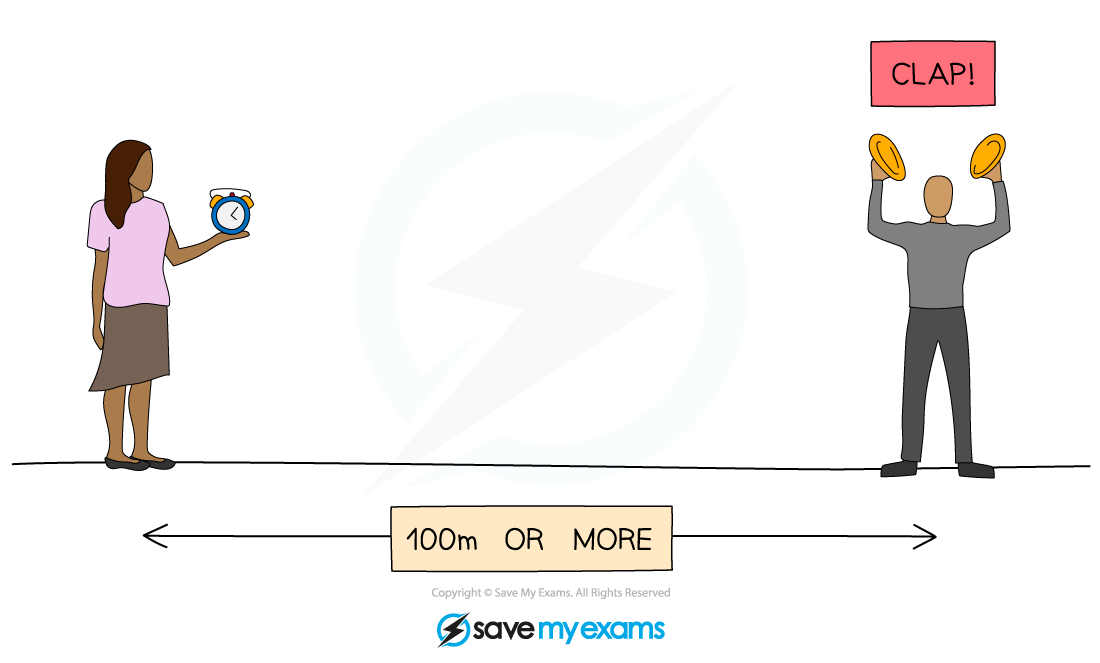
Measuring the speed of sound directly between two points
Two people stand a distance of around 100 m apart
The distance between them is measured using a trundle wheel
One person has two wooden blocks, which they bang together above their head
The second person has a stopwatch which they start when they see the first person banging the blocks together and stops when they hear the sound
This is then repeated several times and an average value is taken for the time
The speed of sound can then be calculated using the equation:
Method 2: Using an Oscilloscope
Measuring the Speed of Sound Using Microphones
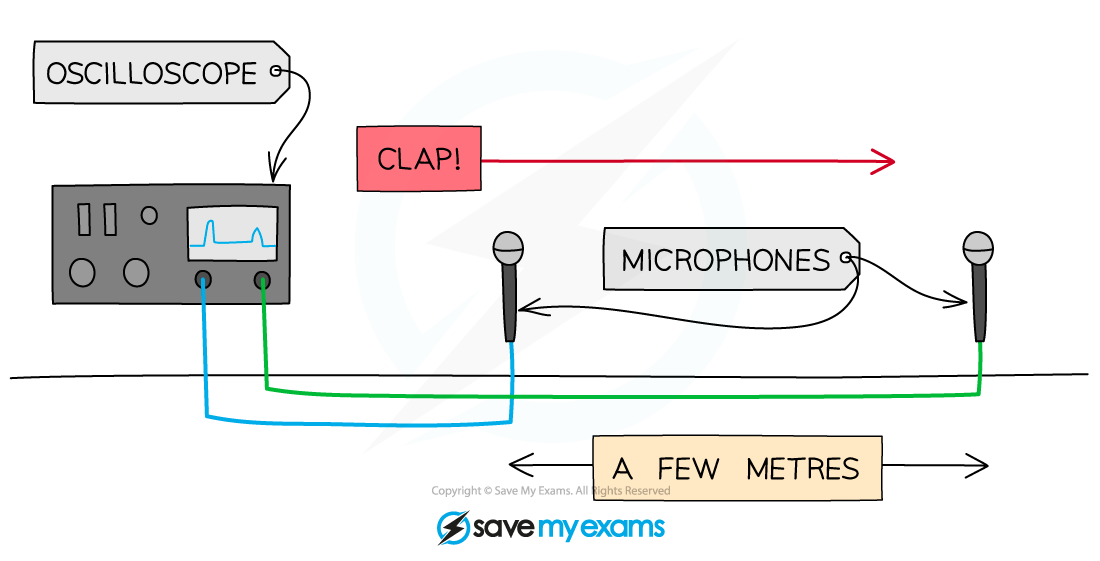
Measuring the speed of sound using an oscilloscope
Two microphones are connected to an oscilloscope and placed about 5 m apart using a tape measure to measure the distance
The oscilloscope is set up so that it triggers when the first microphone detects a sound, and the time base is adjusted so that the sound arriving at both microphones can be seen on the screen
Two wooden blocks are used to make a large clap next to the first microphone
The oscilloscope is then used to determine the time at which the clap reaches each microphone and the time difference between them
This is repeated several times and an average time difference calculated
The speed can then be calculated using the equation:
Measuring Wave Speed in Water
Ripples on water surfaces are used to model transverse waves
The speed of these water waves can be measured
Ripples on Water
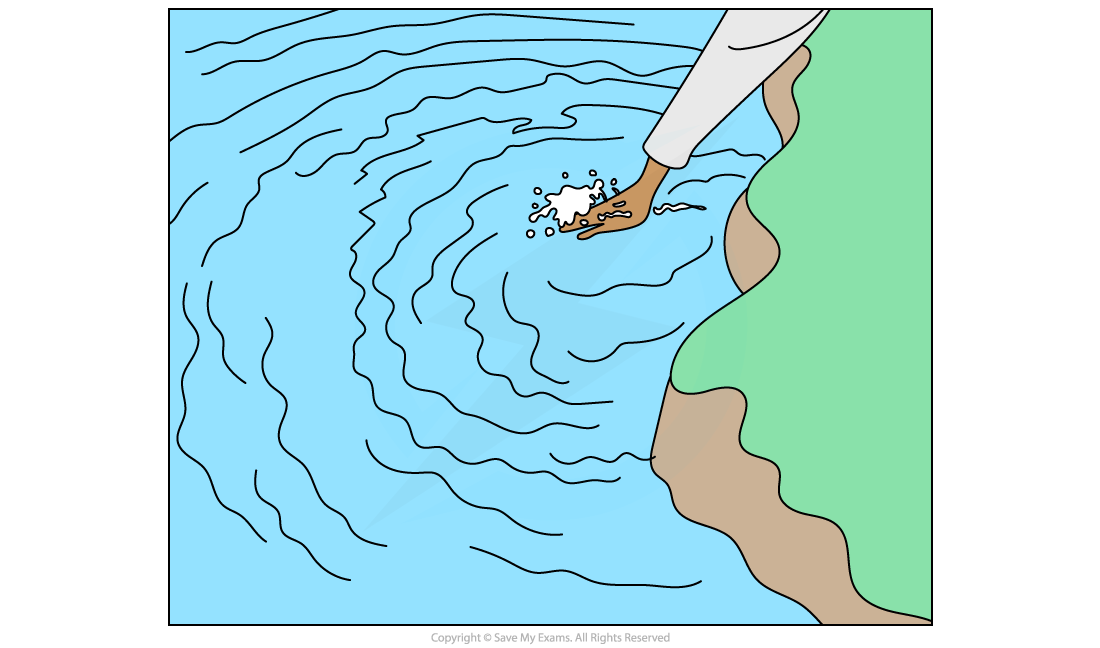
Creating ripples in water
Choose a calm flat water surface such as a lake or a swimming pool
Two people stand a few metres apart using a tape measure to measure this distance
One person counts down from three and then disturbs the water surface (using their hand, for example) to create a ripple
The second person then starts a stopwatch to time how long it takes for the first ripple to get to them
The experiment is then repeated 10 times and an average value for the time is calculated
The average time and distance can then be used to calculate the wave speed using the equation:
Speed of Sound in Air
Speed of Sound in Air
Sound waves travel at a speed of about 340 m/s in air at room temperature
The higher the air temperature, the greater the speed of sound
The speed of sound in air varies from 330 – 350 m/s
Speed of Sound in Materials
Speed of Sound in Materials
Sound travels at different speeds in different mediums:
Sound travels fastest in solids
Sound travels slowest in gases
Some typical speeds of sound in solids, liquids and gases are:
Solids 5000 m/s
Liquids 1500 m/s
Gases 350 m/s