Sound Waves
Describing Sound
Describing Sound
Sound waves are produced by vibrating sources
When a sound wave comes into contact with a solid, those vibrations can be transferred to the solid
For example, sound waves can cause a drinking glass to vibrate
If the glass vibrates too much the movement causes the glass to shatter
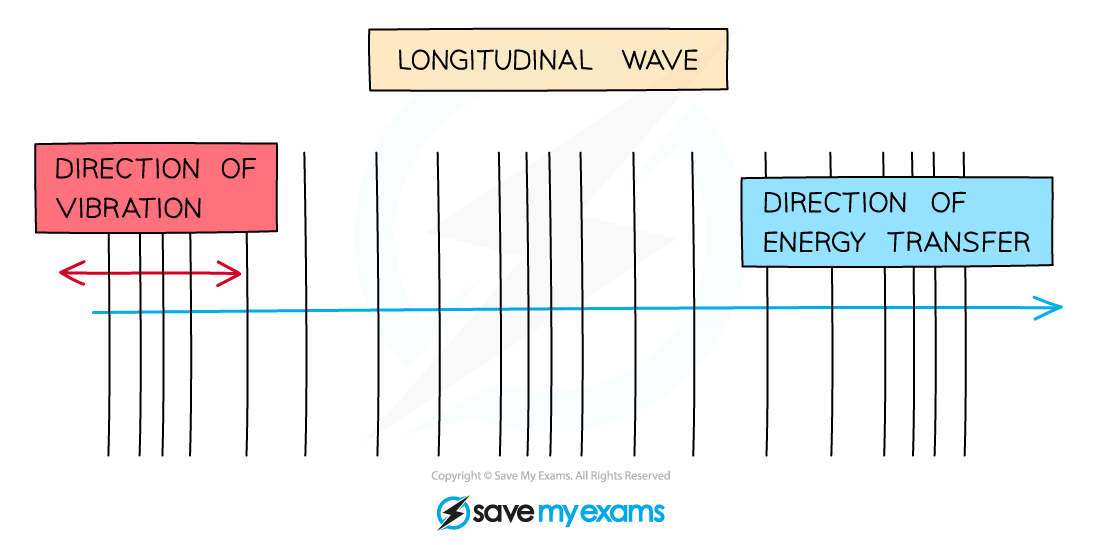
Sound waves are longitudinal: the molecules vibrate in the same direction as the energy transfer
Sound waves require a medium to travel through
This means that if there are no molecules, such as in a vacuum, then the sound can’t travel through it
The range of frequencies a human can hear is 20 Hz to 20 000 Hz
Compression & Rarefaction
Longitudinal waves consist of compression and rarefactions:
A compression is a region of higher density i.e. a place where the molecules are bunched together
A rarefaction is a region of lower density i.e. a place where the molecules are spread out
Compressions and Rarefactions of Air in a Column
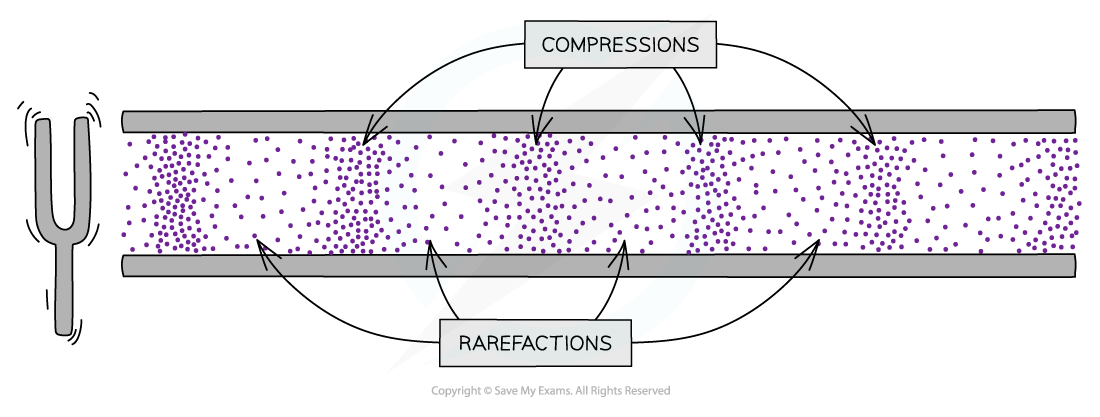
Sound is a longitudinal wave consisting of compressions and rarefactions - these are areas where the pressure of the air varies with the wave
These compressions and rarefactions cause changes in pressure, which vary in time with the wave
Therefore, sound is a type of pressure wave
When the waves hit a solid, the variations in pressure cause the surface of the solid to vibrate in sync with the sound wave
Compressions and Rarefactions of Sound Reflecting from a Solid
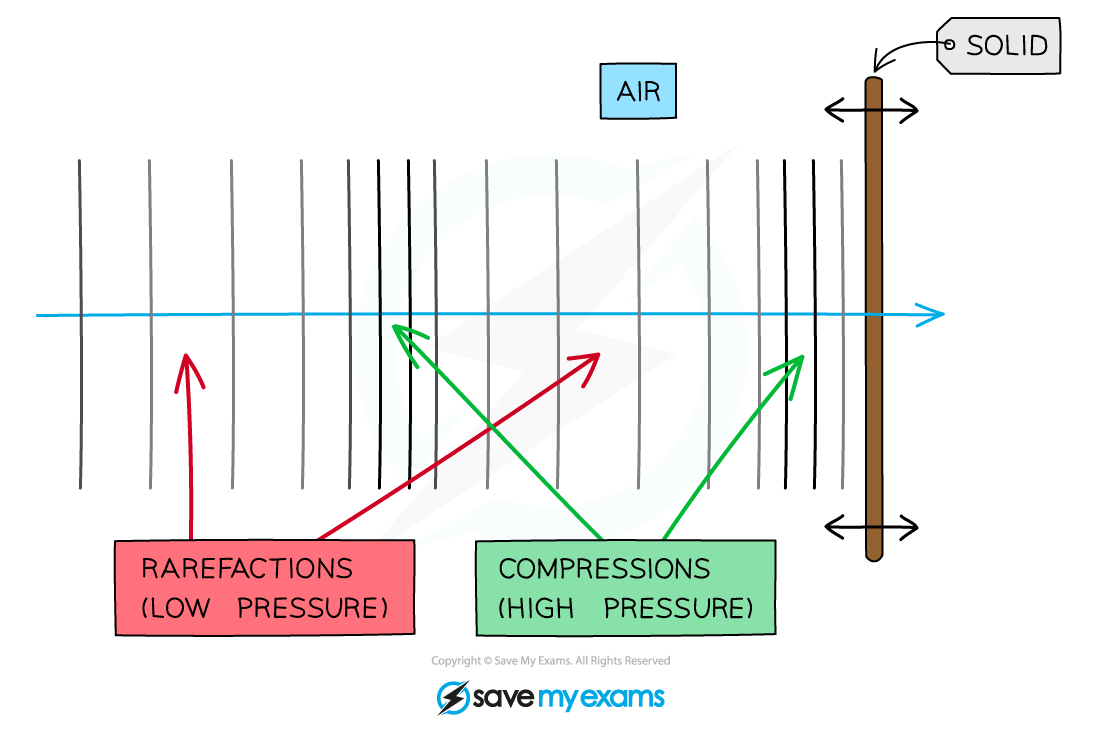
When sound waves hit a solid, the fluctuating pressure causes the solid to vibrate
Investigating Sound in a Vacuum
Investigating Sound in a Vacuum
Sound Waves in a Vacuum
Sound waves are longitudinal waves
All longitudinal waves require a medium through which to travel
A vacuum is a region of space that does not contain air (or any other matter)
This means that, in a vacuum, there is no medium for sound waves
So sound waves cannot travel in a vacuum
Using a Bell Jar
This can be easily demonstrated using a piece of equipment called a bell jar
This is a glass container from which air can be pumped out, creating a vacuum (or nearly a vacuum)
A sound-emitting object is used, such as a battery-operated ringing bell or alarm
This is placed in a bell jar, which still contains air
The ringing bell can be heard despite the bell jar's glass walls
However, as the air begins being pumped out, the volume of the sound heard starts decreasing
When the air is completely removed from the bell jar, the ringing bell cannot be heard at all
Sound in a Bell Jar Demonstration
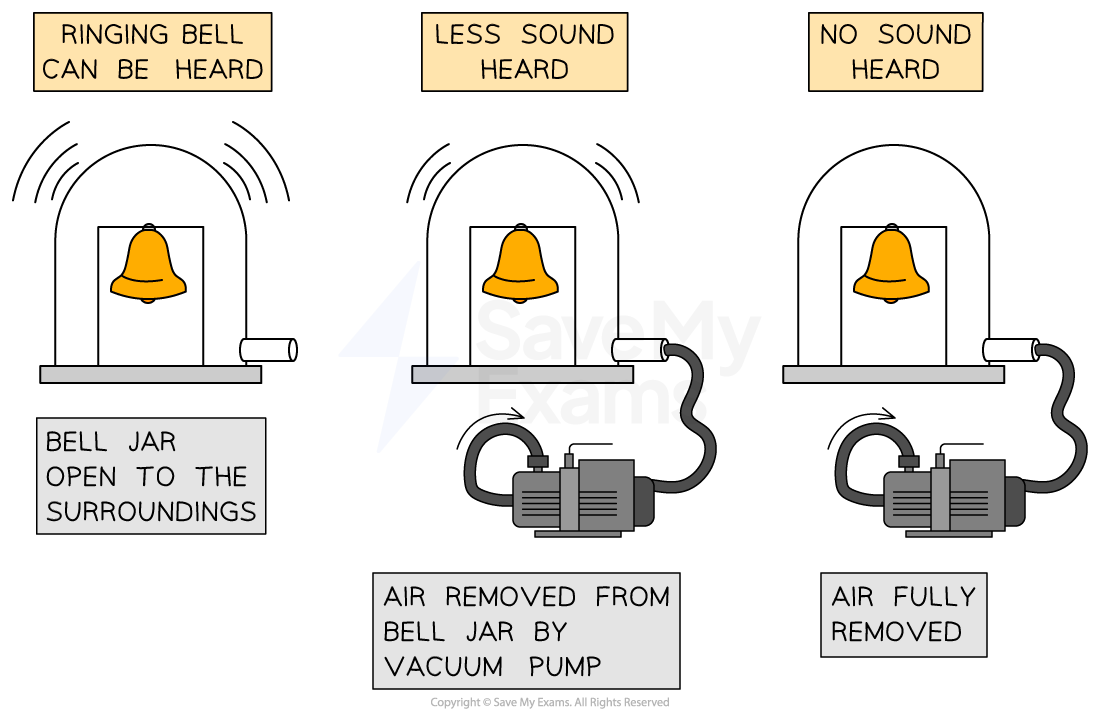
In the absence of air, sound waves are unable to travel and leave the bell jar