Properties of Sound Waves
Pitch & Loudnessvideo
Pitch & Loudness
The frequency of a sound wave is related to its pitch
Sounds with a high pitch have a high frequency (or short wavelength)
Sounds with a low pitch have a low frequency (or long wavelength)
Sounds with a large amplitude have a high volume
Sounds with a small amplitude have a low volume The amplitude of a sound wave is related to its volume
Graphs of Different Amplitudes & Frequencies
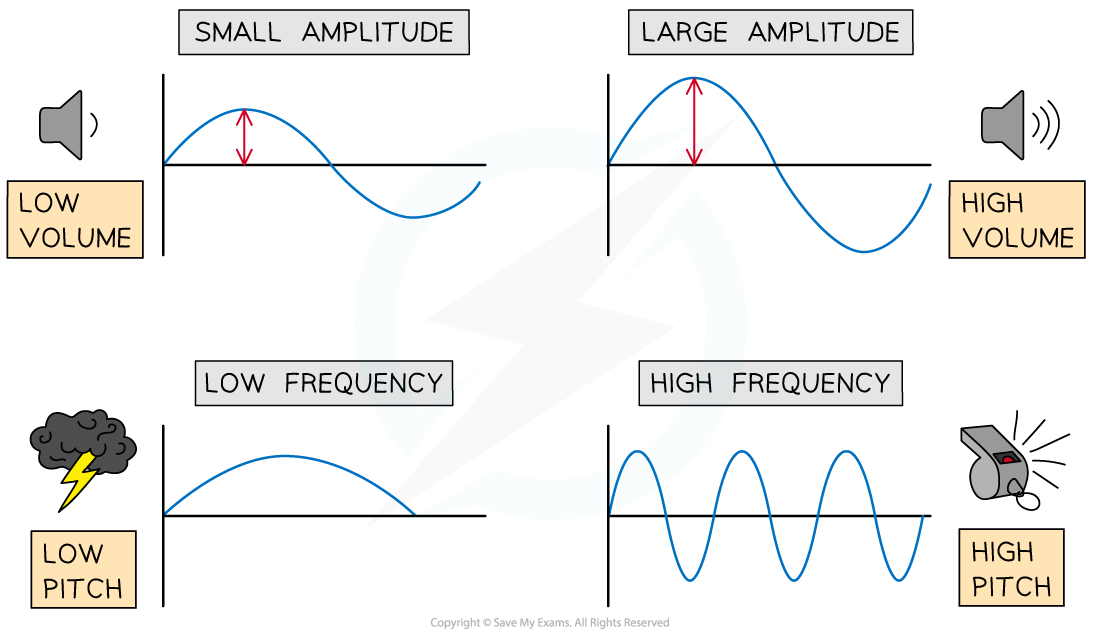
The amplitude of a wave determines the volume of the sound and the frequency determines the pitch
Different Sound Sourcesvideo
Different Sound Sources
An oscilloscope is a device that can be used to study a rapidly changing signal, such as:
A sound wave
An alternating current
Oscilloscope
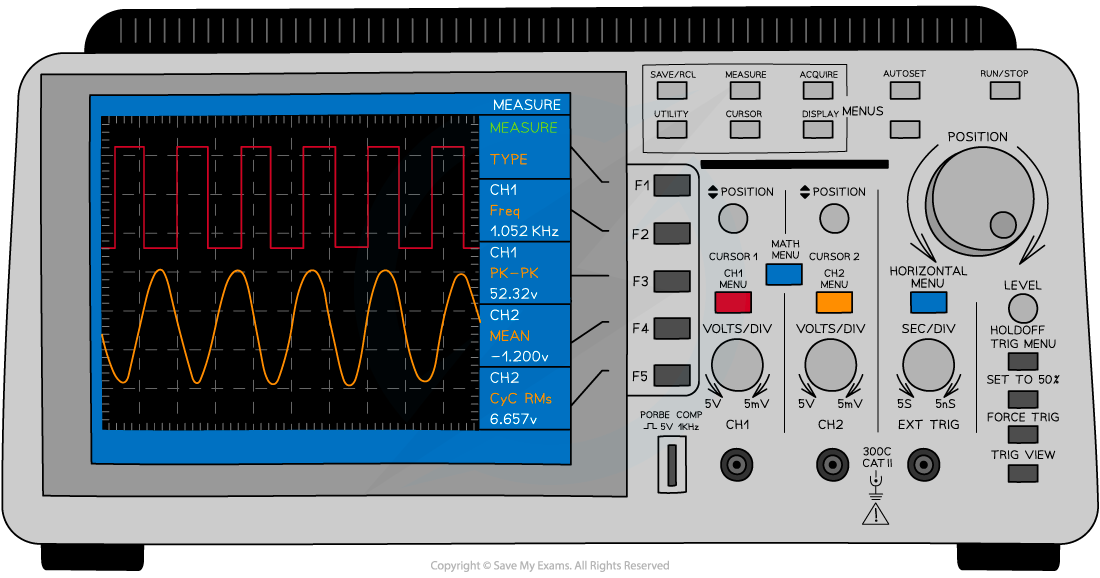
Oscilloscopes have lots of dials and buttons, but their main purpose is to display and measure changing signals like sound waves and alternating current
When a microphone is connected to an oscilloscope, the (longitudinal) sound wave is displayed as though it were a transverse wave on the screen
The time base (like the 'x-axis') is used to measure the time period of the wave
A Soundwave Depicted as a Transverse Wave on an Oscilloscope
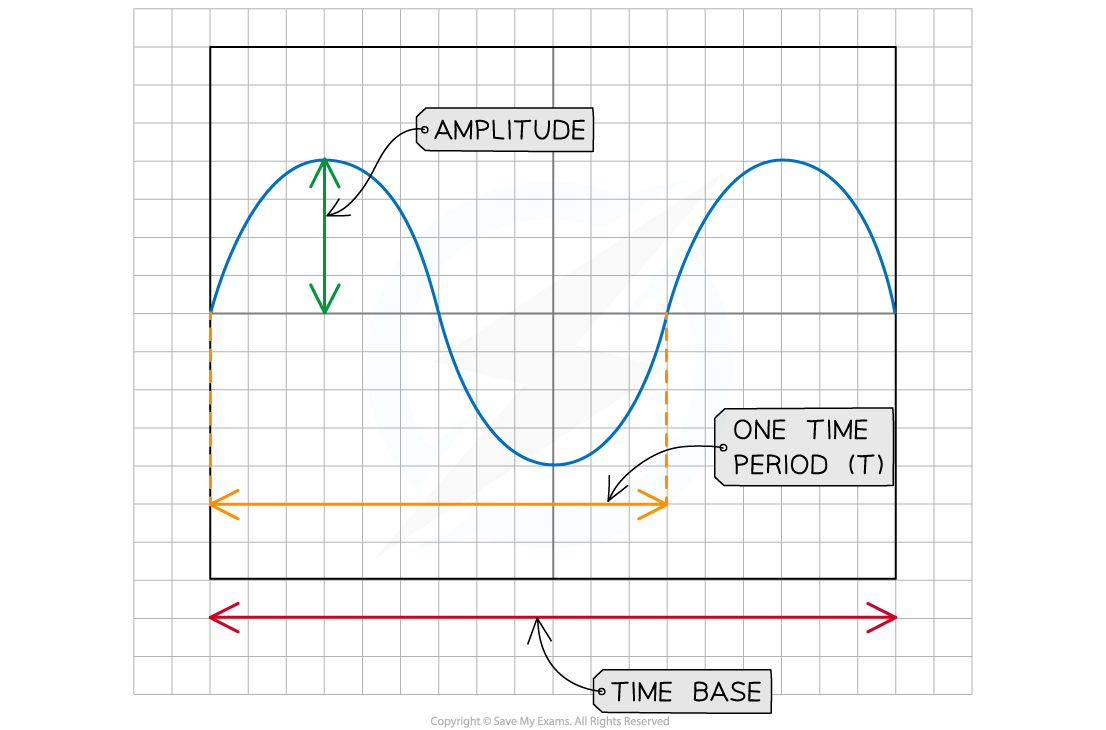
A sound wave is displayed as though it were a transverse wave on the screen of the oscilloscope. The time base can be used to measure a full time period of the wave cycle
The height of the wave (measured from the centre of the screen) is related to the amplitude of the sound
The number of entire waves that appear on the screen is related to the frequency of the wave
If the frequency of the sound wave increases, more waves are displayed on screen