How Markets Work
Definition of a market
Definition of a market
A market is any place or process that brings buyers and sellers together to exchange goods and services
This exchange can happen in a physical location (such as a food market in Jakarta) or through a virtual platform (such as Alibaba or Amazon)

Examples of markets
Examples of markets
A product market is one where buyers and sellers meet exchange a physical good
A factor market is one where buyers and sellers meet to exchange factors of production
Type of market | Description | Example |
|---|---|---|
Physical retail market |
|
|
Online market |
|
|
Commodity market |
|
|
Labour market |
|
|
Foreign exchange market |
|
|
Stock market |
|
|
Roles of buyers and sellers
Roles of buyers and sellers
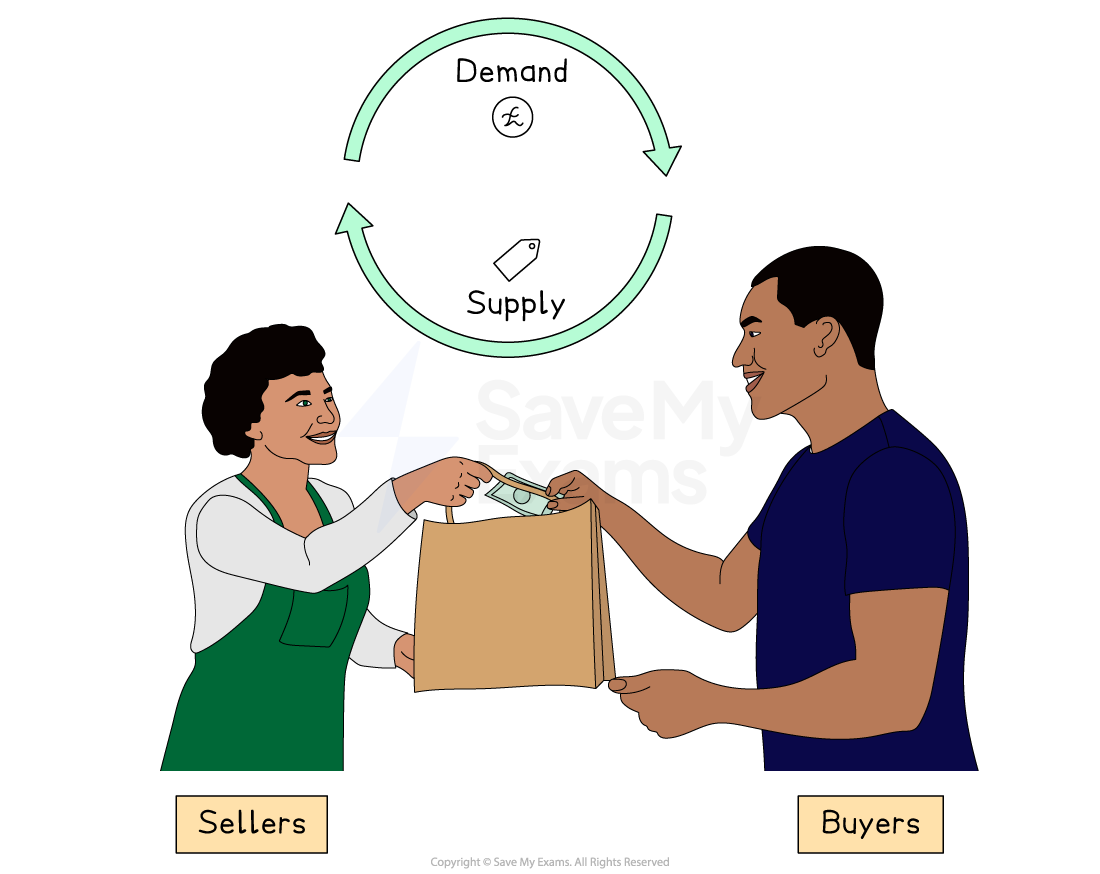
In any market, both buyers and sellers play essential roles
In an efficient market, sellers respond to what buyers want, and buyers choose between competing sellers
This interaction helps determine prices and quantities
Buyers
Also known as consumers or demanders
Their choices and preferences determine demand for goods and services
They help to set prices by signalling how much they are willing to pay
For example: A buyer in Mexico City searching for the best price on mobile phones influences how firms set prices to compete
Sellers
Also known as producers or suppliers
They aim to supply goods or services in order to make a profit
They decide what to produce, how much and at what price based on costs and expected demand
For example: A coconut farmer in the Philippines choosing whether to sell to local markets or export to Singapore