National Minimum Wages (NMW)
Exam code: 2281
Government policy: minimum wages
Government policy: minimum wages
Government's often intervene in the labour market by setting a minimum wage
They do this in order to improve equity and avoid the exploitation of worker
A minimum wage is a legally imposed wage level that employers must pay their workers
It is set above the market rate
The minimum wage/hour often varies based on age
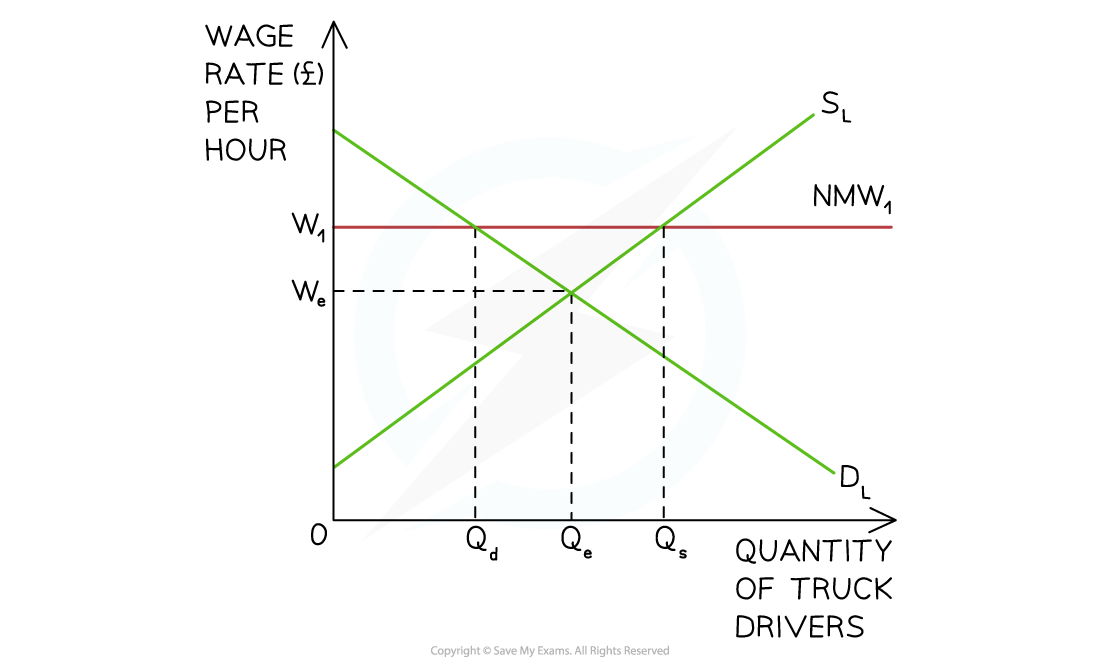
Diagram analysis
The market equilibrium wage and quantity for truck drivers in the UK is seen at WeQe
The government imposes a national minimum wage (NMW) at W1
Incentivised by higher wages, the supply of labour increases from Qe to Qs
Facing higher production costs, the demand for labour by firms decreases from Qe to Qd
This means that at a wage rate of W1 there is excess supply of labour and the potential for unemployment equal to QdQs