StudyDeck

The Growth of Firms

Exam code: 2281
Written by: Ashika|Reviewed by: Caroline Carroll|Updated 2 July 2026

Internal and External Growth

Internal and External Growth

  • The growth of firms can be organic (internal) or inorganic (external)

  • Organic growth is usually generated by

    • Gaining greater market share

    • Product diversification

    • Opening a new store

    • International expansion

    • Investing in new technology/production machinery

  • Inorganic growth usually takes place when firms merge in one of three ways

    • Vertical integration (forward or backwards)

    • Horizontal integration

    • Conglomerate integration

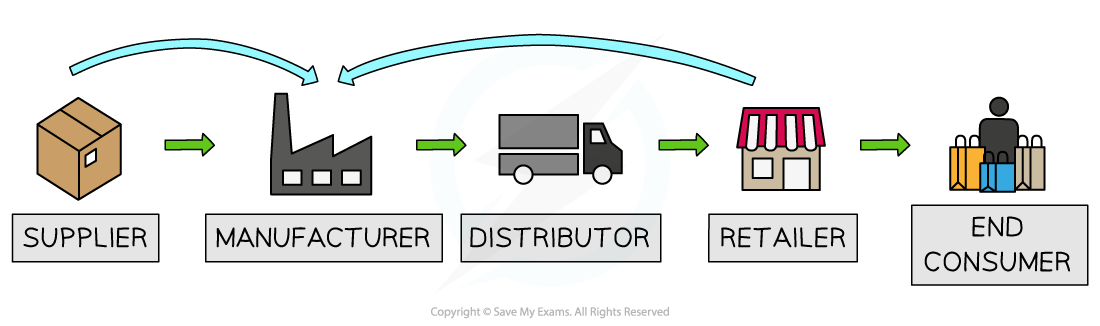
Flowchart of a supply chain: supplier (box), manufacturer (factory), distributor (truck), retailer (store), and end consumer (person with bags) with arrows indicating flow.
A diagram that illustrates how a firm can grow through forward or backward vertical integration
  • Forward vertical integration involves a merger or takeover with a firm further forward in the supply chain

    • E.g. A dairy farmer merges with an ice-cream manufacturer 

  • Backward vertical integration involves a merger/takeover with a firm further backward in the supply chain

    • E.g. An ice-cream retailer takes over an ice-cream manufacturer

Types of Mergers

Types of Mergers

  • Firms will often grow organically to the point where they are in a financial position to integrate with others

    • Integration speeds up growth but also creates new challenges
       

An Explanation of the Advantages and Disadvantages of Each Type of Growth

Type of Growth

Advantages

Disadvantages

Organic

  • The pace of growth is manageable

  • Less risky as growth is financed by profits and there is expertise in the industry

  • Avoids diseconomies of scale

  • The management know and understand every part of the business

  • The pace of growth can be slow and frustrating

  • Not necessarily able to benefit from economies of scale

  • Access to finance may be limited

Vertical Integration
(Inorganic growth)

  • Reduces the cost of production as middle man profits are eliminated

  • Lower costs make the firm more competitive

  • Greater control over the supply chain reduces risk as access to raw materials is more certain

  • Quality of raw materials can be controlled

  • Forward integration adds additional profit as the profits from the next stage of production are assimilated

  • Forward integration can increase brand visibility

  • Diseconomies of scale occur as costs increase e.g. unnecessary duplication of management roles

  • There can be a culture clash between the two firms that have merged

  • Possibly little expertise in running the new firm results in inefficiencies

  • The price paid for the new firm may take a long time to recoup

Horizontal Integration
(Inorganic growth)

  • Rapid increase of market share

  • Reductions in the cost per unit due to economies of scale

  • Reduces competition

  • Existing knowledge of the industry means the merger is more likely to be successful

  • Firm may gain new knowledge or expertise

  • Diseconomies of scale may occur as costs increase e.g. unnecessary duplication of management roles

  • There can be a culture clash between the two firms that have merged

Conglomerate Integration
(Inorganic growth)

  • Reduces overall risk of business failure

  • Increased size and connections in new industries opens up new opportunities for growth

  • Parts of the new business may be sold for profit as they are duplicated in other parts of the conglomerate

  • Possible lack of expertise in new products/industries

  • Diseconomies of scale can quickly develop

  • Usually results in job losses

  • Worker dissatisfaction due to unhappiness at the takeover can reduce productivity