Labour-intensive & Capital-intensive Production
Defining capital-intensive and labour-intensive production
Defining capital-intensive and labour-intensive production
Capital-intensive production occurs when manufacturing relies more heavily on machinery, equipment and technology than human labour
Capital-intensive means that the proportion of machinery costs are higher than any of the other factors of production, including labour
Labour-intensive production occurs when manufacturing relies more heavily on human workers than machines
Labour-intensive means that the proportion of labour costs are higher than the other factors of production, including machinery
Reasons for adopting the different forms of production
Reasons for adopting the different forms of production
Firms will consider several factors before they decide if their production should be capital-intensive or labour-intensive
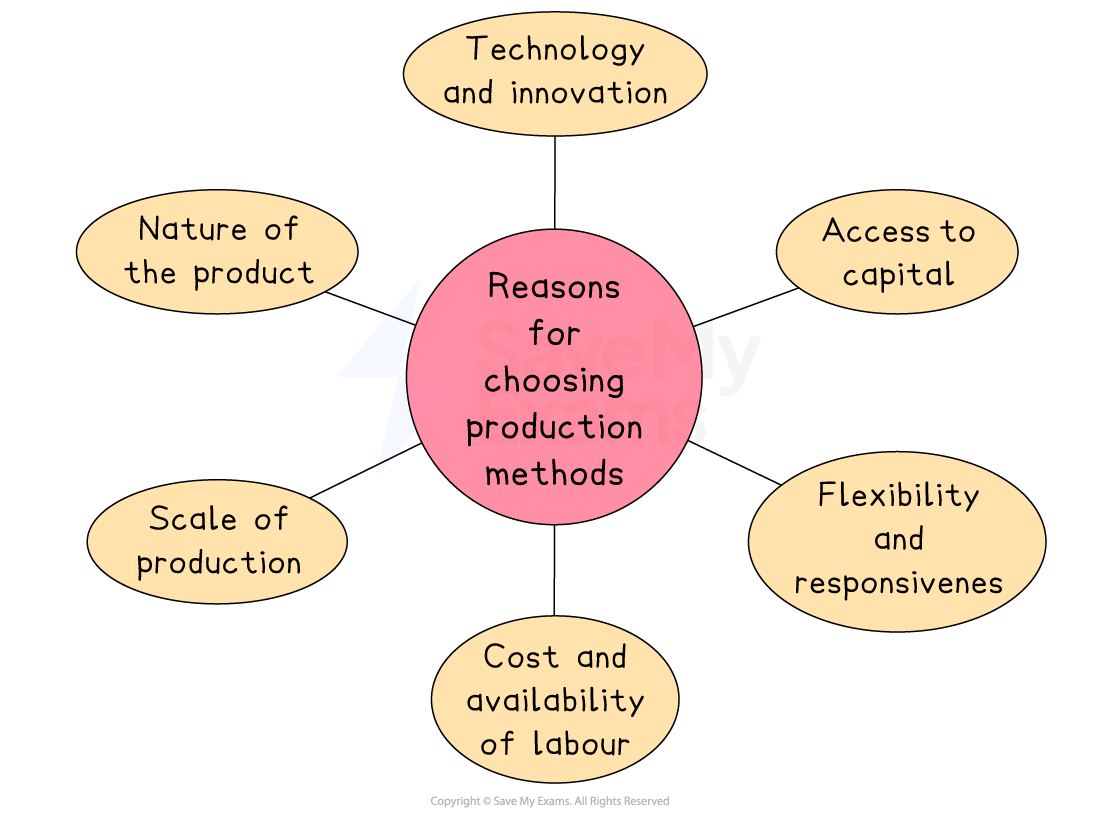
Determining factors
1. Nature of the product
Labour-intensive methods are suitable when products require personalisation or craftsmanship
Capital-intensive methods are preferred for standardised, mass-produced goods
2. Scale of production
Large-scale production (e.g., car manufacturing) usually benefits from capital intensity due to economies of scale
Small-scale or batch production (e.g. artisan goods) often relies on labour intensity
3. Cost and availability of labour
In countries with low labour costs, firms may choose labour-intensive production to save money
In high-wage economies, firms often invest in capital to reduce reliance on expensive human labour
4. Access to capital
Firms with greater financial resources are more likely to afford expensive equipment, making capital-intensive production more viable
Small firms may be limited to labour-intensive production due to budget constraints
5. Technology and innovation
In industries where automation and AI can replace manual tasks, capital intensity becomes more attractive
Where technology cannot fully replace human judgement or creativity, labour intensity remains important
6. Flexibility and responsiveness
Labour-intensive systems can be more flexible when customisation or frequent changes are required
Capital-intensive methods are efficient but less adaptable to variation in production needs
The advantages and disadvantages of the different forms of production
The advantages and disadvantages of the different forms of production
Constant improvements to technology and process innovation mean that firms are constantly evaluating the possibilities of moving from labour to capital-intensive production
Evaluating labour-intensive production
Advantages | Disadvantages |
|---|---|
|
|
Many industries are gradually replacing labour with capital when it makes financial sense to do so
As wages rise in a country, more labour will be replaced by capital (machinery)
Evaluating capital-intensive production
Advantage | Disadvantages |
|---|---|
|
|