Mergers
How do businesses grow?
How do businesses grow?
Many firms start small and will grow into large companies or even multi-national corporations
E.g. Amazon and Dell both started in entrepreneurs' garages
Business growth can be separated into two broad categories, internal and external business growth
Internal growth
Internal growth (organic growth) is driven by expansion using resources from inside the business, such as reinvested profits
It is usually achieved by:
Gaining a greater market share
Product or market diversification
Opening new outlets
International expansion (new markets)
Investing in new technology or production machinery
External growth
External business growth (inorganic growth) is when a business expands by joining with or buying other businesses rather than growing on its own
External growth takes place in the form of a merger or a takeover
A merger occurs when two or more companies combine to form a new company
The original companies cease to exist and their assets and liabilities are transferred to the newly created entity
A takeover occurs when one company purchases another company, often against its will
The acquiring company buys a controlling stake in the target company's shares (>50%) and gains control of its operations
Types of mergers and takeovers
Types of mergers and takeovers
Firms will often grow organically to the point where they are in a financial position to integrate with others
Integration speeds up growth but also creates new challenges
Integration can happen in one of three ways
1. Vertical integration
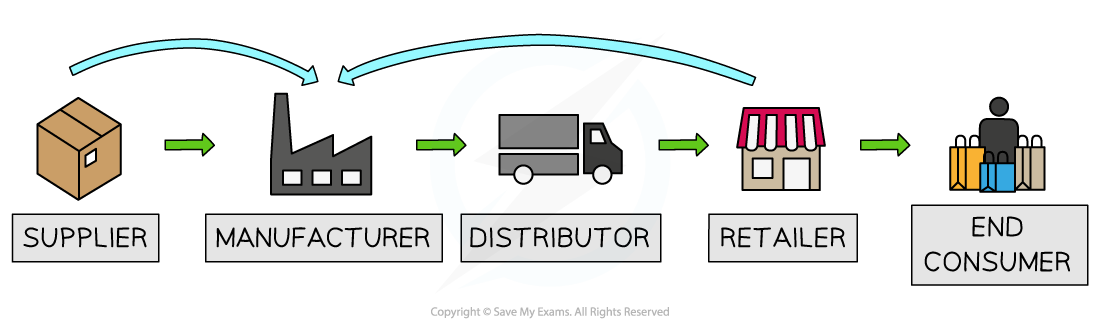
Vertical integration refers to the merger or takeover of another firm in the supply chain or different stage of the production process
Forward vertical integration involves a merger with or takeover of a firm further forward in the supply chain
E.g. A dairy farmer merges with an ice cream manufacturer
Backward vertical integration involves a merger with or takeover of a firm further backwards in the supply chain
E.g. An ice cream retailer takes over an ice cream manufacturer
Evaluating vertical integration
Advantages | Disadvantages |
|---|---|
|
|
2. Horizontal integration
Horizontal integration is the merger or takeover of a firm at the same stage of the production process
E.g. An ice cream manufacturer merges with another ice cream manufacturer
Evaluating horizontal integration
Advantages | Disadvantages |
|---|---|
|
|
3. Conglomerate integration
Conglomerate integration occurs when a firm merges with or takes over another company in an unrelated industry—one that operates in a completely different market
It is a type of diversification strategy that helps firms spread risk by expanding into different sectors, so that poor performance in one market may be offset by success in another
Evaluating conglomerate integration
Advantages | Disadvantages |
|---|---|
|
|