Competitive Markets
An Introduction To Competitive and Monopoly Markets
An Introduction To Competitive and Monopoly Markets
Each firm operates in a specific market
The conditions in different markets can vary significantly and are determined by the market structure in which the firm operates
There are a range of market structures, however your syllabus only requires you to know the characteristics of two - competitive markets and monopolies
Competitive markets are those with an extremely high degree of competition
A monopoly is a market structure in which one firm dominates the market and has significant market power
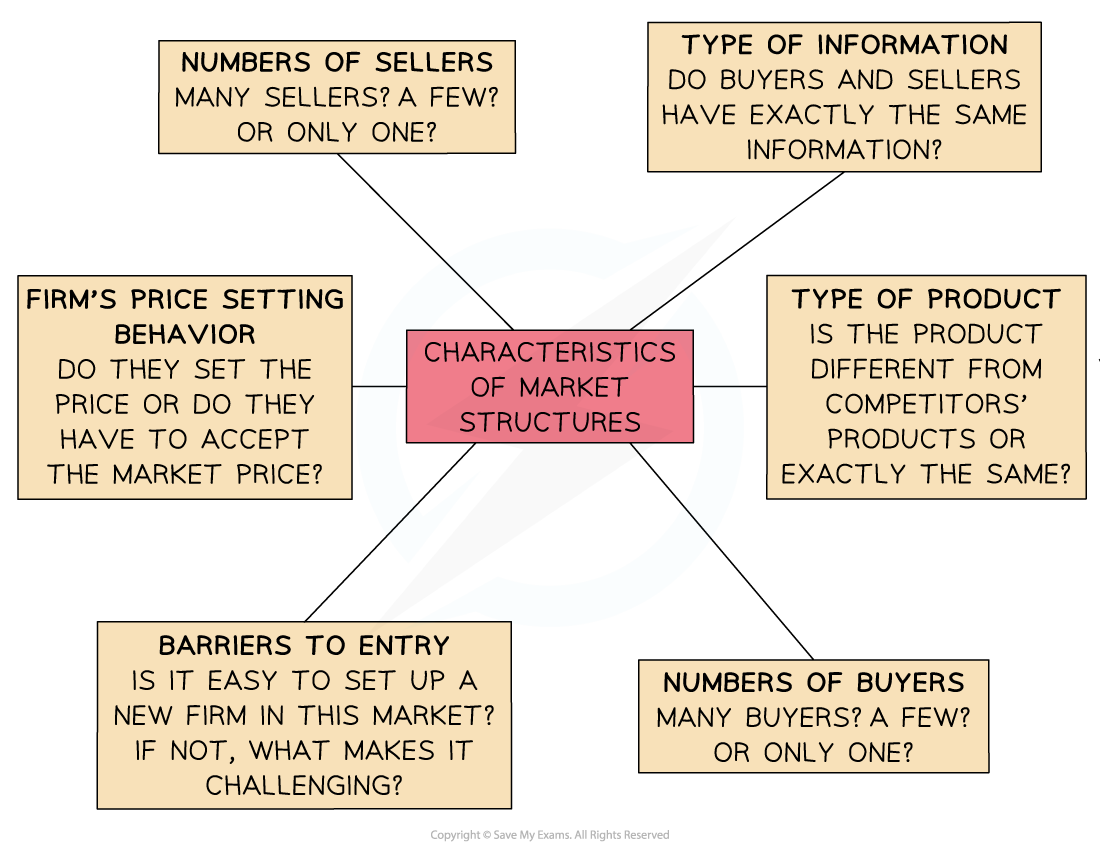
The answers to the questions above determine the type of market structure in which a firm is operating in
If a firm is selling a unique product (e.g. handmade car) it is likely operating in a monopoly market and setting high prices
Characteristics of Competitive Markets
Characteristics of Competitive Markets
The characteristics of a competitive market are as follows
There are many buyers and sellers: due to the number of market participants sellers are price takers
There are no barriers to entry and exit from the industry: firms can start-up or leave the industry with relative ease which increases the level of competition
Buyers and sellers possess perfect knowledge of prices: this assumption presupposes perfect information e.g. if one seller lowers their price then all buyers will know about it
The products are homogenous: this means firms are unable to build brand loyalty as perfect substitutes exist and any price changes will result in losing customers
Advantages and Disadvantages of Competitive Markets
Advantages | Disadvantages |
|---|---|
|
|