Demonstrating Electric Charges
Demonstrating Electrostatic Chargesvideo
Demonstrating Electrostatic Charges
Electrostatic repulsion is caused by the force between charges
When these charges are the same as each other, they repel (push apart)
In simple experiments showing the production of electrostatic charges by friction, insulating solids such as plastics are given a charge
This is done using friction to transfer electrons from the surface
By removing electrons, which have negative charge, the insulator is left with a positive charge
Method
Demonstrating Electrostatic Charge Using the Cradle Method
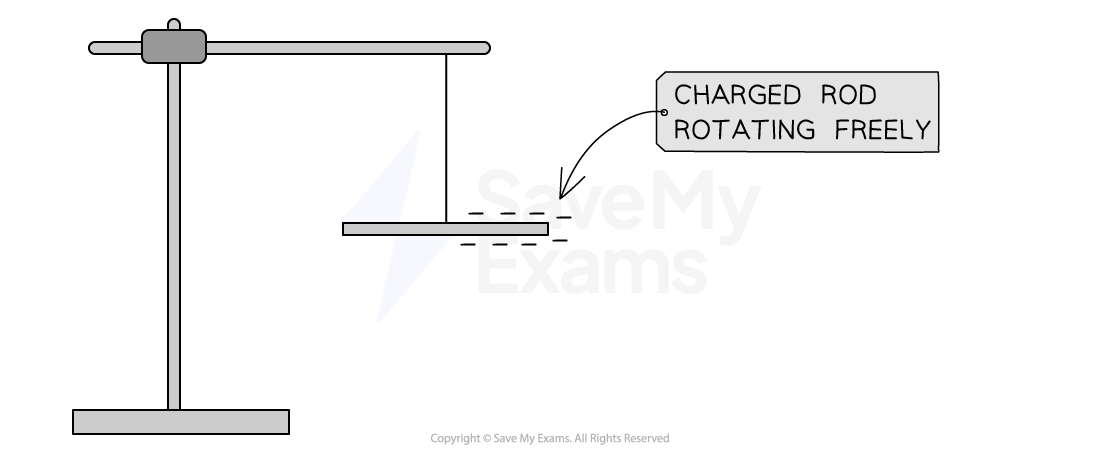
A charged rod is held by a length of thread from a clamp stand so that it can rotate freely
Suspend one of the insulating materials using a cradle and a length of string so that the material can rotate freely
Rub one end of the material using a cloth (in order to give it a charge)
Now take a second piece of insulating material and charge that by rubbing with a cloth
Hold the charged end of the second piece close to the charged end of the first piece:
If the first piece rotates away (is repelled) from the second piece then the materials have the same charge
If the first piece moved towards (is attracted to) the second piece then they have opposite charges
Attraction & Repulsion of Charged Rods
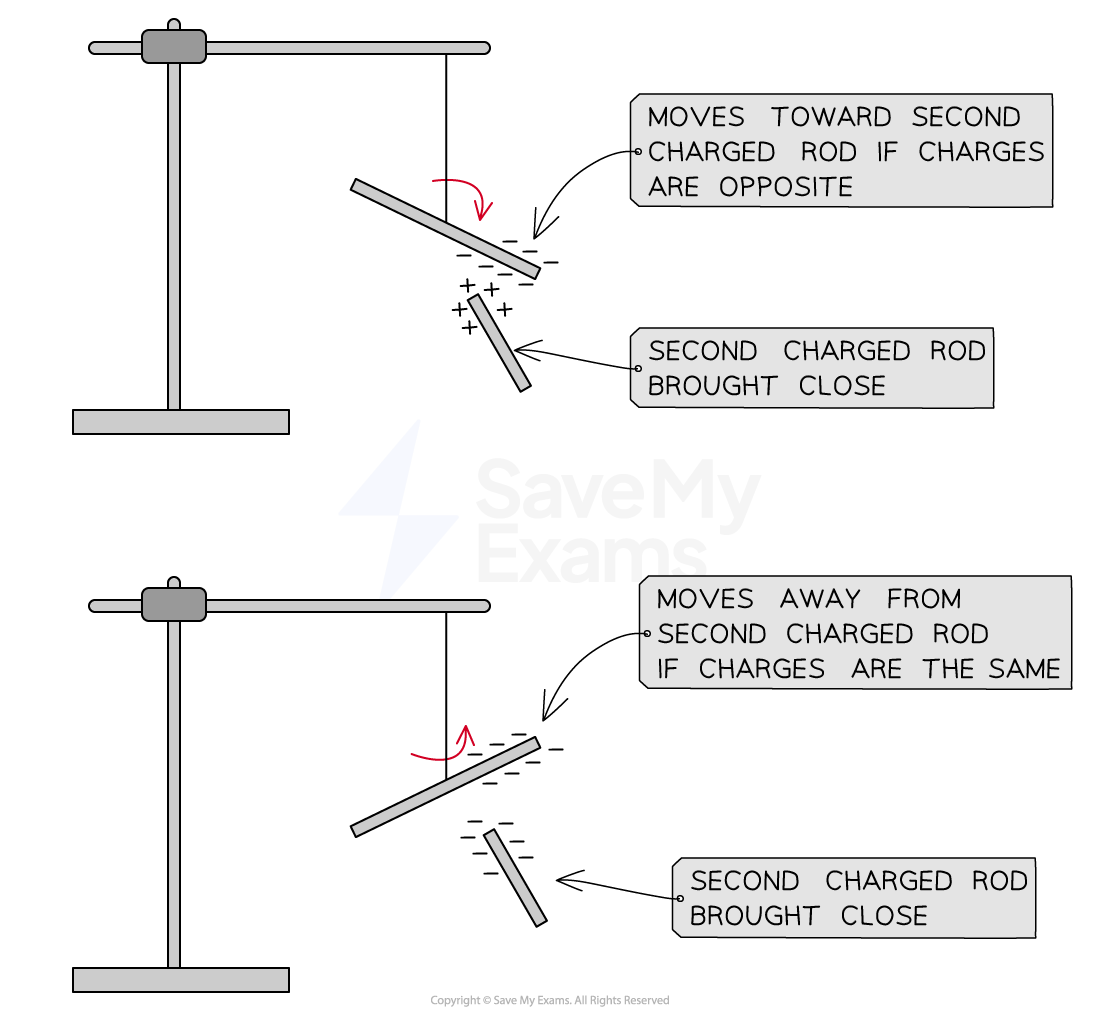
If the charged rods have opposite charges, the freely rotating rod will turn toward the second rod. If the charged rods have like charges, the freely rotating rod will turn away from the second rod