Current in Circuits
Current in Series Circuits
Current in Series Circuits
In a circuit that is a closed-loop, such as a series circuit, the current is the same value at any point
This is because the number of electrons per second that passes through one part of the circuit is the same number that passes through any other part
This means that all components in a closed-loop have the same current
Current in a Series Circuit
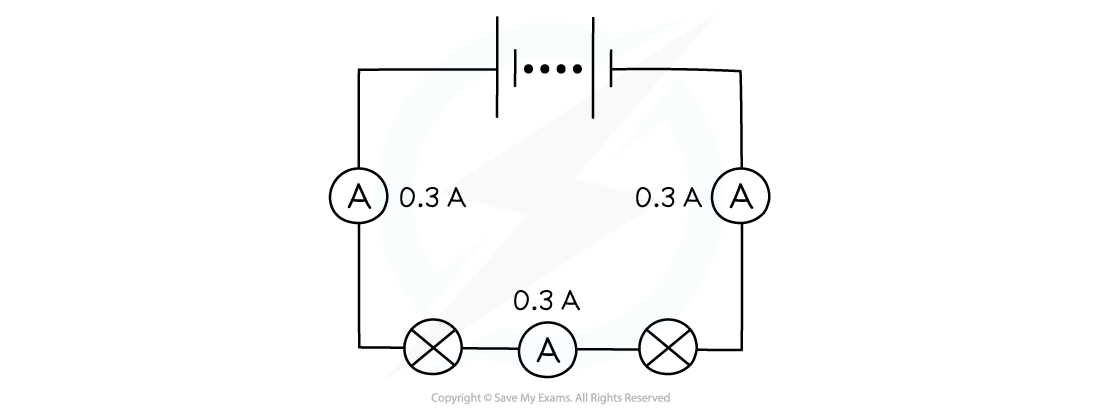
The current is the same at each point in a closed-loop
The amount of current flowing around a series circuit depends on two things:
The voltage of the power source
The resistance of the components in the circuit
Increasing the voltage of the power source drives more current around the circuit
So, decreasing the voltage of the power source reduces the current
Increasing the number of components in the circuit increases the total resistance
Hence less current flows through the circuit
Increasing Potential Difference & Adding Components
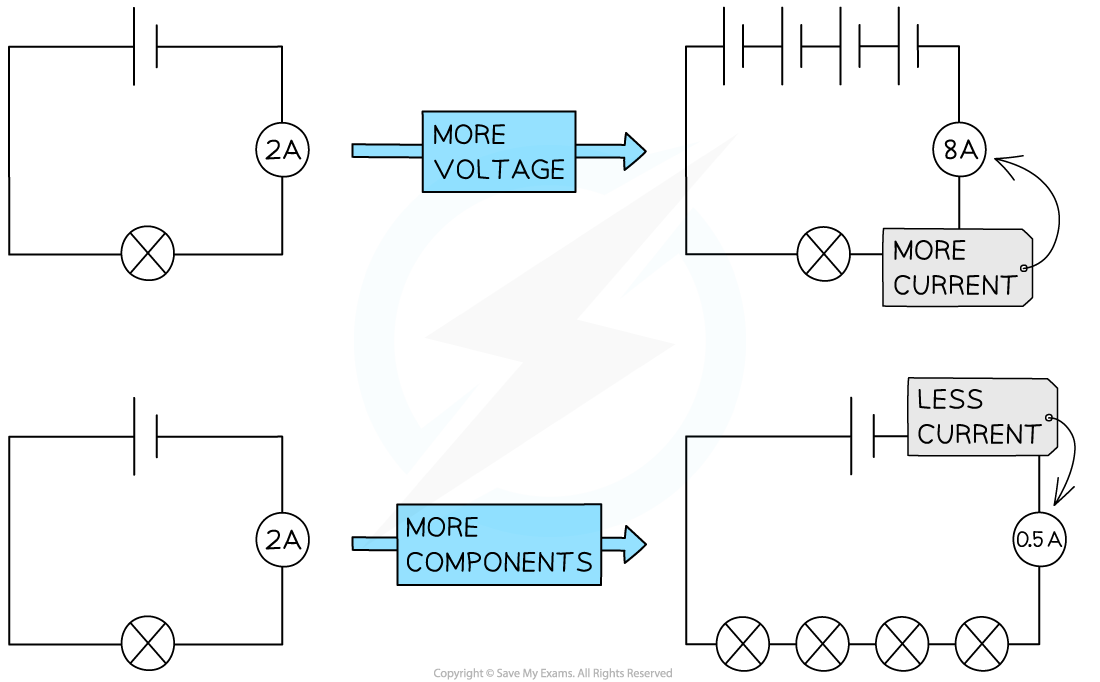
Current will increase if the voltage of the power supply increases, and decreases if the number of components increases (because there will be more resistance)
Current in Parallel Circuits
Current in Parallel Circuits
A parallel circuit consists of two or more components attached along separate branches of the circuit
Current in a Parallel Circuit
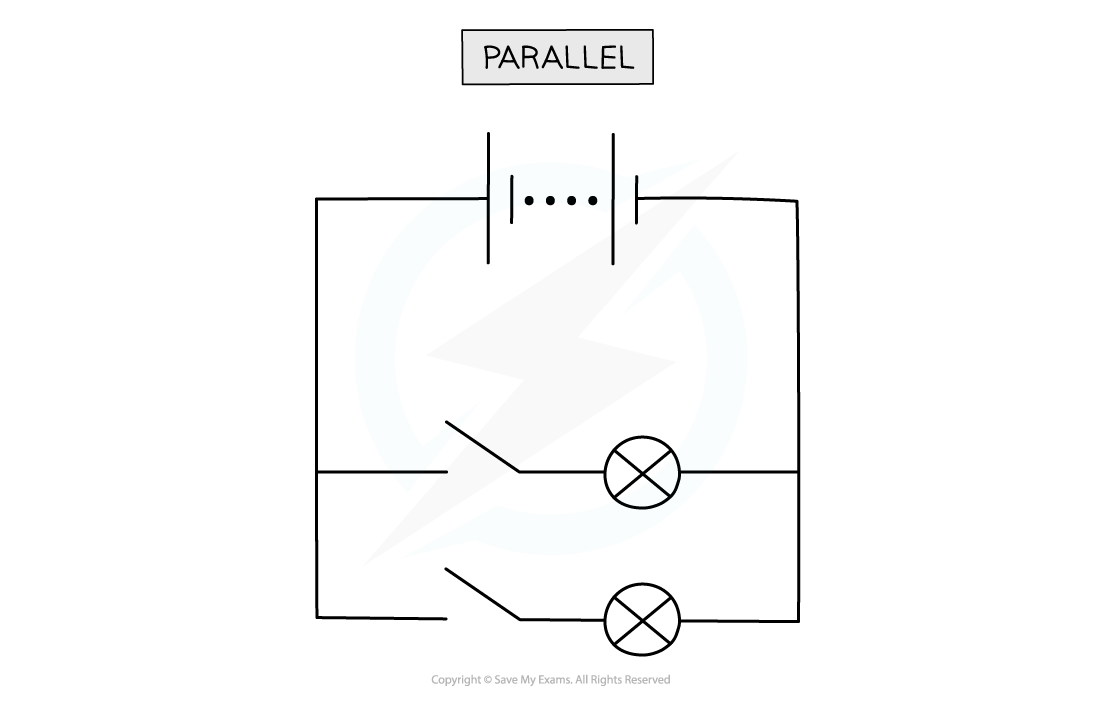
Diagram showing two bulbs connected in parallel
The advantages of this kind of circuit are:
The components can be individually controlled, using their own switches
If one component stops working the others will continue to function
In a parallel circuit, the current splits up - some of it going one way and the rest going the other
This means that the current in each branch will be smaller than the current from the power supply
At a junction in a parallel circuit (where two or more wires meet) the current is conserved
This means the amount of current flowing into the junction is equal to the amount of current flowing out of it
This is because charge is conserved
Note that the current does not always split equally – often there will be more current in some branches than in others
The current in each branch will only be identical if the resistance of the components along each branch are identical
Current behaves in this way because it is the flow of electrons:
Electrons are physical matter – they cannot be created or destroyed
This means the total number of electrons (and hence current) going around a circuit must remain the same
When the electrons reach a junction, however, some of them will go one way and the rest will go the other
Current at Junctions
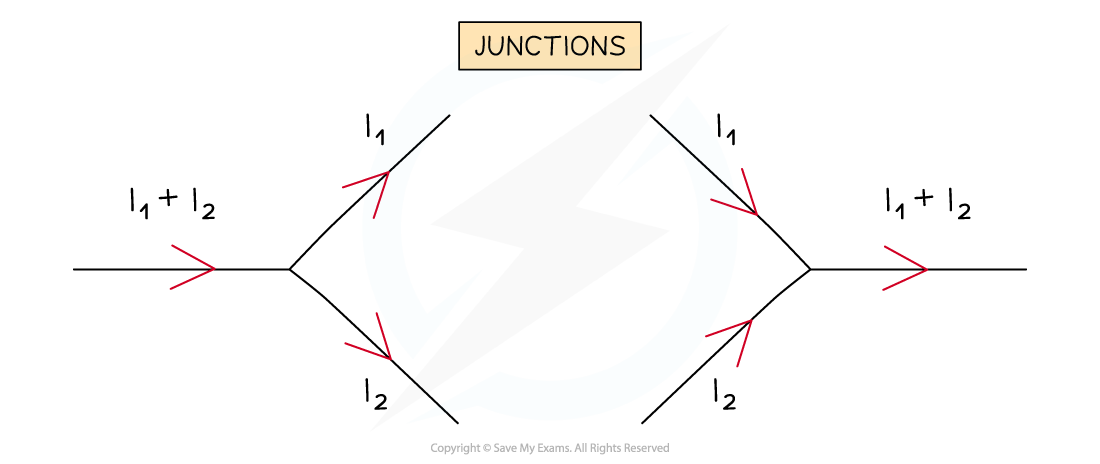
Current is conserved a junction; the total current is the sum of the current in the individual branches