The Process of Market Segmentation
An Introduction to Market Segmentation
An introduction to market segmentation
Market segmentation is the process in which a single market is divided into submarkets, or'segments.'
Each segment represents a slightly different set of consumer characteristics
Firms often segment their markets according to factors such as geographical location, demographics, behavior and lifestyle, age or gender
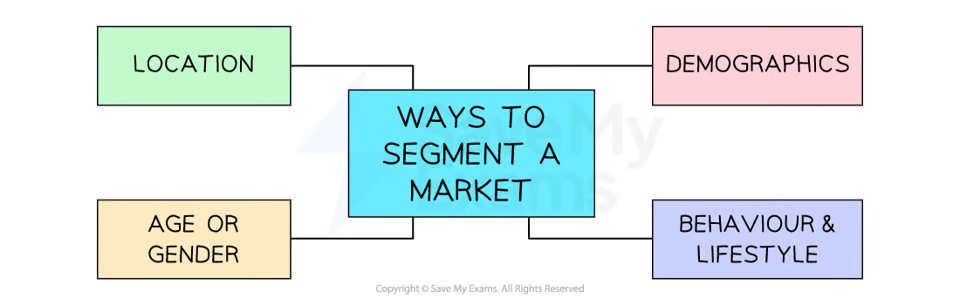
A market for a product such as crisps is not simply seen as one market, e.g., the crisp market is divided up into many market segments, such as
Dinner party snacks (Walkers Sensations, Pringles, Burts) are targeted at middle- to upper earners/professionals with a premium price
Health conscious crisps (Walkers lite, Walkers baked, Revita lite) are targeted at the health conscious market
Lunch box value snacks (multipacks, hoola hoops, etc.) are targeted at families and the mass market
Evaluating the use of market segmentation
Advantages
Disadvantages
Recognises that consumers are not all identical; consumer groups do not all share the same tastes and preferences
Products and marketing activities can be altered to meet different needs of different groups of consumers and targeted more precisely
Less expensive and wasteful than marketing products at wide market segments
It may increase loyalty if the consumer feels that their needs are being met, which can lead to repeat purchases
Not everyone within a segment will behave in the same way
It may be difficult to identify a segment and consumers can belong to multiple segments at the same time
Segmentation requires more detailed market research, which can prove costly but beneficial to the business
A segment may be identified but it may be too small and unprofitable to cater for
Recommending an Appropriate Method of Segmentation
Recommending an appropriate method of segmentation
The type of market segmentation used will depend upon the nature of the business itself
Examples of industry specific segmentation include
The cosmetic industry often aims their products at a specific gender. In recent years, there has been a growth in specific make-up products aimed entirely at men, such as 'Guyliner'- eye liner for men
A bespoke watchmaker may base their segmentation on income levels, aiming at high income customers who can afford their handmade, niche market pieces
A business that runs bootcamp-style exercise classes may base their segmentation on lifestyle choices E.g., those people who want to improve their fitness levels
Before recommending an appropriate method of market segmentation, the business must also consider a number of factors
Factors affecting the choice of market segmentation
Brand image
The business must consider whether appealing to the chosen segment aligns with the existing brand image of the product/company
E.g., A luxury fashion retailer may harm their image if they try to appeal to a budget market
Cost of entry into the market segment
How much advertising will be needed to attract the attention of the segment?
E.g., The fitness fashion industry is very competitive with brands such as Gymshark and Puregym and a new entrant may therefore require a large promotional campaign budget to catch the attention of potential customers
Market analysis data
The business will need to examine market research data to find out how big the potential market segment is in terms of number of customers and potential future sales