Market Segmentation
Why businesses segment the market
Why businesses segment the market
Market segmentation is where a single market is divided into submarkets, or 'segments'
Each segment represents a slightly different set of customer characteristics
This allows businesses to tailor products to suit specific groups, making customers more likely to buy
For example, a skincare company can offer different products for teenagers and older adults, who have different skin concerns
Marketing messages can be designed to appeal directly to each segment, making advertising clearer and persuasive
For example, a fitness brand may use social media to target young adults, but email newsletters for older gym-goers
Focusing on specific segments helps businesses avoid wasting time and money advertising to people who are unlikely to be interested
For example, a luxury brand avoids promoting its products to low-income customers who are unlikely to buy
How markets can be segmented
How markets can be segmented
Ways to segment a market
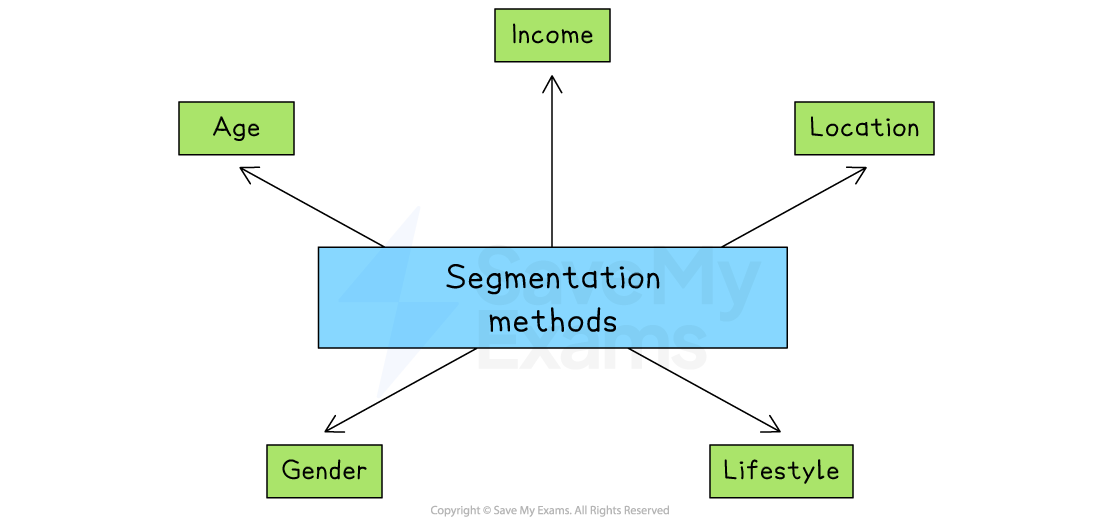
1. Age
Businesses group customers by age, as different age groups tend to have different interests, needs, and spending habits
For example, a toy retailer targets products like Lego at children aged 6–12, while mobile phone brands may market to teens using social media platforms like TikTok
2. Income
Customers are grouped based on how much money they earn. Some products are aimed at budget-conscious buyers, while others target higher-income customers willing to pay more
For example, Primark sells low-cost clothing for price-sensitive shoppers, while brands like Gucci or Rolex target high-income luxury buyers
3. Location
This involves targeting customers based on where they live. Products and promotions may change depending on local tastes, climate, or culture
For example, a surfwear brand might advertise more heavily in coastal areas, while supermarkets in colder regions may stock more winter foods during certain months
4. Gender
Some products are marketed differently to men and women based on preferences or roles in society, though this is now approached more carefully to avoid stereotypes
For example, razor brands often sell separate product ranges for men and women, with different colours, packaging and advertising styles
5. Lifestyle
Lifestyle segmentation focuses on people's interests, hobbies, values, or how they spend their time
For example, a supermarkt may target protein shakes at people who are fitness-focused, while promoting eco-friendly cleaning products to environmentally conscious consumers
Advantages and disadvantages of market segmentation
Advantages and disadvantages of market segmentation
Advantages | Disadvantages |
|---|---|
|
|