Promotion
Reasons for promotion
Reasons for promotion
Promotion refers to all the activities a business uses to inform, persuade, and remind customers about its products or services, with the aim of increasing sales and building brand loyalty
Promotion communicates a business's value proposition to potential customers and helps to differentiate the product or business from competitors
Promotion plays a crucial role in generating customer awareness, interest and desire for a product
The main aims of promotion
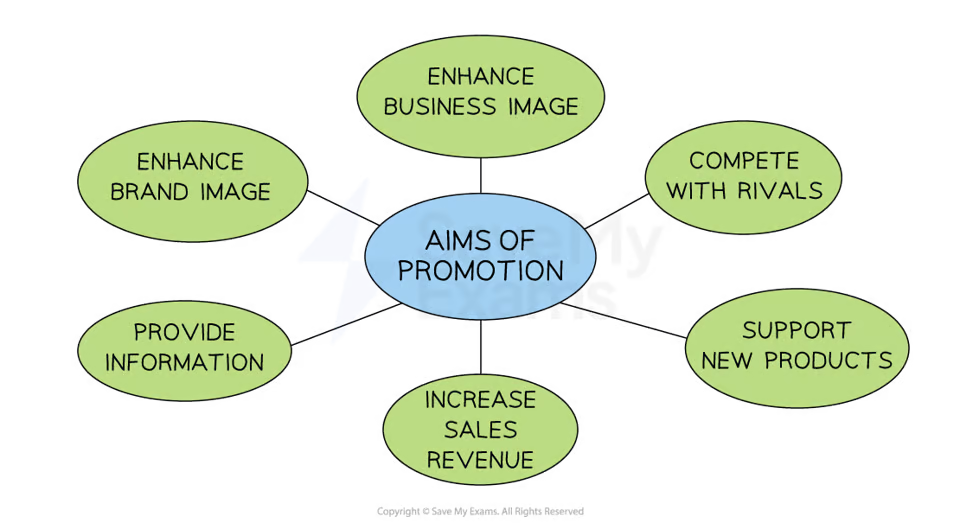
Enhance brand and business image
Promotion helps build a strong, positive image of the business. It can show the brand as trustworthy, high-quality, ethical, or innovative
For example, Apple uses sleek advertising to reinforce its image as a premium, cutting-edge brand
Compete with rivals
In competitive markets, promotion helps a business stand out. Special offers, adverts or sponsorships can attract customers away from competitors
For example, Burger King and McDonald's use adverts and discounts to compete for customers
Support new products
When launching a new product, promotion creates awareness and interest. It helps customers learn what the product is and why they should try it
For example, a soft drinks company might offer free samples in supermarkets when introducing a new flavour
Increase sales revenue
Well-planned promotion can boost sales by encouraging more people to buy, or to buy more often
For example, limited-time discounts or “Buy 1, Get 1 Free” deals increase customer purchases
Provide information
Promotion can be used to inform customers about product features, prices, store locations, or changes to the business
For example, a bank may use advertising to explain new mobile banking features to its customers
Methods of sales promotion
Methods of sales promotion
Sales promotion is a short-term marketing strategy used to encourage customers to buy a product
It often includes special deals or incentives and is designed to boost sales quickly or support a new product launch
Methods of sales promotion
Vouchers
Customers are given a coupon or code offering money off a future purchase
Advantages | Disadvantages |
|---|---|
|
|
Reward schemes
Customers earn points or rewards for regular purchases
Advantages | Disadvantages |
|---|---|
|
|
Competitions
Customers enter to win a prize, often by buying a product or taking part in an activity
Advantages | Disadvantages |
|---|---|
|
|
Special offers and discounts
Temporary price reductions like 20% off or Buy One, Get One Free
Advantages | Disadvantages |
|---|---|
|
|
Recommending a suitable sales promotion
Recommending a suitable sales promotion
A business must carefully choose the right type of sales promotion to suit its product, customers and objectives
Factors affecting the choice of sales promotion
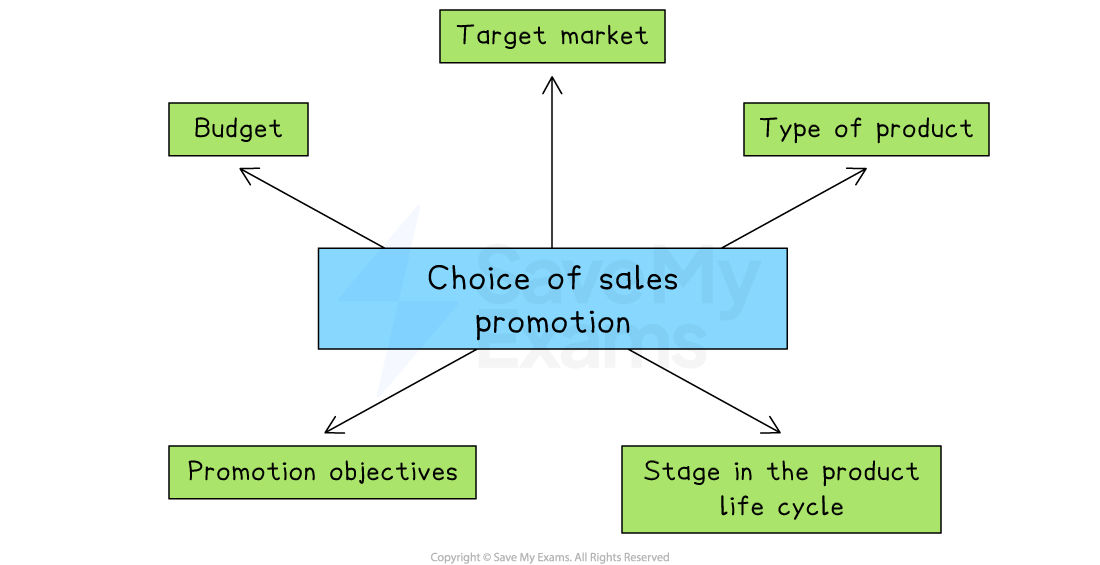
Target market
The type of customers the business wants to reach will influence the promotion
For example, young customers might respond well to competitions or online discounts, while regular shoppers may prefer reward schemes
Type of product
Some promotions work better for certain products
For example, Buy One, Get One Free is effective for fast-moving items like snacks, but not for expensive goods like electronics
Stage in the product life cycle
Sales promotions are often used during product launch or maturity stages
For example, a new product might use vouchers to attract first-time buyers, while a mature product might offer discounts to boost slowing sales
Promotion objectives
The business must be clear on what it wants to achieve
For example, if the objective is to build loyalty, a reward scheme may be best, but if the objective is to quickly increase sales, a discount might be more suitable
Budget available
The business must consider how much money it has to spend
For example, competitions with prizes or large discount campaigns can be costly, so may not be suitable for small businesses
Methods of advertising
Methods of advertising
Advertising is a form of paid promotion used by businesses to inform, persuade or remind customers about their products or services
It aims to increase sales, build brand awareness and attract new customers through different media such as TV, social media, billboards or print
Social media
Using platforms like Instagram, TikTok or Facebook to promote products and interact with customers
Advantages | Disadvantages |
|---|---|
|
|
Targeted emails
Sending promotional emails to specific customers based on their interests or past purchases
Advantages | Disadvantages |
|---|---|
|
|
Leaflets
Printed materials handed out or delivered to promote a product, service or event
Advantages | Disadvantages |
|---|---|
|
|
Billboards
Large outdoor posters placed in high-traffic areas to catch public attention
Advantages | Disadvantages |
|---|---|
|
|
Recommending a suitable method of advertising
Recommending a suitable method of advertising
Businesses must choose the right type of advertising based on several important factors
Target market
The advertising method should match the age, interests and habits of the target customer
For example, social media is good for reaching young people
Cost and budget
Some methods like billboards or TV adverts are expensive, while others like social media or leaflets are more affordable
Type of product
Products with visual appeal, like fashion items or food, may benefit from image-based adverts on platforms like Instagram or billboards
Message content
If the advert needs to give detailed information, methods like emails or leaflets may be more suitable than a billboard
Reach
Businesses may choose national advertising for large markets or local advertising, using posters or flyers, for smaller areas