Joint Ventures & Licensing
Overcoming Problems of Entering Foreign Markets
Overcoming problems of entering foreign markets
Two common strategies used by businesses to try and overcome the problems of entering new markets are global mergers and joint ventures
A global merger is an agreement between two businesses from two different countries to join together
A joint venture occurs when two businesses join together to share their knowledge, resources and skills to form a separate business entity
E.g., The mobile network EE is a joint venture formed by the French mobile network, Orange and the German mobile network, T-Mobile
These strategies may be more cost effective than exporting, licensing and franchising
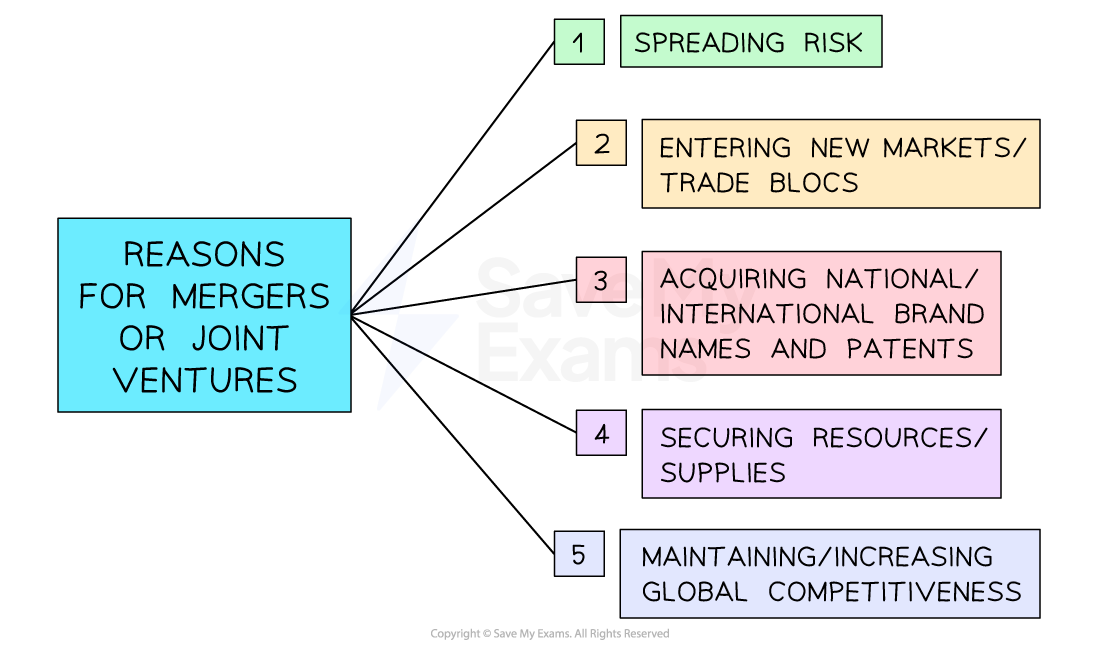
Reasons for mergers or joint ventures
1. Spreading Risk
Operating in more than one market helps to reduce reliance on one geographical market
2. Entering new markets
Entering a market or trade bloc using a merger/joint venture is a quicker method than using organic growth
In emerging economies, many governments insist that foreign businesses can only operate as a joint venture as this can benefit domestic businesses
Forming a joint venture with a local company allows the joining business to gain knowledge and business of the local markets
3. Acquiring national/international brand names/patents
A patent is the legal right given by the government to an individual or business to make, use or sell an invention and exclude others from doing so
The process of developing intellectual property can be a long and expensive process
Using a merger/acquisition is a method businesses can use to get access to intellectual property or a business with a strong reputation
4. Securing supplies
A joint venture with a supplier can ensure that scarce resources used in manufacture are more likely to be available
5. Increasing global competitiveness
Mergers and joint ventures can give businesses access to new technologies, expertise, and economies of scale, helping them operate more efficiently
Partnering with local or international firms can improve innovation and product quality, enabling the business to compete more effectively on a global scale
6. Evaluating mergers and joint ventures
Benefits | Drawbacks |
|---|---|
|
|