Product: The Product Life Cycle
The Product Life Cycle
The product life cycle
The product life cycle describes the different stages a product goes through from its conception to its eventual decline in sales
There are typically five stages in the product life cycle: development, introduction, growth, maturity, and decline
The product life cycle diagram
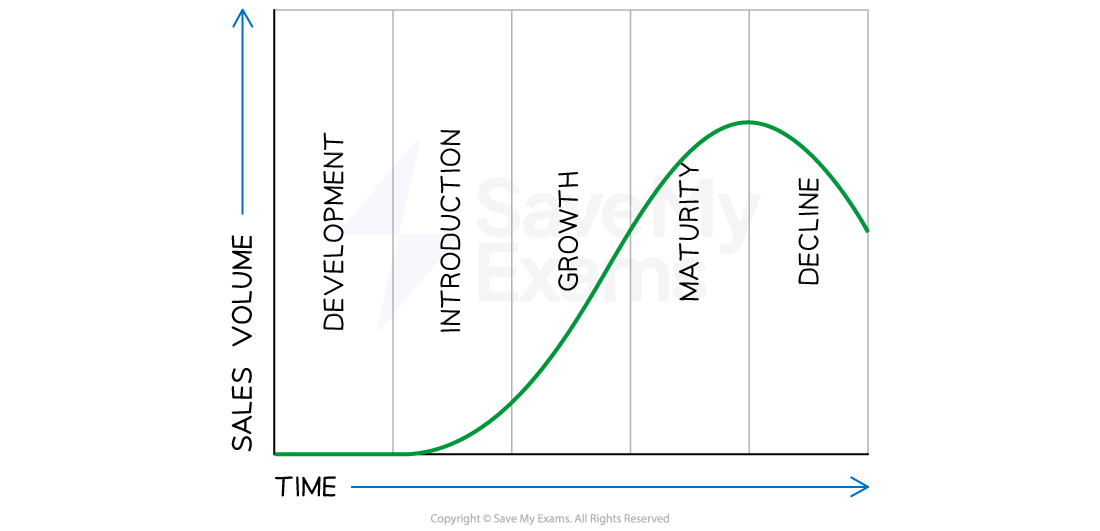
The implications for cash flow and marketing vary at each stage of the product life cycle
Companies should tailor their marketing strategies and manage their cash flow to ensure long-term profitability and success
The impact of the product life cycle on cash flow and marketing strategy
Stage | Explanation | Implication |
|---|---|---|
Development |
|
|
Introduction |
|
|
Growth |
|
|
Maturity |
|
|
Decline |
|
|
Extension Strategies
Extension strategies
Extension strategies refer to the techniques used by businesses to extend the life of a product beyond its natural life cycle
These strategies are designed to boost sales and maintain profitability for a product that has reached the late maturity or decline stage of its life cycle
There are two types of extension strategies which are often implemented at the same time
Product-related extension strategies
Product-related extension strategies
These are strategies that changing or modify the product to make it more appealing to customers
This could involve improving or adding features, increasing capacity or redesigning its appearance
Product improvements e.g. Samsung releases new versions of its Galaxy Smartphone every year with upgraded features and improvements to the previous model
Line extensions, e.g. Coca-Cola introduced Diet Coke and Coke Zero as line extensions of its original Coca-Col
Repositioning e.g. when IBM's personal computer division started losing market share to other brands, it repositioned its products as high-end business machines and focused on the enterprise market
Promotion-related extension strategies
These strategies aim to change the promotional activity related to the product
This could involve:
Changes to advertising e.g Kellogg's continues to recreate adverts for its Corn Flakes cereal, which has been around since 1906
Price promotions, e.g. Cyber Monday occurs on the first Monday after Thanksgiving in the USA and electronic firms discount prices significantly in order to boost sales of their products
Sales promotions, e.g. many coffee shops offer a loyalty programme where customers can earn a free drink for every six consumed