Marketing Strategy
The importance of the different elements in the marketing mix
The importance of the different elements in the marketing mix
The marketing mix has a significant impact on consumer decisions
Businesses need to thoroughly consider each element when developing a suitable marketing strategy so that it is attractive to the intended target market
A change in one element can have a significant impact on the others
For example, an increase in price may require a redesign of packaging to encourage customers to recognise a product is high quality
The marketing mix should change as a product moves through different stages of its product life cycle
For example, newly-launched products may be sold at a low price initially until sales start to grow; at this point, the price may be increased to improve profit margins
If the marketing strategy fails to combine the elements of the marketing mix appropriately, the marketing objectives are unlikely to be achieved
Why each element is important
1. Product
The product/service is the heart of the marketing mix and determines all other elements
Price, the target market, distribution methods and promotional activity stem from the product
If the product changes, then all other elements of the mix will likely need to change
For example, the launch a premium version of a product may require an increase the price and redesigned promotional activity to reflect the new product's image
Questions to consider
Is the product brand new, or is it an existing product?
What type of product is desired by the target market?
What changes need to be made to the product to make it more desirable?
2. Price
The price of a product is closely linked to its perceived brand value
If a product is priced too high, it may be perceived as too expensive by the target audience, leading to lower sales
If a product is priced too low, it may be perceived as low quality, leading to lower sales
Increasing the price may require changes to the promotion strategy, which are aimed at convincing consumers of the product's value
Questions to consider
What price do rivals charge?
What price is the target market willing and able to pay?
What impact might promotional pricing have on demand?
3. Promotion
The promotion strategy can affect the price and distribution channels
For example, if a business decides upon promotional activity that emphasises luxury, it may need to increase the price to reflect the product's value
Questions to consider
What is the promotional budget?
How does the target market respond to different methods of promotion?
What methods do rivals use to promote their products?
4. Place
Distribution and sales channels affect the price and promotion strategy
For example, if a business decides to use specialist distribution channels, it may need to increase the price to reflect the exclusivity of the product
Questions to consider
What channels of distribution are most appropriate for the product?
Where does the target market expect to be able to buy products?
What channels of distribution do rivals use?
Recommending an appropriate marketing mix
Recommending an appropriate marketing mix
Each business combines the different elements of the marketing mix in unique ways for each product or range they sell
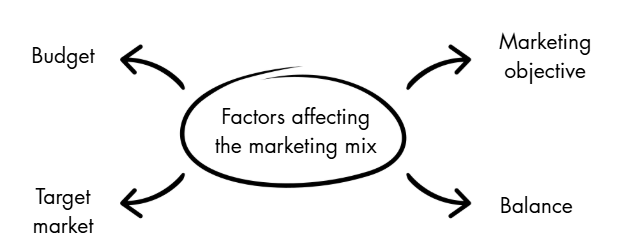
Factors affecting the structure of the marketing mix
Marketing budget for the project
Which advertising media or promotional tactics are affordable?
Large budgets will allow a business to use mass media such as TV advertising, whilst smaller budgets may afford limited promotional activity using social media
Marketing objectives to be achieved
Is the plan to increase market share or launch a new product range?
Increasing market share may require an emphasis on low prices, whilst skimming may be important when launching a new product range
The intended target market for the product
Is the product to be aimed at families or single-person households?
Products aimed at families may be sold in large multipacks, whilst single-person households may be targeted with smaller quantities of standard products
Is it a balanced marketing mix?
Do the elements of the mix effectively complement each other?
Luxury products are likely to require a premium price, whilst products sold in supermarkets may be sold in bright packaging to stand out from other brands