StudyDeck

Introduction to the Marketing Mix

Exam code: 7115
Written by: Ashika|Reviewed by: Caroline Carroll|Updated 2 July 2026

The 4 Ps

The 4 Ps

  • The marketing mix provides a framework for businesses to create and implement successful marketing strategies

    • Sometimes known as the 'Four P's', it represents the key elements of a marketing strategy:

      • Product

      • Price

      • Place

      • Promotion

    • These four components work together to satisfy the needs and wants of a target market while achieving the company's objectives

  • By understanding and manipulating the marketing mix, businesses can differentiate themselves from competitors, maximise marketing impact and achieve long-term success

The four P's of the marketing mix
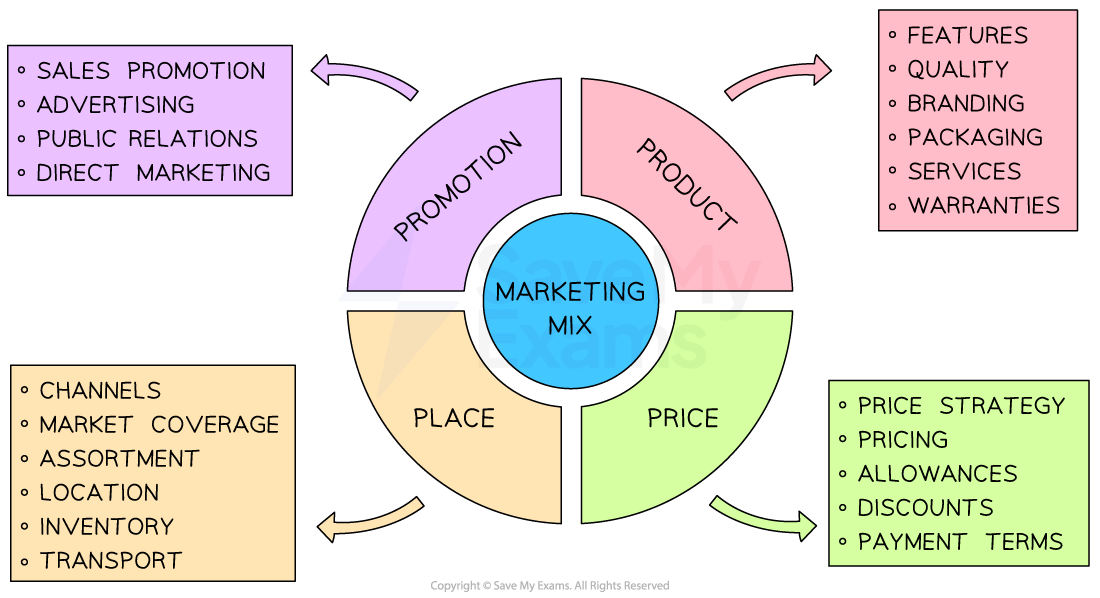
Businesses combine the 4 P's of the marketing mix in appropriate and unique ways to maximise their chances of success

Integrating the 4 P's

Integrating the 4 P's

  • An integrated marketing mix is one which combines each element in the best possible way

  • A change in one element can have a significant impact on the others

  • An integrated marketing mix can help build a competitive advantage

  • By creating a cohesive marketing strategy that resonates with customers, the business is set apart from its competitors

How changes to one element can change the entire mix

Changes to the product

Changes to price

  • The product/service is at the heart of the marketing mix, as it is what the customer is buying

    • The product determines the price, the target audience, and the promotion strategy

  • If the product changes, then all other elements of the mix will likely need to change

    • For example, if a business decides to launch a premium version of its product, it may need to increase the price, target a different audience and use a different promotion strategy to reflect the new product's value

  • The price of a product is closely linked to its perceived brand value

    • If a product is priced too high, it may be perceived as too expensive by the target audience, leading to lower sales

    • If a product is priced too low, it may be perceived as low quality, leading to lower sales

  • Increasing the price may require changes to the promotion strategy, which are aimed at convincing consumers of the product's value

Changes to promotion

Changes to place

  • The chosen promotion strategy can affect price and distribution channels

    • For example, if a business decides to launch a high-end promotion strategy, it may need to increase the price to reflect the product's value

  • The chosen distribution channels can affect the price and promotion strategy

    • For example, if a business decides to use exclusive distribution channels, it may need to increase the price to reflect the exclusivity of the product

Nike's integrated marketing mix

Product

Price

  • The company's products are known for their high quality and innovative design

  • This has helped to create a perception of exclusivity and quality

  • Nike's pricing strategy is focused on premium prices that reflect the value of the product 

  • This reinforces the brand's premium positioning

Promotion

Place

  • Nike's promotion strategy is focused on creating a unique brand image and messaging that resonates with its target audience

  • An integrated marketing mix can help build a competitive advantage

  • By creating a cohesive marketing strategy that resonates with customers, the business is set apart from its competitors. The company's "Just Do It" campaign focuses on celebrating athleticism and determination

    • This aligns with the brand's reputation for being a leader in sports apparel

  • Nike's distribution strategy is focused on creating a seamless online and offline shopping experience

    • This makes it easy for customers to purchase the brand's products