Product
The importance of brand image
The importance of brand image
Developing a strong brand involves creating a unique and identifiable name, design, symbol or other feature that differentiates a product or service or company from its competitors
This can help a business to add value, as customers are often willing to pay higher prices for brands they recognise and trust
Branding helps businesses create awareness, develop strong customer relationships, generate loyalty and sets them apart from competitors
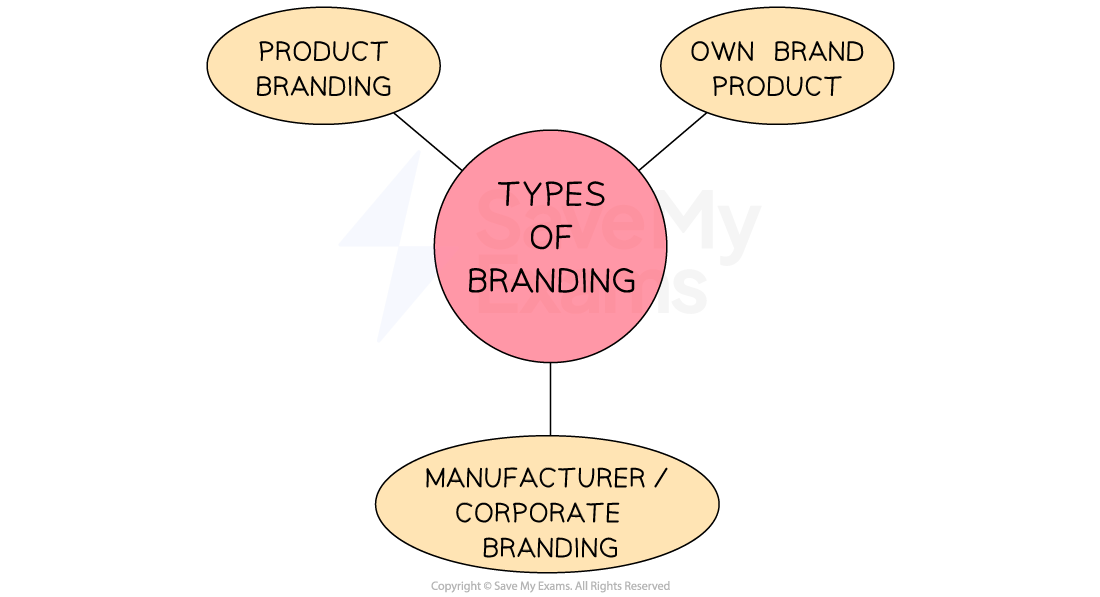
The three main types of branding
Manufacturer or corporate branding
Manufacturer or corporate branding refers to the use of a company name or logo to promote all the products or services offered by a company
This type of branding is used by companies like Nestlé, Nike, and Apple
Product branding
Product branding refers to the use of a unique name, design or symbol to promote a specific product
For example, KitKat, Coca-Cola, and McDonald's Big Mac
Own-brand product
Own brand or private label branding refers to the use of a retailer's name to promote a specific product or service and is often used by supermarkets
For example, ASDA chocolate, Tesco's Finest range, and Sainsbury's Basics range
Examples of the ways that brands have been built
Method | Explanation | Example |
|---|---|---|
Unique selling points (USPs) |
|
|
Advertising |
|
|
Sponsorship |
|
|
Social media |
|
|
Emotional branding |
|
|
Benefits of branding to a business
1. Differentiation
Branding differentiates a business from its competitors
This supports marketing and advertising efforts to build memorable promotional materials and campaigns
2. Reduced price elasticity of demand
Customers are less sensitive to price changes of products with strong and appealing branding
Customers who are loyal to a brand are more likely to continue purchasing the product even if the price increases
3. Ability to charge premium prices
Customers may be willing to pay more for a product that is associated with a well-established brand
They often perceive products with strong branding to be of higher quality and therefore worth the extra cost
4. Brand recognition and identity
Strong branding helps to build trust and credibility
This can create an emotional connection with customers, which helps generate repeat purchases
The role of packaging
The role of packaging
Packaging is the physical container or wrapping for a product
It is also used for promotion and selling appeal
Packaging is normally designed to
Present products in the most practical yet attractive way
Communicate the quality of the product
Catch the customer's eye when they shop
Provide key information to customers
Establish the business's brand image
To stand out from the competition, brands are investing more money than ever before in creative and environmentally friendly packaging designs
For example, Lush Cosmetics packages gift boxes with popcorn, which can be composted by the end user and uses less energy than plastic alternatives

Developing new products
Developing new products
One way to stay ahead of the competition is by developing new products and innovating existing ones
The process of new product development involves a number of important stages

Generate ideas
New product concepts are discussed and brainstormed using customer suggestions, ideas from competitors’ products, employees’ ideas and information collected through market and technical research
Select the best idea
Ideas are weighed up with some dropped and others chosen for further research
This decision relates closely to costs and likely demand
Research includes looking into forecast sales, size of market share and cost-benefit analysis for each product idea
Develop a prototype
This allows the operations department to see how the product can be manufactured, any problems or difficulties arising from its production and how to fix them
Computer simulations are often used to produce 3D prototypes on screen
Test launch
The developed product is sold to on a small scale to a limited market to see how well it sells before its full launch
Changes may be needed prior to an expensive, large-scale launch
Digital products like apps and software run beta versions, which is a method of test-launching
Full launch of the product
The finalised version of the product is launched to the entire target market
Evaluating new product development
Advantages | Disadvantages |
|---|---|
|
|