Entering Foreign Markets
The Potential of New Markets
The potential of new markets
Entering new international markets has proved attractive to many businesses
The internet makes it easier than ever to enter international markets
Financial systems are much more joined up, making it much easier for money to flow between countries
This is a natural part of growth once a successful business has saturated their market share for a particular product
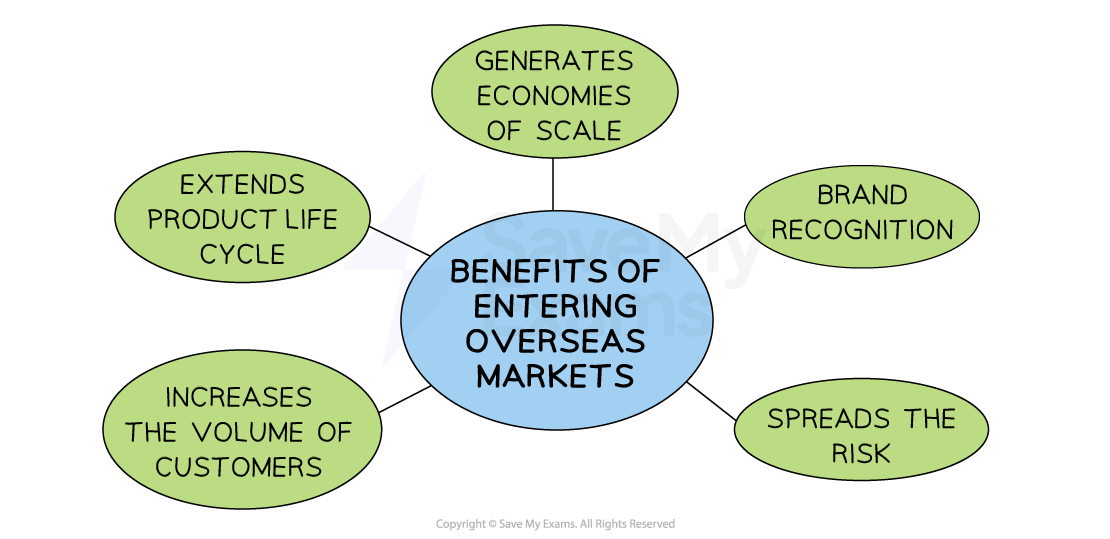
The benefits of entering international markets
1. Economies of scale
Operating on a larger scale can reduce unit costs
Potential for higher profit margins
Flexibility to reduce prices to gain market share
2. Brand recognition
Higher visibility of branding (e.g. product/brand names, packaging)
Particularly relevant to the ethnocentric approach
Improves brand loyalty/repeat sales
3. Spreading risk
Less exposure to market change in one country
May avoid localised economic downturns
4. Increased volume of customers
Potential to earn high level of sales revenue
Access distribution economies of scale
5. Extends the product life cycle
Avoids saturation/decline in domestic market
May reduce the need for spending on research and development
Problems of Entering Foreign Markets
Problems of entering foreign markets
1. Lack of knowledge of the market
The business may lack of knowledge of customer needs or tastesso they may produce wrong style of product or not cater to the market's needs
E.g., Tesco struggled to compete with local supermarkets in China and suffered from distribution issues
2. Higher transport costs
There may be less reliable or more expensive distribution channels
Moving products around the world requires reliable but complex logistics systems
Developments in large-scale containerisation as well as long-distance freight transport by rail is improving global distribution
3. Established competition
Problems of established competitors in the market may make it harder to establish market share
High brand loyalty may exist to local brands and it can take time for customers to build trust towards a foreign brand
4. Trade barriers
Protectionism is when a government seeks to protect domestic industries from foreign competition
Governments may impose tariffs or quotas on imports from businesses in other countries
E.g., Cricket bats imported into the UK from Australian manufacturers such as Bradbury and Kraken have a tariff applied to them, which may help to increase demand for UK-produced brands such as Kippax and Fearnley
5. Exchange rate changes
The exchange rate is the value of one currency expressed in terms of another
Exchange rates are an important economic influence for businesses that import raw materials and components and for businesses that export their product
The value of a currency can appreciate or depreciate over time
Businesses are particularly at risk from fluctuating exchange rates as they make planning and forecasting difficult
6. Cultural and social factors
Global businesses must consider various cultural and social factors to effectively market their products and services in different countries and regions
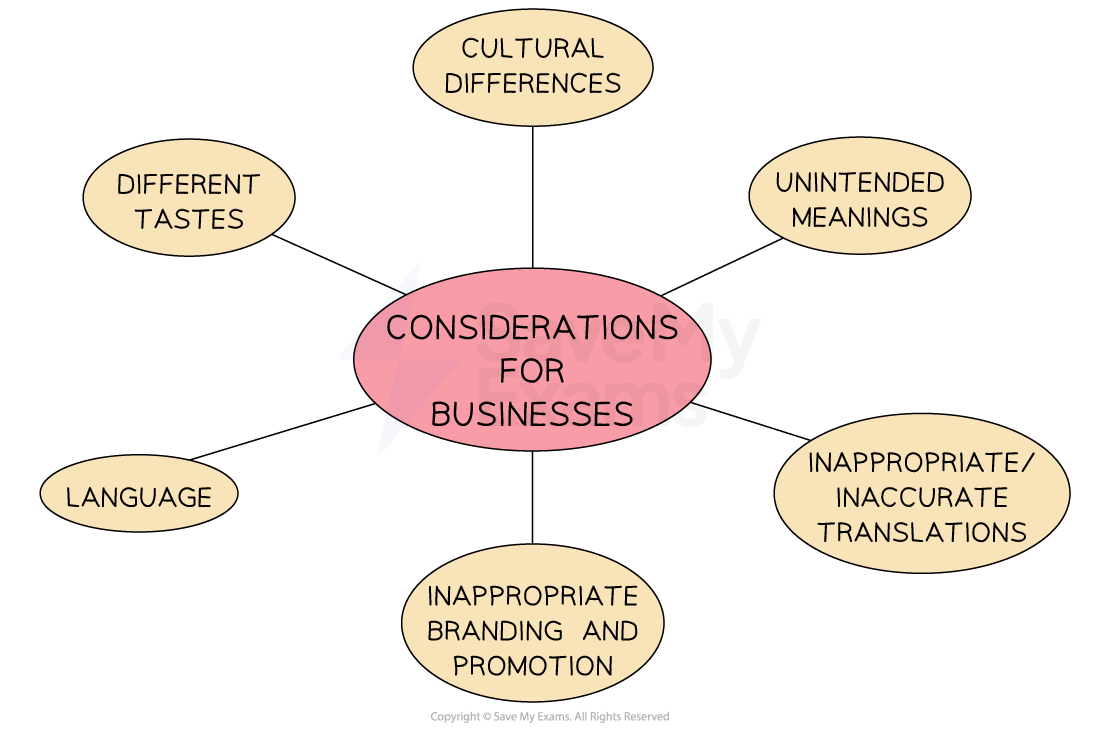
Cultural differences
Businesses must respect and adapt to the customs, values, and traditions of different cultures to avoid offending potential customers or alienating markets
Unintended meanings
Words, symbols, or images used in one country might carry completely different or even offensive meanings in another, risking misinterpretation of marketing messages
Inappropriate or inaccurate translations
Poorly translated content can distort the intended message, confuse customers, or even damage the brand’s reputation. Accurate, context-sensitive translations are vital
Inappropriate branding and promotion
Promotional strategies or brand names that work in one market may be considered offensive or ineffective in another due to social norms or laws
Language
Even within the same language, regional dialects or expressions may differ. Businesses must use appropriate, clear, and locally understood language in their communications
Different tastes
Product flavours, features, or aesthetics that are popular in one country may not appeal to consumers in another. Businesses must conduct research to adapt to local preferences